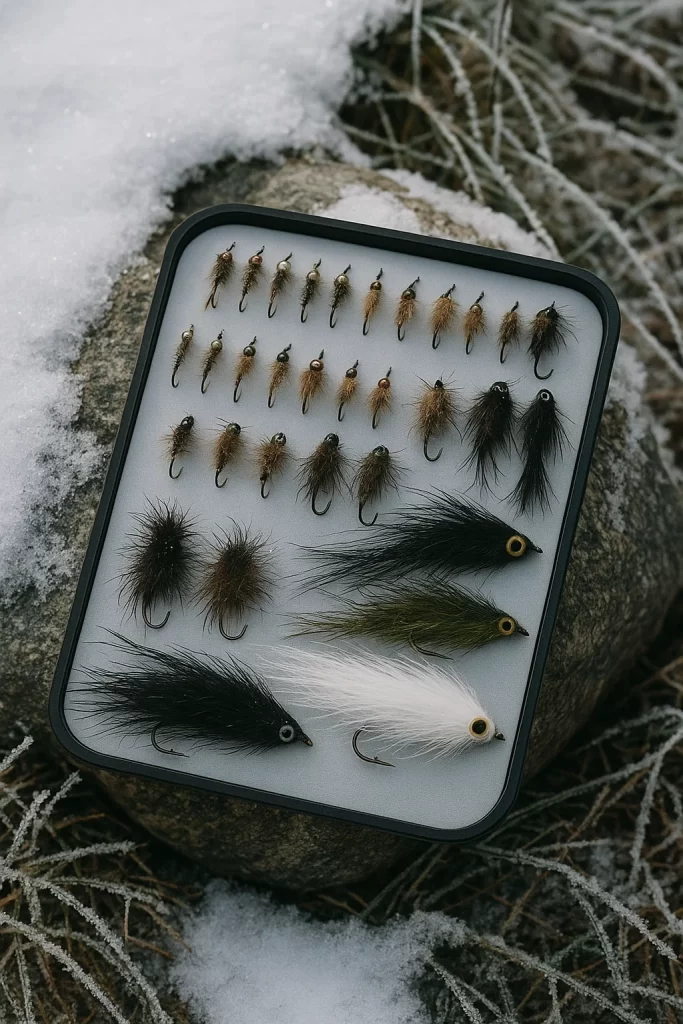
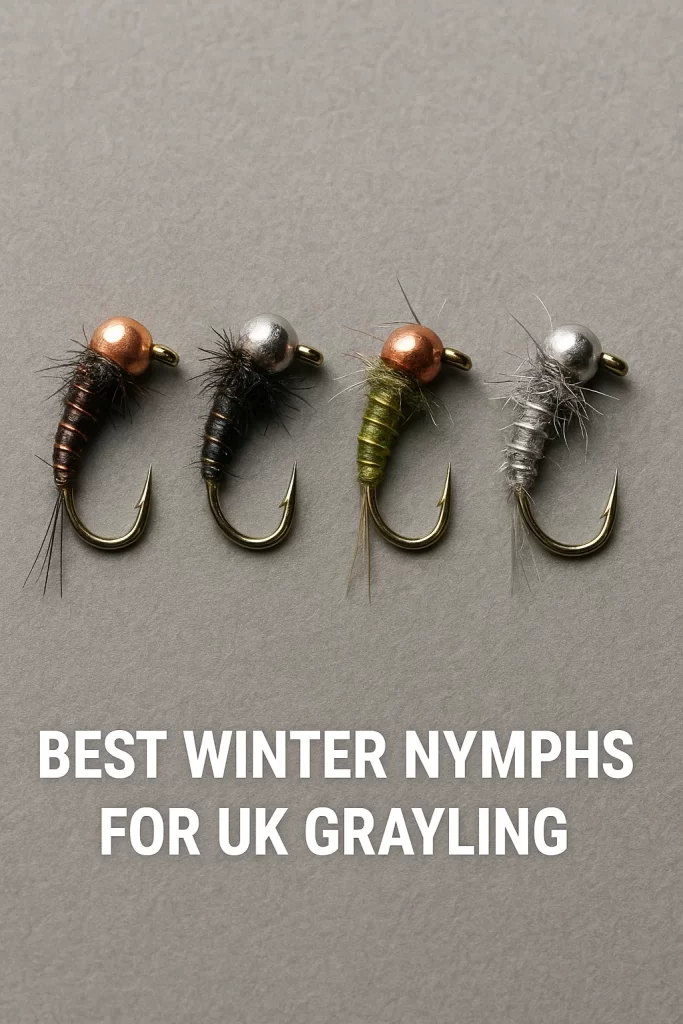
🧊 What Really Happens Under the Surface
When water temperatures drop, trout and grayling slow down. They do not stop feeding — they just become selective. Cold water holds more oxygen, so fish stay healthy, but their metabolism slows. That is why you rarely see fish rising in winter. They are saving energy, holding in slower currents near the riverbed, waiting for food to drift by. If you wade in on a frosty morning, look for small changes:-
- The edges of deep runs where the flow softens
-
- Behind large rocks or fallen branches
-
- Near gravel shelves where nymphs tumble past
🌫️ The Illusion of an “Empty” River
A winter river can feel silent. The water is clear, light is low, and movement is minimal. Even the smallest ripple looks exaggerated, so we assume there is nothing underneath. But rivers do not stop — they shift. In summer, you will find trout rising midstream. In winter, they slide toward the edges, out of the main flow. This illusion tricks many anglers into thinking the fish are gone, when in fact they are simply holding deeper and tighter.🪶 What to Do Differently
To connect with winter fish, think slower and smaller.-
- Drift, do not strip. Let your fly or nymph move naturally.
-
- Fish short lines. Control matters more than distance.
-
- Target soft seams. That is where food collects.
🧭 A Lesson Learned on the River Itchen
Last January, I fished the River Itchen in Hampshire. The morning was bitterly cold — ice on the guides, mist in the trees. For the first hour, not a sign of life. Then, as the sun touched the far bank, I noticed a faint swirl under an overhanging branch. One cast later, the line twitched — and a beautiful grayling came to hand. It reminded me: winter fish never really vanish. They simply wait for those perfect, gentle moments.🌤️ Why Winter Fishing Can Be Rewarding
There is a quiet magic to standing by a winter river. No crowds. No noise. Just the steady sound of water and breath in cold air. Winter teaches patience and precision. Every cast matters. Every take feels earned. If you approach it with calm and curiosity, you will discover something most anglers miss — that the stillness of winter is where the best lessons hide.💡 Quick Takeaway
When a river looks lifeless, it is not. Fish are there — resting, waiting, watching. Slow down, look deeper, and trust the water.Related Guides
Disclosure: As an Amazon Associate and Troutflies.co.uk affiliate, we earn from qualifying purchases. This comes at no extra cost to you.