There’s something deeply satisfying about watching a trout rise to your dry fly on a warm summer evening. The anticipation as your fly drifts downstream, the sudden splash, that moment of tension before you lift the rod. If you fish our British chalk streams or northern freestone rivers, you’ll know that dry fly fishing in summer can be either gloriously rewarding or frustratingly difficult, sometimes within the same hour.
The beauty of summer dry fly fishing is that our rivers come alive with insect activity. From June through August, you’ll encounter everything from mayflies and sedges to terrestrials like daddy longlegs and beetles. Understanding what’s hatching and when makes all the difference between a blank day and one you’ll remember for years.
Presentation matters more than pattern, though I know that’s not what you want to hear when you’ve just spent an hour tying the perfect Iron Blue dun. I’ve watched trout refuse a spot-on imitation presented poorly, then hammer a rather scruffy fly that lands gently with a drag-free drift. The key is getting your fly to behave exactly like the natural insects around it. That means studying the water before you cast.
Gear Used in This Article
Summer flows can be tricky, especially after the dry spells we’ve been having. Lower water levels mean spookier fish and the need for longer leaders. I’ve found that extending my leader to twelve feet or more often does the trick when fish are being selective. You’ll also want to drop your tippet size. Where you might get away with 4X in spring, summer calls for 5X or even 6X on particularly clear days. Yes, you’ll lose more fish, but you’ll hook far more in the first place.
Timing your sessions makes a huge difference. The middle of a blazing summer day rarely produces much action on most rivers. Fish early morning or evening when temperatures drop and insects become active. Those last two hours before dark can be magical, particularly when sedges start hatching. I’ve had some of my best sessions standing in the river well past the point where I could barely see my fly, relying on sound more than sight to detect takes.
When it comes to fly patterns, resist the urge to overcomplicate things. A few well-chosen dry flies will cover most situations. Parachute Adams in various sizes handles many mayfly hatches, while a CDC dun works brilliantly for olives. For sedge activity, you can’t go wrong with an Elk Hair Caddis. Keep some terrestrial patterns handy too, particularly in July and August when beetles and grasshoppers end up on the water.
Reading the rise is a skill that comes with time. Not all rises are equal. A splashy, aggressive take often indicates a fish feeding on emerging insects just below the surface, whereas gentle sipping rings usually mean trout are taking spent spinners or fully emerged duns. Match your fly choice to what you’re seeing.
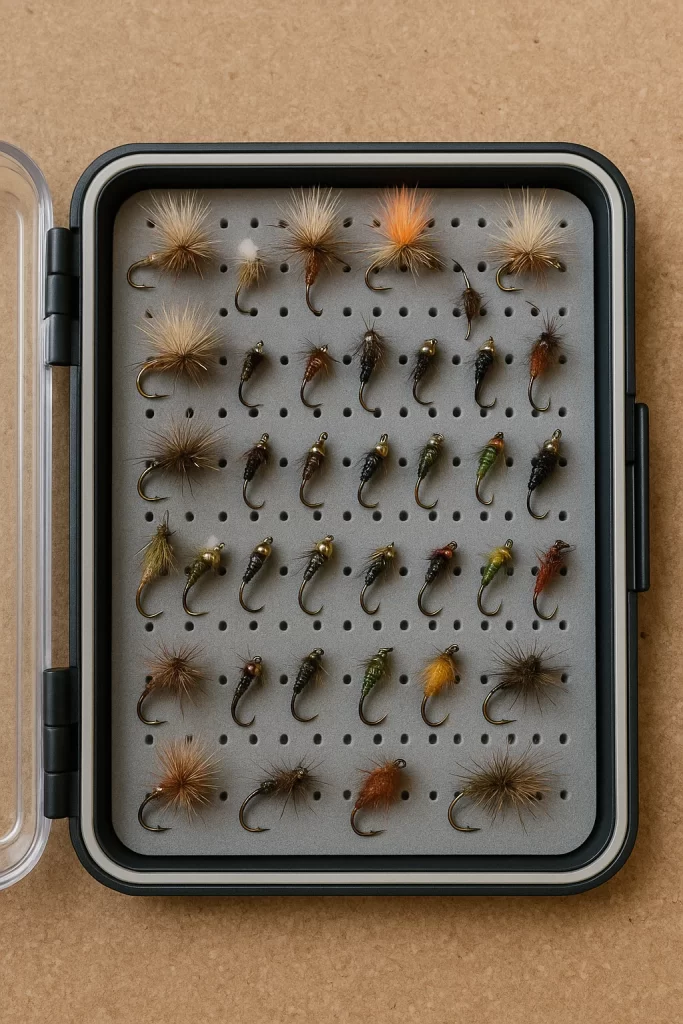
Your fly box organization matters more than you might think. I learned this the hard way after fumbling around trying to find the right pattern while fish fed steadily around me. Having your summer dry flies properly sorted by type and size saves precious fishing time during a hatch. A good quality fly box with clear compartments makes identifying patterns quick and easy, even in fading light. Something like this tackle storage solution https://amzn.to/4dbkzUH keeps everything accessible when you need to switch patterns fast.
One aspect often overlooked is fly flotation. Summer fish can be extraordinarily picky about how your fly sits on the water. A sodden, half-sunk dry fly rarely fools anything. Regular applications of floatant throughout your session keep your patterns riding high. I treat my flies before I tie them on, then reapply every few casts if needed.
Here’s something practical for your next trip: before you start fishing, spend fifteen minutes just watching. Find a likely pool or run, sit back from the bank, and observe. Note where fish are rising, what insects are about, and how they’re behaving on the water. This observation time will tell you more about how to approach your fishing than any article ever could, and it’ll save you from spoiling good water with clumsy, ill-informed casts.