Getting started with fly fishing in the UK can feel a bit overwhelming when you’re standing in a tackle shop staring at hundreds of different flies, or watching someone effortlessly cast thirty yards across a chalk stream while you’re still trying to work out which end of the line does what. I remember my first few sessions on the River Test, tangling myself in more knots than I thought physically possible. But here’s the thing: fly fishing really isn’t as complicated as it looks once you understand a few fundamentals.
Gear Used in This Article
The first thing to get your head around is the casting itself. Unlike coarse fishing where you’re chucking a weighted lure or float, fly fishing uses the weight of the line to carry a virtually weightless fly to the fish. This means the casting technique is completely different. You’re not flinging something heavy, you’re creating a smooth back and forth motion that loads the rod and allows the line to unfurl. Start practicing on grass before you go anywhere near water. Seriously, save yourself the embarrassment of wrapping your line around a tree on your first trip.
Your basic kit doesn’t need to break the bank either. You’ll want a 9-foot rod in a 5 or 6 weight, which is versatile enough for most UK fishing situations. Whether you’re after trout on a reservoir or trying your luck with grayling on a river, this setup will serve you well. The reel is honestly just a line holder when you’re starting out, so don’t spend a fortune. What matters more is getting a decent weight-forward floating line that matches your rod weight. If you’re looking for a solid starter outfit that won’t let you down, there are some excellent beginner fly fishing kits available that include everything you need: https://amzn.to/4dbkzUH
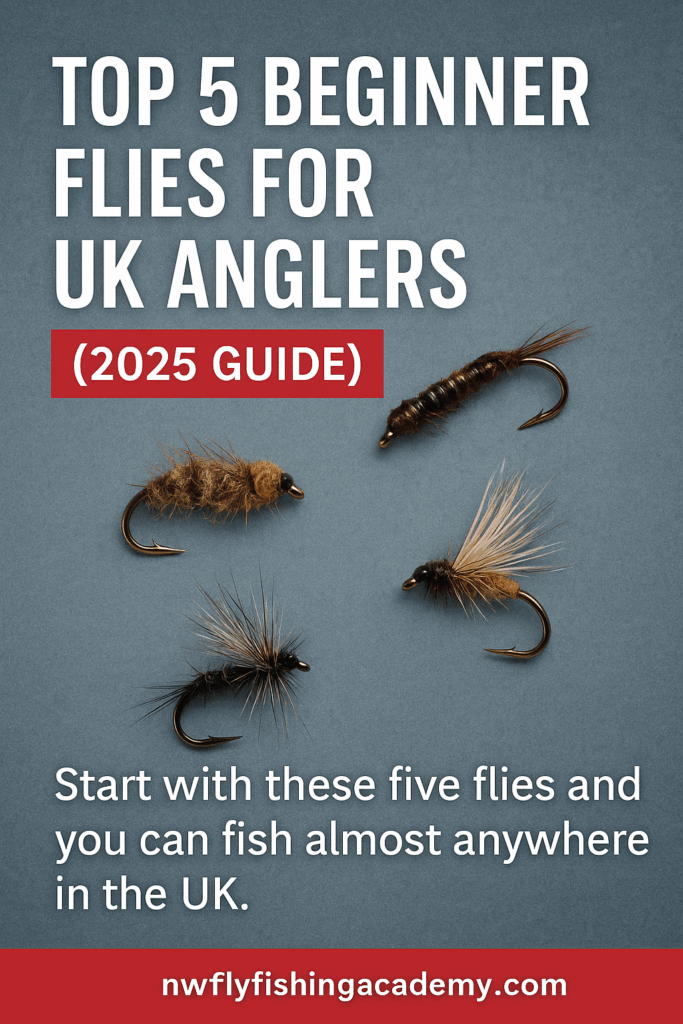
Now, flies. This is where beginners often go a bit mad and buy every pattern under the sun. You really don’t need to. For trout fishing in the UK, you can get through most days with a handful of patterns. A few nymphs like pheasant tail and hare’s ear, some dry flies like the Adams or grey duster, and maybe a couple of wet flies or lures if you’re fishing stillwater. Match the size to what’s hatching if you can, but honestly, presentation often matters more than having the perfect pattern.
Understanding where to fish is just as important as how. On rivers, look for anywhere the current changes pace. Trout and grayling love sitting in slower water next to faster flows, where they can hold position easily while food drifts past them. Behind rocks, at the tail of pools, under overhanging trees. These are your spots. On stillwater, focus on the margins early and late in the day, and don’t ignore areas where wind is pushing surface food against banks or into corners.
The retrieve is something that takes time to get right. On rivers, you’re often just managing the drift of your fly, keeping it moving naturally with the current by mending your line. On stillwater, you might be stripping line back in short pulls, or doing a figure-of-eight retrieve. Watch what other anglers are doing and don’t be afraid to ask questions. The fly fishing community in the UK is generally friendly and most people are happy to share what’s working.
Watercraft comes with time. You’ll gradually learn to read the water, spot rising fish, identify hatches, and understand what the fish are feeding on. Don’t expect to master it all in your first season. I’ve been fishing UK waters for years and still have days where I haven’t got a clue what’s going on.
One practical tip for your next session: when you’re not getting takes, slow everything down. We tend to rush our casts and retrieve when we’re eager or frustrated. Take an extra second before each cast, make sure your fly has landed softly, and give it time to sink or drift naturally before you move it. You’ll be surprised how often that simple change makes the difference.