I’ll be honest, when I first heard about euro nymphing a few years back, I thought it sounded like just another gimmick. We’ve got perfectly good French leader techniques and traditional upstream nymphing methods that have served British anglers well for generations. Why complicate things? Then I spent a frustrating afternoon on the upper Wye watching trout refuse everything I threw at them, while a chap downstream was steadily hooking up with a setup I didn’t recognise. That was my introduction to what the competition lads had been quietly using to clean up.
The beauty of euro nymphing, or Czech nymphing as some still call it, lies in its directness. You’re essentially fishing a long leader with weighted nymphs and no traditional fly line on the water. The leader itself does the work, typically around 15 to 20 feet depending on the water you’re fishing. Instead of casting in the traditional sense, you’re lobbing or flicking your nymphs upstream and slightly across, then following them down with your rod tip held high.
What makes this technique absolutely lethal on UK rivers is the direct contact you maintain with your flies. Our chalkstreams and freestone rivers often have complex currents, and getting a good dead drift with traditional methods means managing line drag constantly. With euro nymphing, you’ve got virtually no fly line on the water to create drag. You’re watching a sighter section, usually a bright piece of material built into your leader, and any hesitation or movement tells you a fish has taken.
The tackle is simpler than you might think. Your standard 9 or 10 foot rod works fine, though longer rods around 10 to 11 feet give you better line control and keep more leader off the water. The leader setup is where it differs from traditional nymphing. You’ll want a proper euro nymphing leader, or you can build your own from sections of progressively thinner monofilament with a sighter section tied in. If you’re just starting out, a ready-made euro nymphing leader will save you the faff of building one yourself and get you fishing straightaway.
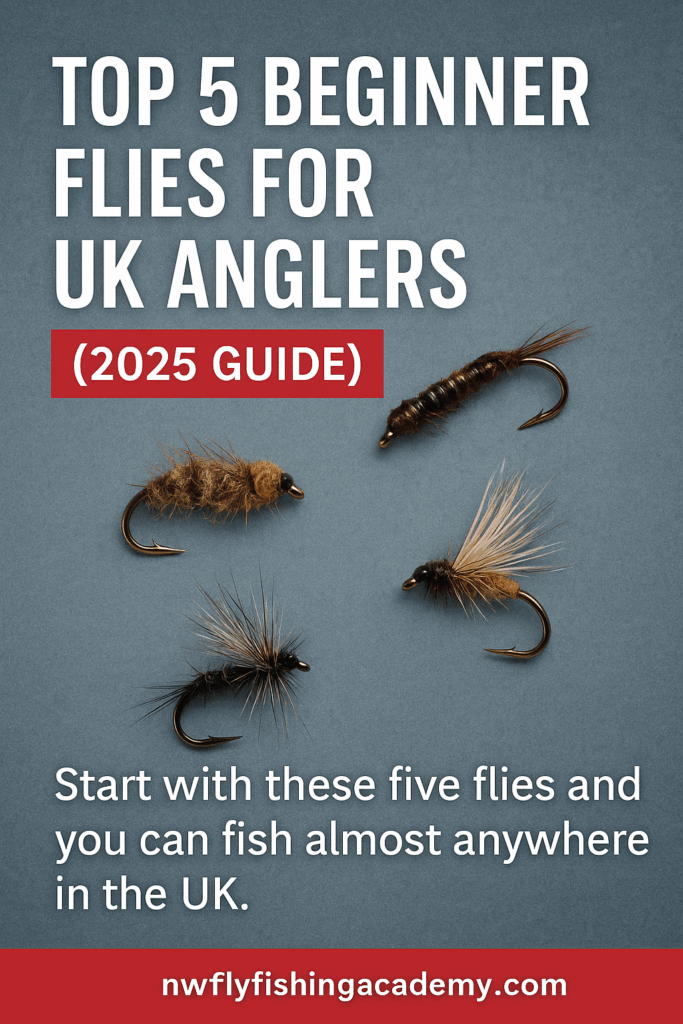
The flies themselves are typically heavier than standard nymphs. Think tungsten beaded patterns that get down quickly in the water column. Hare’s ears, pheasant tails, and various Czech nymph patterns all work brilliantly. The key is having different weights so you can adjust to varying depths and current speeds. I usually fish two flies, sometimes three on bigger water, with the heaviest as the point fly.
Reading the water becomes even more critical with this method. You’re looking for those feeding lanes where trout sit waiting for food to drift past. Runs between faster and slower water, the heads and tails of pools, anywhere the current concentrates food. The technique excels in water between two and six feet deep where you can maintain that crucial contact with your flies.
The takes themselves feel different from traditional nymphing. Sometimes it’s just a slight tightening, other times the sighter dips or moves sideways. You’ll miss plenty at first because it takes time to calibrate what’s a take versus a fly ticking bottom or catching weed. Don’t worry about that. Keep at it and you’ll develop a feel for what’s what.
One thing that surprised me about euro nymphing is how effective it remains even in coloured water. When the rivers push through after rain and conventional dry fly or sight fishing becomes impossible, euro nymphing keeps producing because you’re fishing by feel and getting your flies right in front of the fish.
Here’s something you can try next time out: focus on your sighter and lift the rod tip the moment you see any unnatural movement, even if you’re not sure it’s a take. You’ll be amazed how many fish you’re actually touching that you’d otherwise miss. Set the hook on anything suspicious and you’ll quickly learn to distinguish between rocks, weeds, and the real thing.