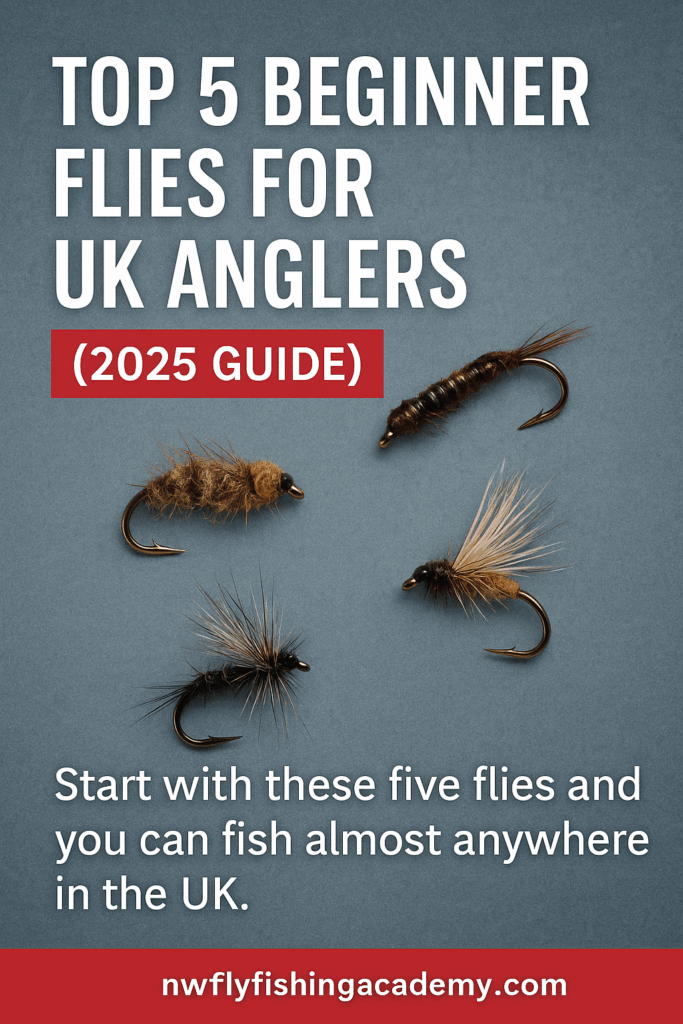
There’s something deeply satisfying about watching a trout sip down your nymph as it drifts past, and upstream nymphing gives you the best chance of making that happen. It’s a method that feels right once you get the hang of it, though I’ll admit my first attempts on a small Yorkshire beck years ago were spectacularly messy. These days, it’s my go-to approach on most of our UK rivers, and for good reason.
The basic principle is simple enough. You’re casting upstream and allowing your nymphs to drift back down towards you with the current. The trout are facing upstream, waiting for food to come to them, and you’re presenting your fly in the most natural way possible. They see the nymph before they see you, which is half the battle won on our typically gin-clear lowland streams.
Getting your presentation right starts with the cast itself. You want to land your nymphs upstream of where you think the fish are holding, giving them time to sink to the right depth before they reach the taking zone. On a typical chalk stream, I’m usually casting about three to five metres upstream, though you’ll adjust this depending on water depth and current speed. A reach cast often helps, mending the line as it lands to get that crucial drag-free drift.
The real skill in upstream nymphing is learning to read what’s happening beneath the surface. Without a dry fly to watch, you’re relying entirely on your indicator or, better still, the behaviour of your fly line and leader. I’ve caught more fish since I started watching my line tip like a hawk. Any twitch, pause, or sideways movement could be a fish, and you need to react instantly. The take can be so subtle it’s almost nothing, just a tiny hesitation in the drift.
Leader setup makes a massive difference. I typically run a nine-foot leader tapered to 5X or 6X for most of our rivers, though I’ll go lighter on the hard-fished waters where the trout have seen every pattern going. Some anglers swear by indicators, and there’s no shame in using them, especially when you’re learning. A small piece of fluorescent wool or a purpose-built strike indicator can really help you spot those subtle takes while you’re developing your water sense.
Weight is another consideration you’ll need to get right. Too heavy and your nymphs are bouncing along the bottom, catching weed and looking unnatural. Too light and they’re not getting down to where the fish are feeding. I carry nymphs in various weights and add split shot to the leader when needed. On a river like the Test or Itchen, you’re often fishing relatively shallow water, so lightly weighted nymphs work perfectly. Get yourself up to a northern spate river after some rain, and you’ll need more weight to get down.
The retrieve is where upstream nymphing differs from other methods. You’re not really retrieving at all in the traditional sense. Instead, you’re constantly gathering line to keep pace with the drifting nymphs. Your line hand should be working steadily, keeping in touch with the flies without creating any drag. Think of it as staying connected rather than pulling. This constant contact is what lets you feel or see those takes.
Positioning yourself correctly matters more than most anglers realise. You want to be low, especially on clear water, and you need to think about where your shadow falls. I’ll often fish from a kneeling position on bright days, and I’m always watching my shadow on the water. Move slowly between casting positions, and give new spots a few minutes before you move on. Trout can be spooky, but they settle down quickly if you’re patient.
For your next session, try this: focus on fishing just one or two nymphs in the top thirty centimetres of water, even when you think fish might be deeper. You’ll be surprised how often trout will move up in the water column for a nymph that’s drifting naturally, and the takes are much easier to spot in that upper layer. Start simple, master the drift, and the rest will follow.