Right, let’s talk about getting yourself sorted with a complete fly fishing setup that actually works for British waters. I’ve seen plenty of newcomers turn up to the river with kit that’s either total overkill or so budget it falls apart after three outings. Getting the balance right matters, especially when you’re fishing our moody chalk streams and temperamental reservoirs.
The backbone of any setup is your rod and reel combination, and for UK fishing you really want to be looking at a 9-foot rod rated for a 5 or 6 weight line. This covers you for most situations, from dry fly work on the Test to stripping lures at Rutland Water. I’ve fished with everything from ultra-premium carbon to cheap as chips glass fibre, and honestly the middle ground serves you best when starting out. You need something with a decent backbone that won’t collapse when you hook into a proper brown trout, but you’re not yet at the stage where you’ll notice the difference between a £300 rod and a £600 one.
The reel matters less than people think for British fishing. We’re not battling bonefish here. What you need is something that holds your line properly, has a smooth drag for when that unexpected rainbow decides to run, and won’t seize up after a wet day on the Usk. I’ve used the same mid-range reel for five seasons now and it’s never let me down. Some anglers obsess over exotic drag systems and machined aluminum, but save that money for your fly line instead.
Speaking of line, this is where you should spend decent money. A cheap line is horrible to cast and creates more problems than it solves. For UK conditions, you want a weight forward floating line in the weight that matches your rod. The difference between bargain line and quality line is night and day when you’re trying to present a size 16 CDC dun into a feeding lane on the Kennet. Good line shoots better, lasts longer, and actually floats properly when the mayfly are up.
Leaders and tippet deserve more attention than most beginners give them. I carry spools ranging from 3X down to 6X, though I spend most of my time using 4X or 5X. British trout can be proper spooky, especially on our clear chalk streams where they’ve seen every fly pattern known to man. A heavy-handed leader setup will have them scattering before your fly even lands. I make up my own tapered leaders these days, but when I started I used shop-bought ones and they did the job fine.
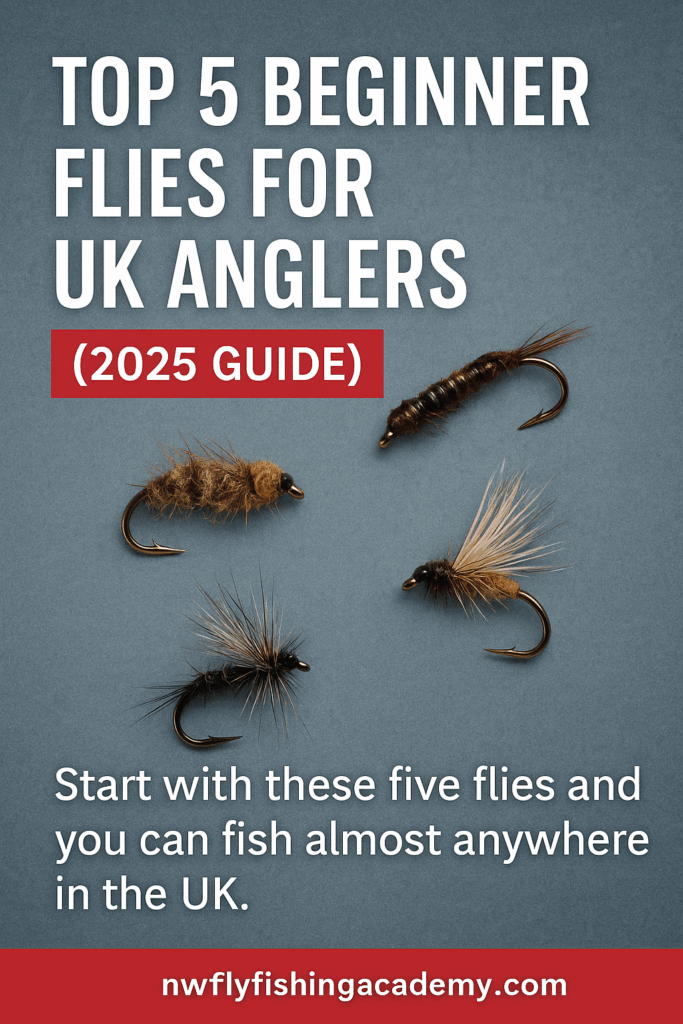
The fly box situation is where things get interesting. You could bankrupt yourself buying every pattern under the sun, but you really only need a core selection to begin with. For dry flies, I’d never hit the water without Adams in various sizes, some CDC patterns for calm days, and a few terrestrials like black ants for summer. Nymphs are essential too, especially on our freestone rivers where most feeding happens subsurface. Pheasant tail nymphs and hare’s ear variants probably account for seventy percent of my nymph caught fish. Then you want some streamers for reservoir work or when the river’s up and coloured.
If you’re looking for a ready-made solution that actually makes sense, this complete fly fishing starter set covers the basics without the nonsense. I’ve recommended similar setups to mates who were starting out and they’ve all got on well with them. The key is having everything you need without loads of expensive extras you won’t use for years.
Waders are non-negotiable for British fly fishing unless you only fish from banks or boats. Our rivers are cold, even in summer, and you need to be able to move into position without freezing your bits off. Breathable chest waders are the standard now, and rightly so. The old neoprene ones made you sweat like a pig on anything above freezing. Get yourself some decent wading boots with proper grip too. Those felt soles are banned on some waters now because of biosecurity, so studded rubber is often your best bet. I’ve had some proper scary moments on slippery rocks before I upgraded my boots.
The accessories list can get silly if you let it, but some bits are actually useful. Forceps for unhooking fish, nippers for cutting tippet, floatant for your dry flies, and some split shot for getting nymphs down. A net helps with landing fish safely and getting them back in good condition. I clip everything to my vest or chest pack so it’s there when I need it. Nothing worse than trying to dig through pockets with cold, wet hands while a fish thrashes about.
Polarised sunglasses make a massive difference. You can spot fish holding in the current, see subsurface structure, and protect your eyes from poorly cast flies (usually your own). The cheap petrol station ones don’t cut it. You need proper polarised lenses, ideally with interchangeable options for bright and overcast days. I’ve spotted some absolute monsters that I’d have walked right past without decent glasses on.
Where you fish dictates some of your kit choices too. Stillwater fishing needs different flies and techniques compared to river work. I mostly fish rivers these days, and the Wye is my local water. The tactics that work there on a wet February morning are worlds apart from what you’d do on a reservoir in July. Build your kit for where you actually fish most often, then expand as you explore different venues.
Related Reading:
The biggest practical tip I can give you is this: get out and fish with what you have rather than endlessly researching the perfect setup. I wasted my first season reading forums and watching videos when I should have been on the water learning. Your casting will improve, you’ll figure out which flies work in your local waters, and you’ll develop preferences based on actual experience rather than marketing blurb. Start with a solid mid-range complete kit and upgrade individual pieces as you understand what you actually need.