The patterns that actually work when the rivers wake up
The River Is Open. Are Your Flies Right?
Every spring, anglers dust off their rods, head to the river with confidence, and blank.
Not because they can’t fish. Because they’re using the wrong flies.
The tungsten nymphs that caught grayling all winter won’t work on trout rising to a March Brown in April. Spring fish are feeding differently, sitting in different places, and responding to completely different patterns.
Here’s the truth: a small box of the right spring flies will outfish a large box of the wrong ones every single time. This guide tells you exactly what to carry, when to use it, and why it works.
Affiliate Disclosure: This article contains Amazon affiliate links. As an Amazon Associate I earn from qualifying purchases at no extra cost to you.
| My Top Pick for Spring Fly Fishing
If you only buy one thing before the season starts, make it a quality mixed olive and nymph selection in a waterproof fly box. The Hare’s Ear and Large Dark Olive between them cover the majority of spring situations on UK rivers. Fly Tying Starter Kit: https://amzn.to/433ZbwH Waterproof Fly Box: https://amzn.to/4okVASO Soft Hackle Pack: https://amzn.to/4om4T54 |
Why Spring Changes How You Fish
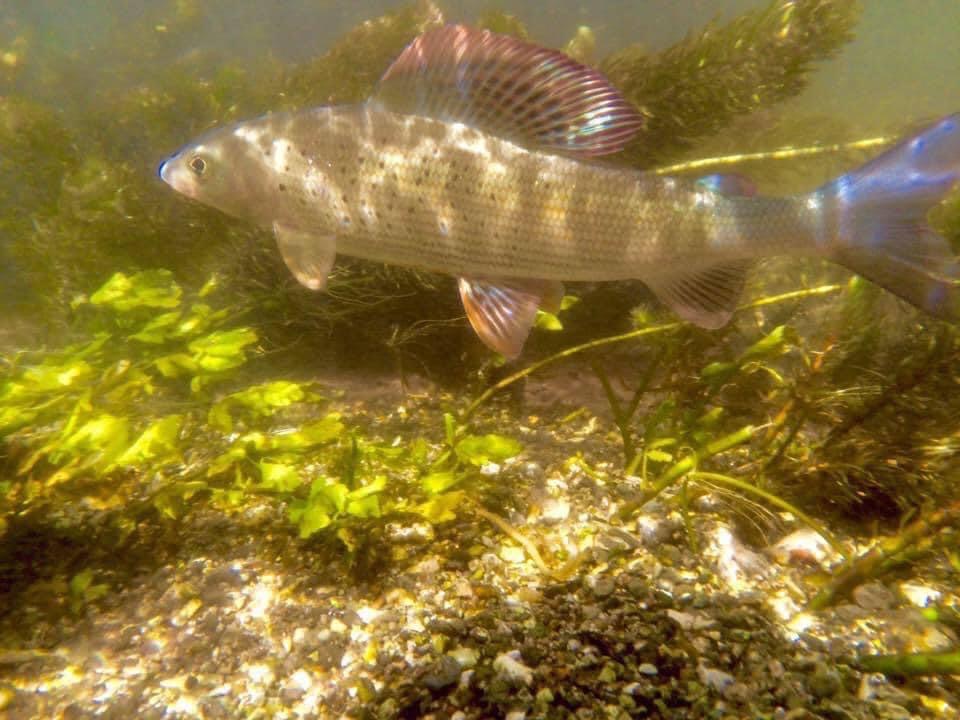
In winter, you’re working hard for fish. Cold water slows everything down. Grayling sit deep. Takes are subtle. You’re fishing weighted nymphs slowly along the riverbed, staying focused for hours on end.
Spring switches that off. Water temperatures rise past 7-8 degrees, insects start hatching properly, and trout move out of deep winter lies into shallower feeding lies. They’re actively looking for food.
The hatch becomes your biggest asset. When insects emerge at the surface, fish come up to eat them. That’s your window. The angler who knows what’s hatching, and has the right pattern, catches fish. Everyone else watches.
| Water temperature guide:
Below 7C: fish in winter mode, nymph deep and slow 7-10C: fish becoming active, nymphs and wet flies working Above 10C: fish feeding confidently, dry fly increasingly effective |
Spring Hatch Calendar: What’s on the Water Month by Month
| Month | What’s Hatching and What Works |
|---|---|
| March | Large Dark Olives, early midges, March Browns on upland rivers. Fish still cautious. Nymphs under the surface dominate. Occasional dry fly on warm afternoons. |
| April | Olive hatches strengthen. Grannom caddis in huge numbers. Iron Blue Dun on cold days. Fish feeding actively. Nymph and dry both working depending on conditions. |
| May | Hawthorn fly, BWO evenings, Olive hatches peaking. Dry fly becomes your primary method on clear days. The season is properly underway. |
| Late May | Mayfly hatch begins. Trout abandon caution entirely. The best dry fly fishing of the year. Prioritise being on the river over everything else. |
The 8 Best Spring Flies for UK Rivers
1. Large Dark Olive — The Fly That Starts It All
Here’s the thing about the Large Dark Olive: it’s the first proper hatch of the year, and it triggers fish that haven’t risen to a dry fly since October.
LDOs emerge on overcast days with a light upstream wind, from mid-March onwards. They’re not glamorous. They’re not dramatic. But when they’re hatching, trout sip them with a quiet, confident rhythm that makes your heart rate go up.
Fish the emerger pattern first — half-submerged in the surface film — rather than the fully dressed dry. In cold spring water, trout take the emerging insect far more readily than the adult sitting on top.
- Hook size: 14-16
- Best as: Emerger or dry fly
- Conditions: Overcast, mild, slight upstream breeze
- When: Mid-March through April
2. March Brown — Fish Talk About This Hatch for Weeks
If you’ve ever been on a northern or Welsh river in early April when the March Brown is hatching, you understand why anglers plan their seasons around it.
It’s a big fly by UK standards. Trout eat it with complete conviction. The hatch typically fires between 11am and 2pm on bright spring days, and it produces some of the most aggressive surface feeding you’ll see all year from fish that have been maddeningly difficult since autumn.
The wet fly and spider versions work just as well as the dry on fast water. Don’t limit yourself to floating patterns if the river is pushing hard.
- Hook size: 12-14
- Best as: Dry fly, wet fly, or spider pattern
- Rivers: Northern England, Wales, Scotland
- When: March to April on freestone and upland rivers
3. Hare’s Ear Nymph — The Spring Workhorse
Not everything in spring is about the surface. For the first few weeks of the season, most feeding still happens subsurface. The Hare’s Ear nymph is the most reliable pattern for this — and honestly, it belongs in every box from March through October.
A size 14 Hare’s Ear on a light tippet, fished on a slow drift through a pool, will catch trout on almost every UK river. It’s not exciting. It works.
| Pros | Cons |
|---|---|
|
|
Who this is for: every spring angler, full stop. If you carry nothing else, carry this.
Who should skip it: nobody. There is no scenario where a Hare’s Ear is the wrong call.
| Soft Hackle Pack (includes Hare’s Ear variants): https://amzn.to/4om4T54 |
4. Grannom Caddis — April’s Chaos Fly
The Grannom hatch in April is one of the most dramatic events in UK spring fishing. It can hatch in such numbers that the air above the river looks like smoke. Trout that have been finicky for weeks suddenly lose all caution.
When you see grey-green flies carpeting the surface and fish rising openly in water they’d normally avoid, you’re in a Grannom hatch. Tie one on. Fish it dead drift. The takes are often savage.
- Hook size: 14-16
- Best as: Dry fly or pupa
- When: April, typically midday
- Tip: Carry both the dry and pupa version — fish sometimes prefer the emerging insect
5. Iron Blue Dun — The Cold Day Secret
Here’s a pattern most beginners never carry and experienced anglers swear by.
The Iron Blue hatches on cold, blustery spring days — when the weather is miserable enough that you’re not sure it’s worth being out. Exactly those conditions seem to trigger it. Trout respond eagerly to the small dark profile when other hatches have packed up.
If you’re ever on the river in late March in bleak conditions and wondering if anything is happening, look for tiny dark flies. If they’re on the water, an Iron Blue will often save your day.
- Hook size: 16-18
- Best as: Dry fly or emerger
- When: Cold blustery days, March to May
6. Pheasant Tail Nymph — Frank Sawyer’s Gift to Spring Fishing
Frank Sawyer tied the original Pheasant Tail on the River Avon, and it’s been catching UK trout on spring rivers ever since. Where the Hare’s Ear is general, the Pheasant Tail is more specific — it’s a close imitation of the nymph stage of most UK upwing flies.
Fish it slowly just below the surface during an olive hatch. Watch your leader for the slightest check. The take is often so subtle you’ll miss it the first dozen times.
- Hook size: 14-16
- Best as: Nymph in the surface film
- When: During active olive hatches
- Works especially well on: Chalk streams and limestone rivers
| Fly Tying Starter Kit — tie your own Pheasant Tails and save money across the season: https://amzn.to/433ZbwH |
7. Hawthorn Fly — The Two-Week Window You Can’t Miss
The Hawthorn fly is a terrestrial. It doesn’t hatch from the river. It blows in from hedgerows and trees, timed almost perfectly with hawthorn blossom in May.
For two or three weeks, trout abandon their usual wariness and intercept these large black flies confidently. The key detail is the long trailing legs. Without them, your imitation won’t work half as well. When you tie on a size 10 Hawthorn and a trout comes from two metres away to eat it, you’ll understand why people specifically plan their season around this hatch.
- Hook size: 10-12
- Critical feature: Long knotted legs trailing below the hook
- When: Two to three weeks in May — watch the hawthorn blossom
- Where: Any river with bankside hedgerows and trees
8. Blue Winged Olive — The Evening Rise Fly
The BWO is an evening fly. It appears as the light drops in May and June, triggering the evening rise — that golden 45 minutes before dark when trout feed so reliably that even beginners catch fish.
Stay on the river late in May. Tie on a BWO dry as the sun drops below the treeline. Watch the tails of pools. Position yourself downstream of rising fish. The evening rise is one of the most reliably wonderful experiences in UK fly fishing, and this fly is the key to it.
- Hook size: 14-16
- Best as: Dry fly or emerger
- When: May to July evenings, from around 7pm
- Presentation: Fine tippet, delicate dead drift, be patient
Spring Fly Comparison Table
| Pattern | Best Conditions / Method / Hook Size |
|---|---|
| Large Dark Olive | Overcast mild days, mid-March. Dry or emerger. Size 14-16. |
| March Brown | Bright spring days, upland rivers. Dry, wet or spider. Size 12-14. |
| Hare’s Ear Nymph | Any conditions, all season. Nymph. Size 12-16. |
| Grannom Caddis | April midday hatches. Dry or pupa. Size 14-16. |
| Iron Blue Dun | Cold blustery days. Dry or emerger. Size 16-18. |
| Pheasant Tail Nymph | Olive hatches, surface film. Nymph. Size 14-16. |
| Hawthorn Fly | May, bankside vegetation. Dry dead drift. Size 10-12. |
| Blue Winged Olive | May to July evenings. Dry or emerger. Size 14-16. |
Who This Guide Is For
| This guide is for you if… | This guide is less relevant if… |
|---|---|
| You’re fishing UK rivers for trout or grayling from March onwards | You’re primarily a stillwater angler — different hatches, different approach |
| You’ve been nymphing all winter and want to adapt for spring | You fish catch-and-release stocked fisheries where pattern matters less |
| You want to understand what’s actually hatching and why | You already have a strong spring box and know your local hatches well |
Final Decision Summary — What to Actually Buy
Here’s how to think about this practically.
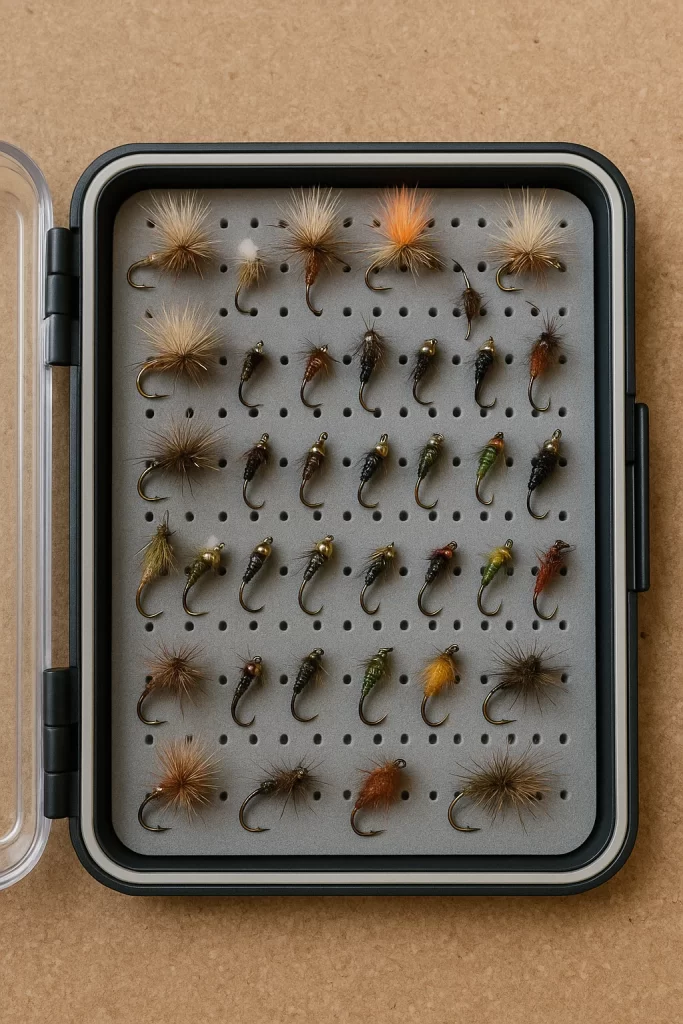
If you’re starting from scratch: the Fly Tying Starter Kit gives you materials to tie Hare’s Ears, Pheasant Tails, and simple olives at a fraction of the cost of buying individual flies. Pair it with a waterproof fly box and you’re set for the season.
If you want ready-tied flies: the Soft Hackle Pack covers a range of patterns that work across multiple hatches. Add a small selection of dry flies (LDO, BWO, March Brown) from a local tackle shop.
Either way, store them properly. A waterproof box keeps your flies in good condition and means you’re not scrabbling through a damp mess when a fish starts rising.
| Spring fly fishing kit — what to buy:
Fly Tying Starter Kit: https://amzn.to/433ZbwH Waterproof Fly Box: https://amzn.to/4okVASO Soft Hackle Pack: https://amzn.to/4om4T54 Polarised Sunglasses (essential for spotting rises): https://amzn.to/495KRr4 |
What to Do Next
You’ve read the guide. Here’s what to actually do with it.
- Check the date. If you’re reading this in March, start with the LDO and Hare’s Ear. April, add the Grannom and March Brown. May, the Hawthorn and BWO.
- Check your tippet. If you’re still on 4lb or 5lb from winter nymphing, buy 3lb and 2lb fluorocarbon before your next dry fly session. The difference in takes is significant.
- Watch the water. Spend 10 minutes observing before you cast. Where are fish rising? What’s hatching? That 10 minutes is worth more than the first hour of blind fishing.
- Arrive at 10am, not 7am. Spring hatches peak midday, not dawn. Have breakfast, take your time, be on the water by 10.
The Season Is Starting
Spring fly fishing in the UK is genuinely one of the best experiences the sport offers. The fish are hungry. The hatches are beginning. The rivers are waking up.
You’ve now got the pattern knowledge to make the most of it. Trust the guide, watch the water, and go fishing.
For more on technique and approach, read our full spring tactics guide — or if you want to know exactly which rod to use for spring rivers, the rods guide has everything you need.
- Spring Fly Fishing Tips UK: Coming soon
- Best Fly Fishing Rods UK: https://nwflyfishingacademy.com/best-winter-fly-fishing-rods-uk/
- Best Dry Flies UK for Spring Trout: Coming soon
- How to Read a River UK: https://nwflyfishingacademy.com/how-to-read-a-river-like-a-pro-finding-trout-and-grayling-in-any-flow/