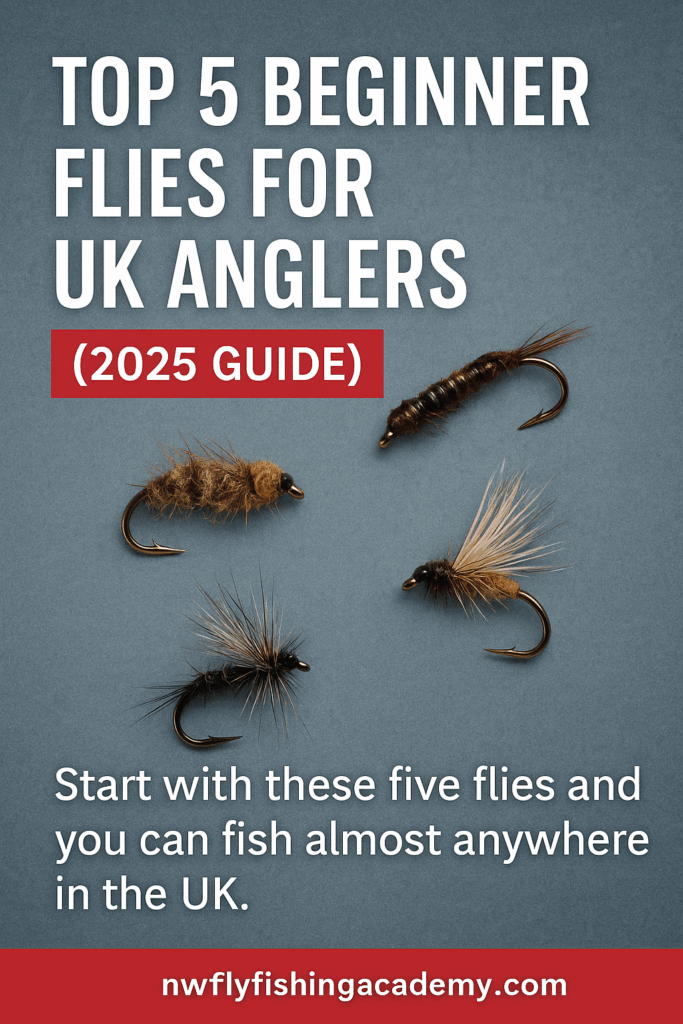
I spent most of my early years on the river stubbornly casting dry flies, even when there wasn’t a rise in sight. There’s something pure about watching a trout rise to a floating fly that kept me committed to the dry, come hell or high water. But I was leaving a lot of fish uncaught, and eventually I had to admit that my pride was getting in the way of catching trout.
The reality is that trout spend about ninety percent of their feeding time below the surface. On most UK rivers, especially our freestone streams and chalk streams outside of peak mayfly season, the majority of food drifts past at nymph level. That’s not to say dry fly fishing is ineffective, but understanding when to use each method makes all the difference between a blank day and a memorable one.
Dry fly fishing shines during hatches, naturally. Those magical summer evenings when olives are popping off the water and trout are slashing at anything that floats are what we live for. But even when there’s no obvious hatch, fish will often take a well-presented dry fly during the warmer months. I’ve had some brilliant days in May and June fishing a general dry pattern like a Grey Wulff or Adams through likely looking water, prospecting for fish that are willing to come up.
The challenge with dry fly fishing is that it requires near-perfect presentation. Drag is your enemy, and on our often fiddly UK streams with their overhanging trees and tricky currents, getting a drag-free drift can be like trying to thread a needle wearing boxing gloves. You also need the fish to be in a taking mood. If the water’s cold, heavily coloured, or there’s simply no surface activity, you can cast the perfect dry fly all day and still go home empty-handed.
Nymph fishing opens up a different world. Suddenly you’re targeting fish that aren’t showing, fishing through the deeper runs and pools that dry fly anglers walk past. The Czech nymphing techniques that have become popular in the UK are deadly effective, particularly on our northern rivers and Welsh streams where grayling and trout hold in faster water. Even on the southern chalk streams, a simple duo rig with a couple of nymphs under an indicator will often outfish a dry when there’s no rise.
The trade-off is that nymphing loses some of that visual excitement. You’re watching a leader or indicator rather than the fly itself, interpreting subtle movements to detect takes. Some people find it less engaging, though I’d argue that once you get tuned in to reading the signs, it’s just as involving. Plus, there’s still plenty of satisfaction in setting the hook and feeling a good fish on the other end.
I’ve found that carrying both options and being willing to switch between them has transformed my fishing. Start with a dry fly if there’s any surface activity or if conditions look promising. If nothing’s happening after twenty minutes, tie on a nymph rig and work through the water more systematically. I keep a selection of tungsten beaded nymphs in my box for getting down quickly in faster water, along with lighter wire versions for when fish are feeding just below the surface.
The best days are when you can combine both approaches. Fish a dry fly through a promising run, then switch to nymphs for the deeper pocket water, then back to the dry when you spot a riser. Being adaptable matters more than being a purist, at least if you want to catch fish consistently on our rivers.
Weather plays a huge part too. Bright, warm days with good insect activity favour the dry fly. Overcast conditions, especially with a bit of colour in the water after rain, often fish better with nymphs. Early and late season, when water temperatures are lower and hatches are sparse, nymphing will typically give you more chances.
Here’s something to try next time out: fish a dry fly with a lightweight nymph tied on a dropper about three feet below it. You get the visual appeal of watching the dry fly, which also acts as your indicator, while the nymph fishes the zone where most trout are feeding. It’s a brilliant compromise that accounts for well over half my caught fish these days.