I still remember my first proper day on the River Test, standing waist-deep in water that looked about as promising as a puddle, watching a bloke upstream landing his third trout while I’d barely managed to get my fly wet without tangling the line round my neck. If you’re just starting out with fly fishing in the UK, you’re probably feeling a bit like that version of me. The good news is that it genuinely does get easier, and you don’t need to spend years working it out the hard way.
The biggest mistake most beginners make is trying to cast like they’ve seen in the films. You know the ones, where someone’s whipping fifty feet of line through the air like they’re conducting an orchestra. Forget all that. Your first dozen sessions should be about getting comfortable with twenty feet of line, maximum. Find a quiet stretch of your local river or a still water where nobody’s watching, and practice the basic overhead cast until it feels natural. The motion isn’t about power. It’s about timing and letting the rod do the work. Think of it like flicking paint off a brush, not like you’re trying to throw a cricket ball into the next county.
When it comes to kit, the industry will happily sell you all sorts of expensive gear that you absolutely don’t need yet. A decent mid-range rod and reel setup will see you through your first season and probably your second. I started with a nine-foot five-weight rod, which is pretty much the standard for UK river fishing, and I still use it now when I’m after trout on smaller streams. What matters more than having top-shelf equipment is understanding how to use what you’ve got.
One thing that will make your life infinitely easier is getting a proper fly fishing vest or chest pack to keep your bits organized. There’s nothing worse than standing in the middle of a river, fish rising all around you, while you’re fumbling through your pockets trying to find the right fly or a spare length of tippet. Keep your gear accessible and you’ll spend more time actually fishing.
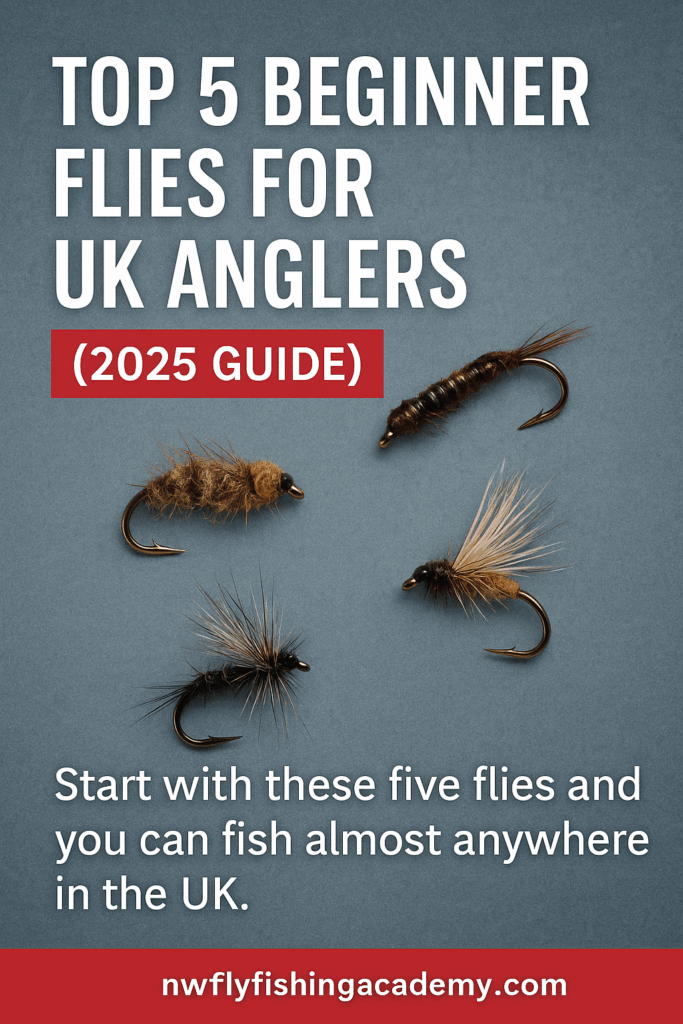
Let’s talk about flies, because this is where it gets properly confusing at first. Walk into any tackle shop and you’ll see hundreds of patterns, all with daft names that sound like they were invented down the pub. The truth is, for UK rivers and lakes, you can get through most situations with a handful of basic patterns. Start with some simple dry flies like the Adams or a Grey Duster for when fish are feeding on the surface. Add a few nymphs such as the Pheasant Tail and Hare’s Ear for fishing deeper. A couple of streamers won’t go amiss if you fancy trying for something bigger. That’s honestly enough to get you started. You can spend the rest of your life collecting obscure patterns later.
Reading the water is something that takes time but makes an enormous difference. You’re not just looking for any old spot to chuck your fly. Watch for rises, those little dimples on the surface where fish are feeding. Look for areas where the current changes speed or direction. Trout particularly love sitting where faster water meets slower water, because that’s where food gets delivered to them without much effort on their part. They’re lazy, basically, just like the rest of us. Overhanging trees and undercut banks are worth investigating too, especially on bright days when fish want a bit of shade.
The relationship between you and the fish is all about the tippet, that final thin length of line between your fly line and the fly itself. Beginners often use tippet that’s too thick because they’re worried about breaking off. The problem is that thick tippet is visible to the fish and doesn’t let your fly move naturally. Yes, you’ll lose a few flies while you’re learning. That’s just part of it. Better to lose the occasional fly than to spend all day casting to fish that can see your setup coming from a mile away.
Presentation matters more than having the perfect fly. I’ve watched absolute beginners catch fish on flies that barely resembled anything in nature, simply because they presented them well. The fly needs to land softly on the water and drift naturally with the current. If it’s dragging across the surface in a way that nothing edible would actually move, the fish aren’t interested. This means managing your line and being thoughtful about where you’re standing in relation to where you’re casting. Sometimes you need to wade carefully into position, other times you’re better off staying on the bank.
Weather conditions affect everything in fly fishing. Overcast days are often better than bright sunny ones because fish feel more confident about feeding when there’s cloud cover. A bit of ripple on the surface of a lake helps hide your line and leader. Light rain can be brilliant for fishing, though I’ll admit that standing in a river during a proper downpour loses its charm after a while. Pay attention to hatches as well. When insects are emerging and fish are actively feeding, that’s your time. Everything else can wait.
The learning curve in fly fishing is steep at first, then it levels off, then you realize there’s always something new to figure out. Don’t get discouraged when things go wrong. Everyone who fly fishes has days where nothing works. The bloke who looks like he knows exactly what he’s doing has probably had more terrible days than you’ve had total days on the water.
Related Reading:
Here’s something practical for your next session: before you even think about fishing, spend fifteen minutes just watching the water. See where fish are rising, notice how the current moves, look for insect activity. Most beginners rush straight into casting and miss half of what’s happening. Those fifteen minutes of observation will tell you more about where and how to fish than an hour of blind casting ever will.