Right, so you’ve watched a few videos on YouTube, maybe seen someone casting on your local river, and now you fancy giving this fly fishing lark a go. Good choice. But walking into a tackle shop or browsing online can feel like stepping into a foreign language class where everyone’s already fluent and you don’t even know the alphabet yet.
The thing about fly fishing is that it looks far more complicated than it actually is. Yes, there’s gear involved. Yes, there’s technique to learn. But honestly, you don’t need to remortgage the house or spend six months reading manuals before you wet a line. What you need is a sensible setup that won’t let you down and won’t make you feel like you’ve wasted your money if you decide it’s not for you.
Let’s start with the rod. For UK fishing, especially if you’re planning to fish our rivers and streams for trout, you want a 9-foot rod rated for a 5-weight line. This is the Goldilocks setup for British waters. It’ll handle most situations you’ll encounter, from small moorland becks to bigger chalk streams. Some people will tell you to go lighter, maybe a 3-weight, for delicate presentations. Ignore them for now. A 5-weight is forgiving enough to learn with and powerful enough to actually land fish when you hook them.
Now, there are rod and reel combos out there that give you everything matched up from the factory. These can be brilliant for beginners because someone’s already done the thinking for you. You’re not trying to figure out if your reel balances with your rod or if your line matches the rod weight. It’s all sorted. The Piscifun Fly Fishing Rod and Reel Combo has served plenty of beginners well and won’t empty your wallet before you’ve even started.
Your reel doesn’t need to be fancy when you’re starting out. Trout in UK rivers aren’t going to strip 50 yards of line off in blistering runs like a bonefish on a flat. Your reel is basically just a place to store your line. It needs to hold your fly line plus backing, have a drag system that’s smooth enough not to snap your tippet, and not fall apart after three outings. That’s genuinely all you need at this stage.
The fly line is where things get interesting because this is what you’re actually casting. The line has weight, unlike conventional fishing where you’re casting the weight of a lure or lead. Your rod flexes, loads up, and propels this weighted line through the air. The fly just goes along for the ride. For UK fishing, you want a weight-forward floating line. Don’t overthink this bit. Weight-forward means the business end of the line is heavier, which helps with casting. Floating means it stays on the surface, which is where you want it for the dry fly and nymph fishing you’ll likely be doing.
Then there’s the leader and tippet situation, which confuses everyone at first. Your fly line is thick and visible. You can’t tie your tiny size 16 fly directly to it because fish aren’t stupid and a great thick line attached to a delicate insect imitation looks wrong. The leader is a tapered length of clear monofilament or fluorocarbon that goes between your fly line and your fly. It tapers from thick to thin. The thin end is where you tie on your tippet, which is just a length of finer material that you tie your fly to.
Most leaders come pre-tapered and about 9 feet long. Buy a couple of those and a spool or two of tippet in 4X and 5X. The X rating is just thickness. Higher numbers are thinner. You’ll replace your tippet regularly as you change flies and it gets shorter, but the leader lasts longer. Keep it simple and don’t get sucked into debates about fluorocarbon versus monofilament just yet. Either will catch you fish.
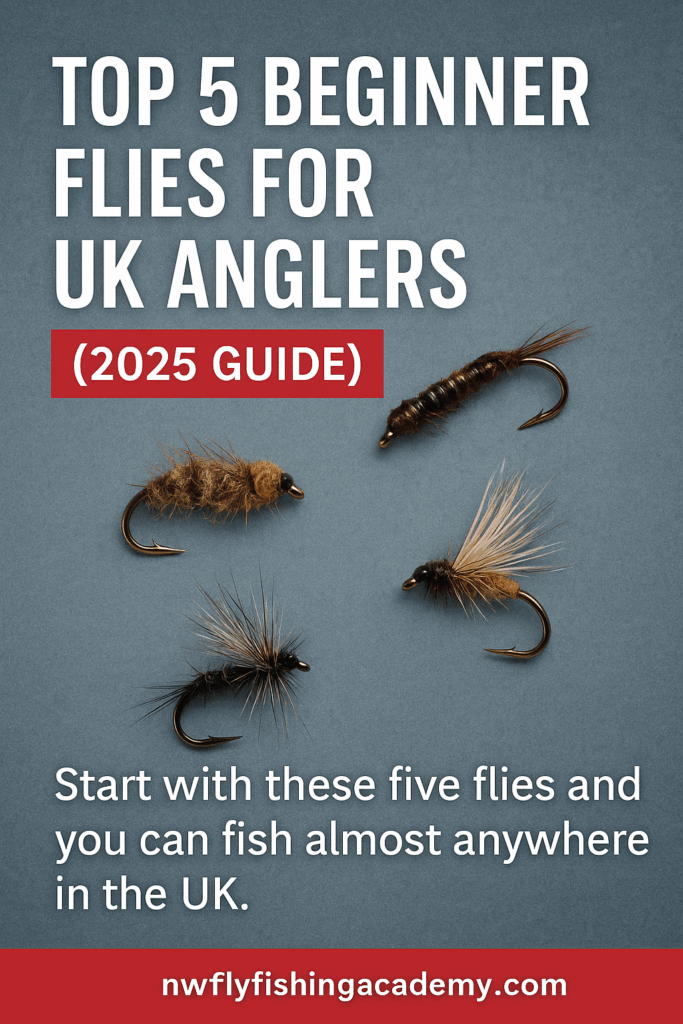
For flies, you need a basic selection but not the entire contents of the tackle shop. Get yourself a few dry flies like Adams, Elk Hair Caddis, and maybe some Klinkhammers. Add some nymphs such as Pheasant Tail, Hare’s Ear, and Copper Johns. Perhaps throw in a couple of small streamers. Size 12 to 16 is the sweet spot for most UK trout fishing. A basic fly box with 20 or so flies will see you through plenty of sessions while you figure out what actually works on your local water.
You’ll need a few other bits. Nippers or small scissors for cutting line. Forceps or a hemostat for removing hooks from fish. Polarized sunglasses so you can actually see into the water and spot fish. A hat because you’ll hook yourself in the head at least once, trust me. Some floatant to keep your dry flies sitting on the surface. Maybe some split shot or putty for getting nymphs down deeper.
Clothing depends on the time of year, but chest waders are brilliant for UK fishing because our rivers are cold and you’ll want to get in the water. Breathable ones are worth the extra money if you can stretch to them. You’ll also want a wading jacket with pockets for all your bits and pieces.
The whole setup shouldn’t need to cost you more than a decent weekend away. You can absolutely spend thousands on this sport, and some people do, but you can also get started properly for a few hundred quid. The fish don’t know if your rod cost £100 or £1000. They care about whether your fly looks like food and whether you’ve presented it naturally.
Once you’ve got your kit, the real learning begins on the water. YouTube videos help with casting basics, but nothing replaces actual time on a riverbank. Join a local club if there’s one nearby. Most are welcoming to beginners and the knowledge you’ll pick up from other anglers is priceless.
Related Reading:
Here’s something practical you can do on your next session: spend the first 15 minutes just watching the water before you even string up your rod. Look for rises, observe what insects are about, see where fish might be holding. That quarter hour of observation will tell you more about what to fish and where to cast than an hour of blind fishing ever will.