The practical knowledge that separates consistent anglers from hopeful ones
You’re Doing Everything Right. So Why Aren’t You Catching?
You’re on a good river. You’ve got a box of flies. You’re casting well enough. The conditions look fine.
But the fish aren’t cooperating.
This is the experience of most UK anglers in the first weeks of the spring season. Not because they’re doing anything dramatically wrong, but because spring trout behave differently to what most people expect. They’re in different lies. They’re eating different things. They’re responding to different approaches.
The gap between the angler who catches consistently in spring and the one who doesn’t isn’t skill. It’s knowledge. Specifically, knowing half a dozen things about spring fish behaviour that experienced anglers take for granted. This guide covers those things directly.
Affiliate Disclosure: This article contains Amazon affiliate links. As an Amazon Associate I earn from qualifying purchases at no extra cost to you.
| Quick Kit Check. Are You Set Up for Spring?
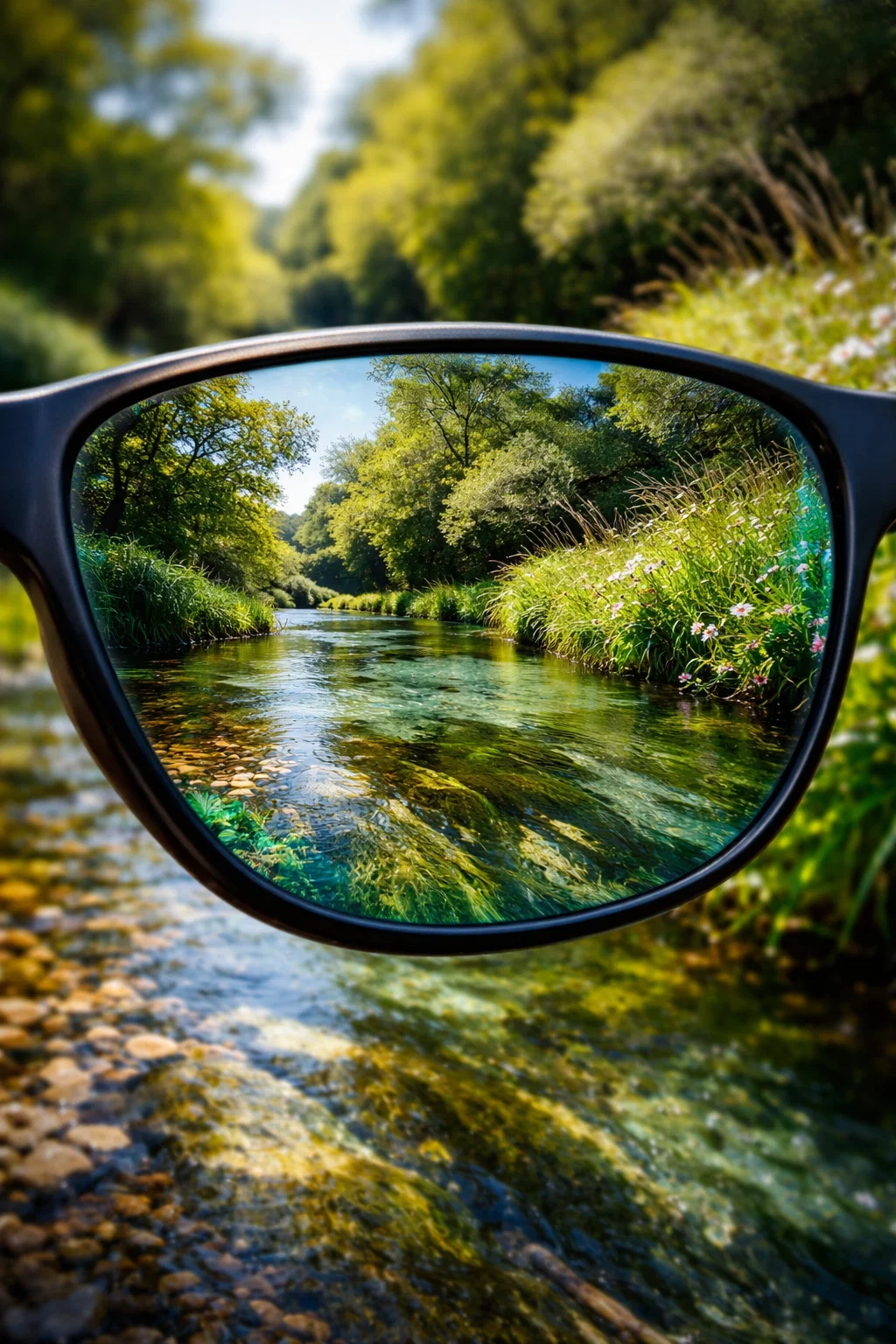
The two things that make the most difference to spring catch rates are polarised sunglasses (to spot rises and fish) and fine tippet (2-3lb for dry fly work). Both cost less than a day ticket. Polarised Sunglasses: https://amzn.to/4sN7HLn Fly Rod Combo (if you need an upgrade): https://amzn.to/3PEEraF |
Why Spring Trout Behave Differently
Trout are cold-blooded. Their metabolism is tied directly to water temperature. In winter, cold water slows everything down, they feed sparingly, hold in deep slow lies, and move as little as possible.
As water temperatures rise through March and April, something changes. Metabolism accelerates. Insects start hatching. Trout move from deep winter lies into shallower feeding lies. They start actively searching for food rather than waiting for it to come to them.
This transition happens gradually, week by week. Understanding where the fish are in that transition tells you almost everything about how to approach the session.
| Water Temperature | What’s Happening and How to Fish |
|---|---|
| Below 7C | Fish in winter mode. Deep and slow. Nymph along the riverbed. Don’t expect surface action. |
| 7-10C | Fish becoming active. Moving to feeding lies. Nymphs and wet flies working well. |
| 10-13C | Feeding confidently. Hatches starting properly. Nymph and dry both effective. |
| Above 13C | Full spring mode. Surface feeding during hatches. Dry fly your primary method. |
10 Spring Fly Fishing Tips That Actually Make a Difference
1. Arrive Later Than You Think You Should
This is the mistake that costs anglers the most fish in spring.
Summer fishing rewards early starts. Spring doesn’t. The water is still cold in the morning. Hatches don’t begin until the sun has warmed things up. Fish that are active and feeding midday are locked in deep slow lies at 7am.
Arrive at 10am. Be properly set up by 10:30. Fish from 11am through to 2 or 3pm. That’s when the hatches peak and the fish feed. The early morning on a cold spring river is beautiful to look at, but there are better uses of your time.
2. Spend 10 Minutes Watching Before You Cast
The single most effective thing you can do to improve your spring catch rate costs nothing and requires no skill.
Stand back from the river. Watch the surface. Look for rises. Note where insects are hatching. Identify which runs and pools hold feeding fish. Plan your approach before you touch your rod.
Most anglers wade straight in and start casting. By the time they’ve covered water for 20 minutes, they’ve spooked half the fish they could have caught. The angler who watches first knows where the fish are and approaches them specifically.
| Watch the water, not your fly box.
The river tells you what you need if you pay attention. 10 minutes of observation is worth more than an hour of blind fishing. |
3. Check the Water Temperature
A small digital thermometer is one of the most useful tools a spring angler can carry. It costs a few pounds and tells you more about what the fish are doing than any amount of looking at the water.
Check it when you arrive and again after an hour. If the temperature is rising through the morning, you’re in for improving fishing as the day goes on. If it’s stable and cold, you’re in nymph territory. If it’s already past 10 degrees, get a dry fly ready.
| Digital Fishing Scale and Thermometer: https://amzn.to/41pNvmq |
4. Fish the Edges and Margins
In winter, trout hold in the deepest channels. In spring, as hatches begin, they move to the edges.
The shallow margins. The crease between fast and slow water. The bank-side slacks where emergers collect before they can fly. These are far easier lies to approach and present a fly to accurately than mid-river positions.
If you’ve been wading mid-river and not finding fish, wade out and fish the margins from the bank. In April and May, trout often feed within a metre of the bank in calm conditions. Walk softly. Fish quietly.
5. Use Lighter Tippet for Dry Fly Work
Spring rivers are often low and clear after winter. Tippet visibility is a genuine problem that costs takes.
If you’ve been fishing 4lb or 5lb fluorocarbon all winter for nymphing, drop to 3lb for dry fly work. On pressured chalk streams and clear limestone rivers, 2lb or 2.5lb is standard practice among experienced anglers. Yes, you’ll lose a fish occasionally. The increase in takes more than compensates.
Keep the heavier tippet for nymphing in fast or coloured water. Match the tippet to the water clarity and the method.
6. Match the Hatch Simply
Matching the hatch doesn’t require entomology. It requires three observations: size, general colour, and whether the fly is on the surface or emerging from it.
Small and olive in April covers most situations. Slightly larger and darker in March. Large caddis patterns from April onwards when you see grey-green flies on the water. Hawthorn in May when large black flies are blowing onto the surface.
If nothing’s hatching and fish aren’t rising, fish a nymph. When fish start rising, switch to dry. That’s the whole decision framework.
7. Fix Drag Before Changing Fly
Drag is the unnatural pulling of your fly across the surface caused by different current speeds acting on different sections of your fly line. A dragging fly gets refused. Every time.
The fix is a mend: immediately after your fly lands, flick a loop of line upstream with the rod tip. This gives your fly a few extra seconds of natural drift before the current takes control.
Before you change your pattern, ask yourself honestly whether the fly was dragging. If you’re not certain it wasn’t, it probably was.
8. Move Upstream Steadily Rather Than Staying in One Spot
Spring trout are not evenly distributed. They cluster in specific lies: the tail of pools, shallow gravel runs that warm first, the edges of early weed growth.
Cover water. Move upstream steadily, give each likely lie two or three presentations, then move on. The angler who covers 400 metres of river finds more fish than the one who fishes the same pool for two hours waiting for something to happen.
The exception is when you’ve located a specific rising fish. Then stay, observe, and be patient.
9. Approach Rising Fish From Downstream
Trout face into the current. Approaching from downstream puts you behind their field of vision. Your fly arrives before your presence does.
On clear spring rivers, this matters enormously. A trout that sees you before you’ve cast over it is a trout that has stopped rising. Walk parallel to the bank until you’re level with the fish or slightly downstream. Stay low. Move slowly. Cast upstream.
10. Keep a Simple Fishing Journal
This is the tip that costs nothing and pays back compounding returns over years.
After each session: note the date, water temperature, time of hatches, which patterns worked and which didn’t, where fish were holding. After two springs of this, you’ll have a picture of your local river that most anglers spend a decade building by accident.
The angler who wrote down that Pool 4 always produces a rise between noon and 1pm on overcast April days has a repeatable advantage. Build that database for your own rivers.
Quick Gear Check for Spring
| Item | What You Need and Why |
|---|---|
| Rod | 9ft 4wt or 10ft 3wt for most UK rivers. Light enough to feel the dry fly cast. https://amzn.to/4bK8zsP |
| Polarised Sunglasses | Non-negotiable. You cannot spot rises or fish without them. https://amzn.to/3NWY7Gj |
| Tippet | 3lb and 2lb fluorocarbon for dry fly. 4lb for nymphing. Fine tippet catches more spring fish. https://amzn.to/3NxsjI1 |
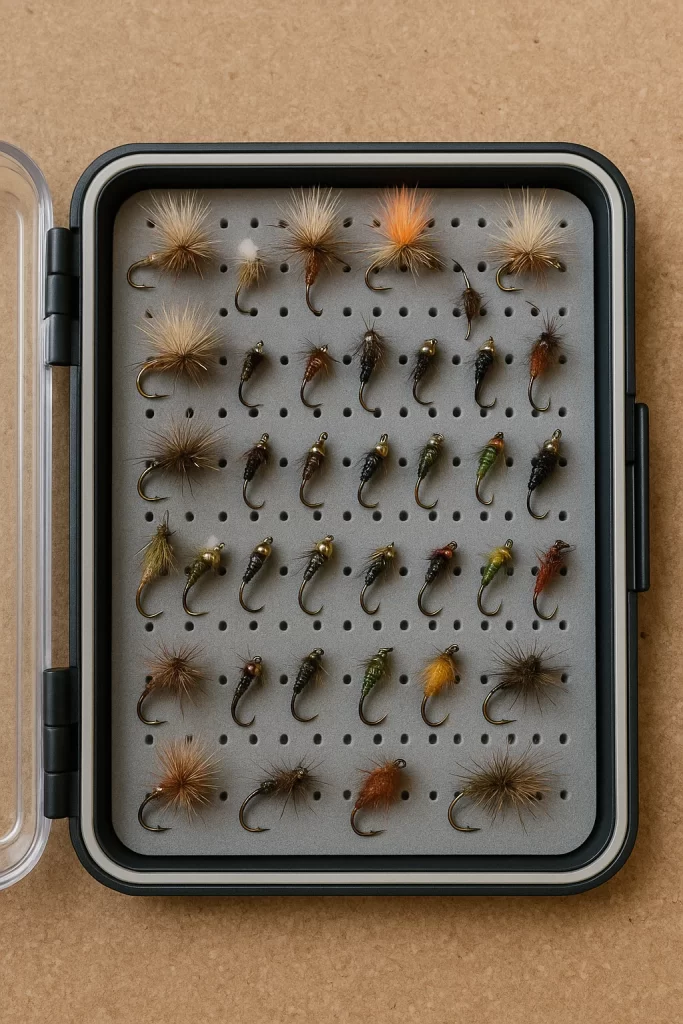
| Fly Box | Waterproof. Wet flies fish badly. Keep everything dry. https://amzn.to/41olRpW |
| Hat and Neck Gaiter | Reduces glare and keeps you comfortable on cold mornings. https://amzn.to/3PqC2jY |
| Thermometer | Check water temperature on arrival. Changes everything about how you approach the session. https://amzn.to/4bQZnD4 |
Who This Guide Is For
| This is for you if… | Less relevant if… |
|---|---|
| You fish UK rivers for trout from March to June | You fish mainly stillwaters or put-and-take fisheries |
| You want consistent results rather than occasional luck | You’re already catching well in spring and know your rivers |
| You’ve had frustrating blank days in spring despite good conditions | You fish abroad where conditions and seasons differ significantly |
What to Do Before Your Next Session
Take these five steps before you next go out.
- Check the forecast for a mild overcast day between 10am and 3pm. Those are the best spring conditions. Not bright sunshine, not gale force wind.
- Look at your tippet. If it’s 4lb or heavier, buy 3lb and 2lb before you go. This alone will increase your takes.
- Pack a thermometer. Just put one in your bag. It costs almost nothing and changes how you interpret what the river is doing.
- Plan to arrive at 10am, not 7am. The extra sleep is not wasted — the fish will be more active when you get there.
- Take 10 minutes to watch before you cast. Every session. Make it a habit.
The Season Is There for the Taking
Spring fly fishing in the UK rewards preparation and observation more than any other season. The fish are catchable. The hatches are predictable. The rivers are beautiful.
Apply the knowledge in this guide and you’ll catch more fish this spring than last. Not because you’ve become a better caster, but because you understand what the fish are doing and where they are.
That’s the real advantage. And now you have it.
- Best Spring Flies UK: https://nwflyfishingacademy.com/best-spring-flies-uk-trout-grayling/
- Best Dry Flies UK for Spring Trout: https://nwflyfishingacademy.com/best-dry-flies-uk-spring-trout/
- Best Fly Fishing Rods UK: https://nwflyfishingacademy.com/best-winter-fly-fishing-rods-uk/
- How to Read a River UK: https://nwflyfishingacademy.com/%f0%9f%8c%8a-how-to-read-a-river-like-a-pro-finding-trout-and-grayling-in-any-flow/
- Best Winter Grayling Flies UK: https://nwflyfishingacademy.com/best-winter-grayling-flies-uk/