You know what happens to most fishing gifts? They end up gathering dust in a garage or get returned for something more “practical.” But a properly thought out fly fishing starter kit is different. It’s an invitation to join one of the most rewarding pastimes you can pursue in the UK, and if you get the components right, it’ll actually see some serious river time.
I’ve watched quite a few people start their fly fishing journey over the years, and the ones who stick with it are usually those who begin with gear that works properly without breaking the bank. The trick is avoiding the complete rubbish at one end and the wallet-draining high end kit at the other. Neither serves a beginner well.
The heart of any starter kit is the rod and reel combo. For UK fishing, you want to be looking at a 9 foot rod rated for a 5 or 6 weight line. This setup handles our typical river conditions beautifully, whether someone’s after trout on a chalk stream or grayling on a northern spate river. Going lighter might seem tempting, but a 5 weight gives you enough backbone to deal with wind (and let’s face it, we get plenty of that) while still being delicate enough for small dry flies.
The reel doesn’t need to be fancy for a starter. A simple, reliable design that holds your fly line plus a bit of backing is perfectly adequate. Save the expensive reels with sealed drags for when you’re chasing salmon or sea trout. For most trout fishing, the reel is just somewhere to store line.
Line choice matters more than people realize. A weight forward floating line in the appropriate weight makes casting so much easier when you’re learning. Some starter kits skimp here and include line that’s about as supple as garden wire. That’s a false economy because poor line makes learning to cast ten times harder than it needs to be.
Leaders and tippet deserve a mention too. A decent starter kit should include a few tapered leaders in the 9 foot range and some tippet material in various strengths. You’ll get through these as you learn (trust me, there will be tangles), so having spares included is genuinely helpful.
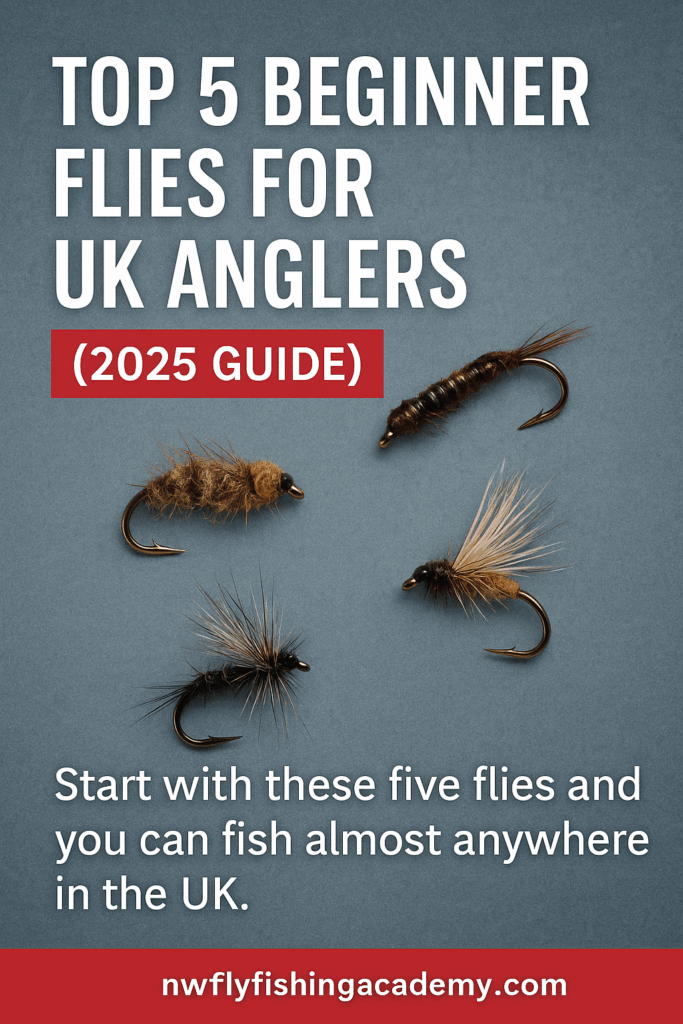
Flies are where it gets interesting. Rather than a random selection of patterns that look pretty in the box, a good starter kit focuses on proven UK patterns. A mix of dry flies like Adams and Grey Dusters, some nymphs like Pheasant Tails and Hare’s Ears, plus a couple of small streamers covers most situations you’ll encounter. You want maybe two dozen flies total, not hundreds. Quality over quantity at this stage.
Storage and accessories round things out. A simple fly box, nippers for cutting line, and forceps for removing hooks are genuinely useful. A rod tube protects the investment during transport. Some kits throw in loads of gadgets that never get used, which just adds unnecessary bulk and cost.
When you’re looking at complete setups, something like this fly fishing starter kit gives you a solid foundation without the guesswork. The real value is knowing everything works together properly rather than trying to piece together individual components yourself.
The best part about giving someone a starter kit is you’re not just handing over equipment. You’re giving them access to rivers and streams they’ve probably walked past dozens of times without really seeing. There’s something special about watching someone catch their first fish on the fly, and having the right gear from the start makes that moment come sooner rather than later.
Here’s something practical for whoever receives this gift: before heading out for the first time, spend an hour in a park practicing the basic cast. Forget about catching fish initially. Just get comfortable with how the line loads the rod and how timing matters more than strength. Twenty minutes of practice on grass saves hours of frustration on the water.