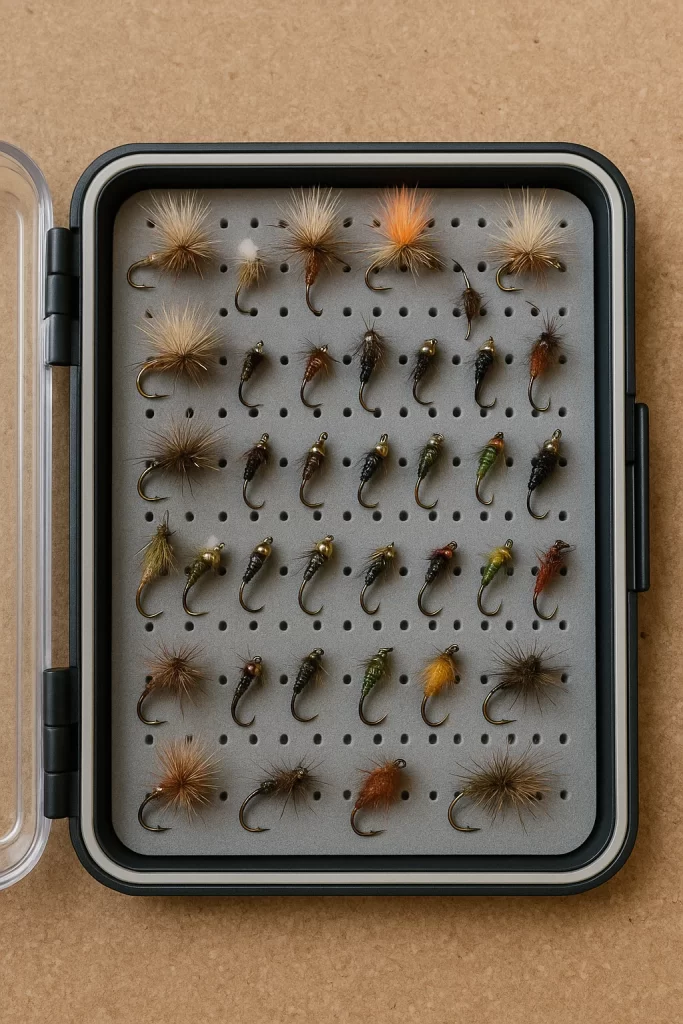
I’ve been writing about UK fly fishing for three years and always had the same question in the back of my mind — what do fish actually see when a fly drifts over them?
So I bought an underwater camera and dropped it in to find out.
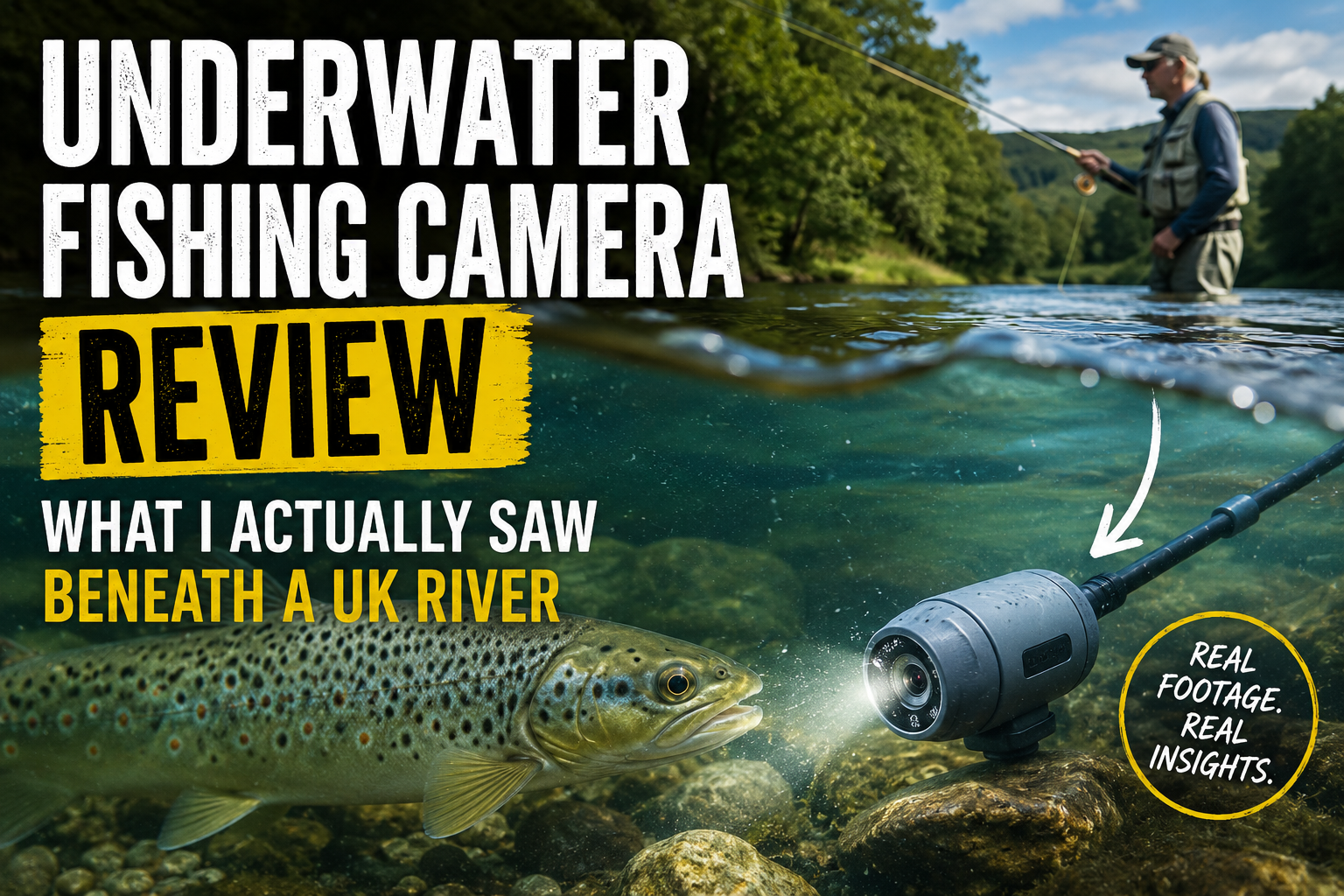
The Camera
The one I tested is a drop camera with a 4.3 inch IPS display, 30 metre cable, infrared night vision, 220 degree wide angle lens, and fully waterproof housing. It runs off a handheld display unit with a live feed from the camera head.
This article contains affiliate links. If you buy through them, we may earn a commission at no extra cost to you.
You can find it on Amazon here.
Setting It Up
Setup takes about two minutes. The display unit is handheld, the cable feeds down into the water, and you get a live picture on screen immediately. The 4.3 inch IPS display is clear enough to use in daylight without struggling to see it, which I wasn’t expecting at this price.
The 30 metre cable is more than you’ll ever need on most UK rivers. Even on deeper chalk stream pools you’re using a fraction of that length. On the rivers I fished — upland spate rivers in the North West — I rarely needed more than three or four metres.
What the Footage Actually Showed
This is the part that surprised me.
The 220 degree wide angle lens captures a much broader field of view than I expected. You can see fish approaching from the sides, not just directly ahead of the camera. On the first session I could clearly see how trout were holding position in the current and — more usefully — how they reacted when anything passed overhead. My shadow put fish down from further away than I thought.
That alone was worth the price.
The infrared night vision kicks in automatically in low light. For early morning sessions, evening rises, or anywhere you’re fishing under overhanging trees, this is genuinely useful rather than a box-ticking feature.
Water clarity matters. On a clear low-water day the picture is sharp and detailed — you can see individual fish and how they’re positioned. After rain when the river colours up you lose definition, but you still pick up movement and fish behaviour even in coloured water.
What It’s Good For
The most useful applications on UK rivers are scouting a pool before you fish it, checking where fish are actually holding versus where you assumed they were, and seeing how a fly or lure behaves underwater. That last one is more revealing than you’d think — a fly that looks perfect in your hand can behave very differently in moving water.
It’s also well suited to still water fishing and ice fishing, where you can position the camera on the bottom and watch a static presentation.
What It Isn’t
This is not a GoPro. You’re not going to mount it to your rod and wade upstream filming as you go. It’s a drop camera on a cable — you lower it into a pool, watch the screen, and learn something about the water before you start fishing. Once you understand that’s what it’s designed for, it does exactly what it’s supposed to.
Is It Worth Buying
For the price, yes. The footage from the first session was enough to change how I was reading a pool I’d fished a dozen times before. Seeing where fish were actually holding — not where I thought they were — is the kind of thing that takes years to learn through observation alone.
If you fish rivers, still waters, or do any ice fishing and want to understand fish behaviour rather than guess at it, it’s a straightforward buy.
For more UK fly fishing gear guides and river content, visit nwflyfishingacademy.com
Frequently Asked Questions
What is the best underwater fishing camera for UK rivers? A drop camera with a wide angle lens, infrared night vision, and a handheld display unit works well on UK rivers. The camera reviewed here has a 220 degree lens and 30 metre cable — more than enough for even the deepest UK river pools.
Does an underwater fishing camera work in coloured water? It depends on how coloured the water is. On a clear low-water day the picture is sharp and detailed. After heavy rain when the river colours up you lose definition, but you can still pick up fish movement and general behaviour even in murky conditions.
How deep does an underwater fishing camera work? The camera reviewed here has a 30 metre cable, which covers any depth you’ll encounter on a UK river. Most UK spate rivers and chalk streams rarely exceed 3 to 4 metres in fishable pools.
Can I use an underwater fishing camera for fly fishing? Yes — the most useful application is dropping the camera into a pool before you fish it to see where fish are actually holding. It also shows you how your fly behaves underwater, which is often very different from how it looks in your hand.
Is an underwater fishing camera worth buying for UK anglers? For the price, yes. The footage from a single session is enough to change how you read a pool and approach fish. If you fish rivers, still waters, or do any ice fishing it is a practical tool rather than a gimmick.
Can I use it at night or in low light? The infrared night vision activates automatically in low light conditions. This makes it useful for early morning sessions, evening rises, and anywhere you are fishing under heavy tree cover.