You’ve matched the hatch perfectly. The fly looks spot on. Your presentation was delicate enough to make a ballerina weep. Yet that trout just turned away at the last second, or worse, completely ignored your offering as if it were a piece of floating litter. If you’ve spent any time on UK rivers and stillwaters, you know this frustration intimately.
The thing is, trout refusing flies isn’t some mystical problem that only the most experienced anglers can solve. After years of fishing everything from the chalk streams of Hampshire to the moorland becks of Yorkshire, I’ve come to realize that refusals usually come down to a handful of specific, fixable issues. The problem is we often look for complicated answers when the solution is usually staring us right in the face.
Let’s start with the most common culprit that nobody wants to admit affects them: drag. Even the tiniest amount of unnatural movement will put trout off, especially on our slower English chalk streams where the fish have all day to inspect your fly. You might think your dry fly is drifting perfectly, but if there’s even a slight belly in your line caused by conflicting currents, that fly is skating just enough to scream “fake” to any educated trout. On rivers like the Test or Itchen, where trout see thousands of flies each season, they’ve got PhDs in spotting dodgy drifts. The solution isn’t just about mending your line once after the cast. You need to be constantly managing your line throughout the drift, sometimes feeding it, sometimes lifting it, always thinking about keeping that fly moving at exactly the speed of the current.
Then there’s the issue of getting the depth wrong with nymphs. This one drives me mad because I’ve lost count of how many times I’ve been fishing a perfectly good nymph pattern at completely the wrong depth. Trout, particularly in our freestone rivers during the cooler months, have a feeding lane that’s often just a few inches deep. If your nymph is riding too high or dragging along the bottom, you might as well be fishing in a different river. I learned this lesson the hard way on the Ure one February afternoon when I wasn’t getting any interest whatsoever. After adding more weight and getting my flies down to where the fish were actually holding, I started connecting. The trout hadn’t suddenly decided to start feeding. They were feeding all along, just not where I was presenting my flies.
Size matters more than most of us want to acknowledge. There’s a tendency among UK fly fishers to fish flies that are too large, probably because we can see them better and they’re easier to tie on. But our trout, especially on pressured waters, are often keying in on tiny midges, micro mayflies, or minuscule nymphs. I’ve had days on the Derbyshire Wye where switching from a size 16 to a size 20 made the difference between blanking and having the best session of the season. Yes, smaller flies are harder to see and more fiddly to work with, but if that’s what the fish want, that’s what they get. A decent pair of forceps like these ones (https://amzn.to/495KRr4) makes handling smaller hooks much less frustrating when your fingers are cold and the light is fading.
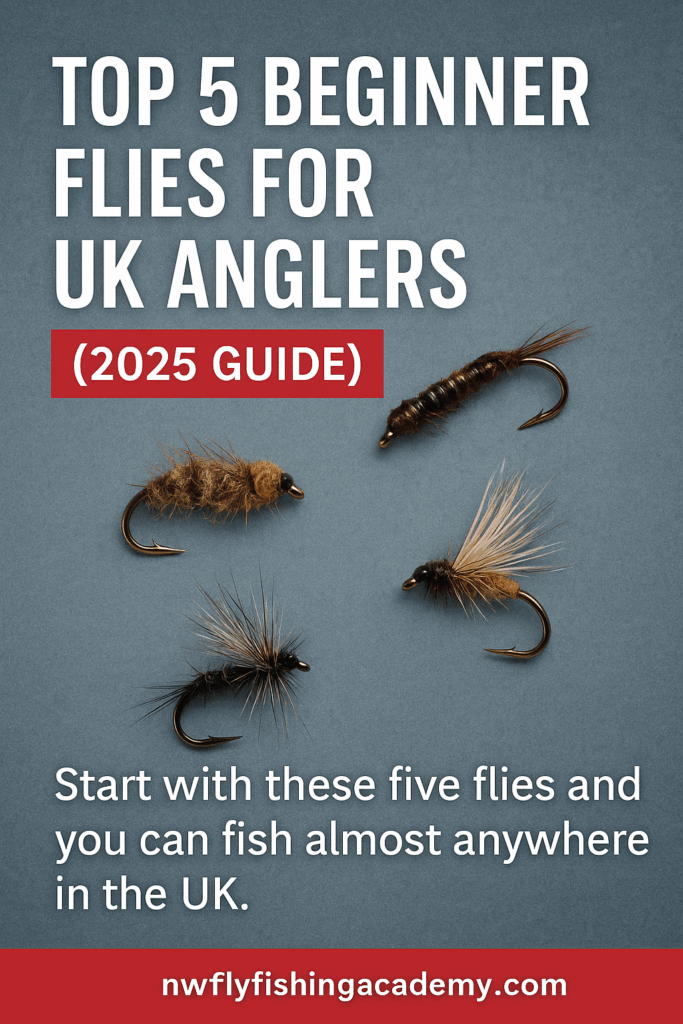
The fly pattern itself might be wrong, but probably not in the way you think. We often obsess over having the exact right pattern when the truth is trout are more concerned with the overall impression of size, shape, and behaviour. That said, there are times when colour and profile matter enormously. During a hatch of large dark olives on a cloudy day, a pale watery pattern simply won’t cut it, no matter how good your presentation. The reverse is also true. Sometimes we’re fishing patterns that are too bushy, too bright, or too flashy for the conditions. Our UK trout, particularly wild brownies in smaller streams, often prefer something more subtle and natural looking.
Leader and tippet problems account for more refusals than most anglers realize. A leader that’s too short, too thick, or too stiff will affect how your fly behaves on the water. On calm days when the surface is like glass, trout can absolutely see your tippet, and if it’s too heavy, they’ll refuse the fly every time. I usually fish 5X or 6X for most of my dry fly work on our southern chalk streams, going even finer when conditions demand it. Yes, you’ll lose more fish on lighter tippet, but you’ll actually hook them in the first place. The trade-off is usually worth it. Equally important is checking your tippet for wind knots and abrasion throughout the session. A roughed-up or kinked tippet changes how your fly sits and moves, and trout notice.
Sometimes the problem is that you’re fishing over spooked fish. This is especially true on small streams and shallow stillwater margins where trout are incredibly aware of bankside movement, shadows, and vibrations. I’ve seen anglers wade right into the best holding water, scattering every fish in the pool, then wonder why nothing’s rising to their flies. The solution is to slow down, stay back from the water, and fish the near water before crashing through it to reach the far bank. Our brown trout didn’t survive this long by being careless, and they’ll shut down completely if they sense danger.
Weather and light conditions play a bigger role than we give them credit for. Trout feed differently under bright sun compared to overcast skies. They position themselves differently. They’re more selective about what they’ll eat. A fly that worked perfectly yesterday morning might be completely wrong for this afternoon’s conditions. This is why carrying a variety of patterns in different sizes and profiles matters more than having twenty variations of the same fly.
Related Reading:
Here’s something practical you can try next time you’re getting refusals: rest the fish. I know it goes against every instinct when you’ve found a rising trout, but sometimes the best thing you can do is stop casting and wait five or ten minutes. Let the fish settle back into its rhythm, let the ripples from your last cast fade away, then come back with a different approach. Often that trout will start feeding confidently again, and your next presentation will get a completely different response.