Ever watch someone catch fish from the same river you just blanked on? They are not lucky. They can read the water.
Every ripple, swirl, and shadow tells a story. Once you learn to listen, the river starts guiding you to where the fish really are.
🪶 1. The River Has Voices
A river is not just water moving downhill. It is a map of calm, speed, and shelter. Trout and grayling use that map every day. Fast water brings food. Slow water brings rest.
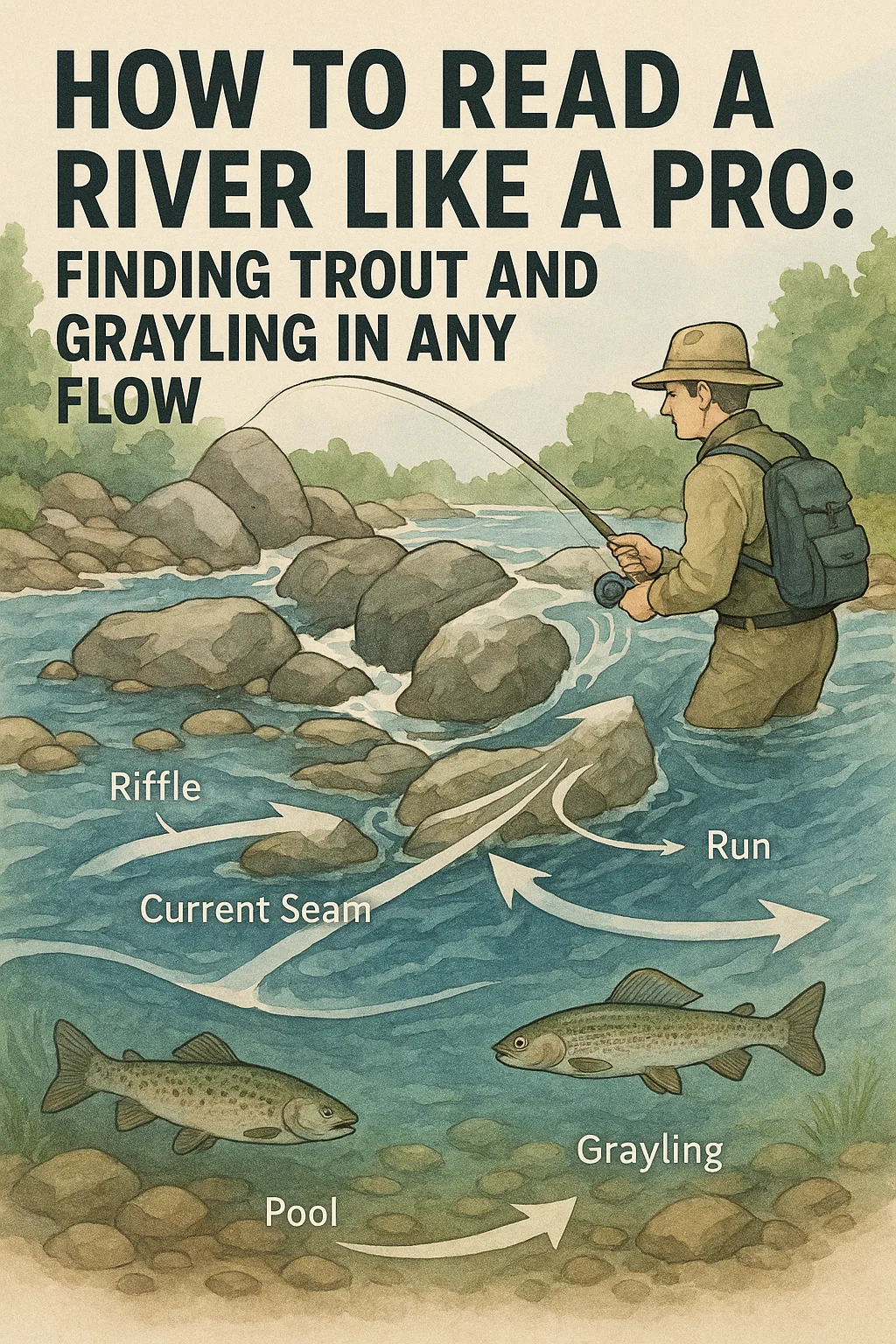
Tip: Look for where fast water meets slow water. That is called a seam. Fish sit right on that line waiting for food to drift by.
📅 Reading the River in Different Seasons
The same river behaves very differently depending on the time of year, and understanding that changes how you approach every session.
In spring, snowmelt and rain raise water levels. Fish spread out into flooded edges and margins they would not normally use.
In summer, water runs lower and clearer. Trout move to shaded pools and deep runs where the temperature stays cooler and they feel less exposed.
In winter, they huddle in slow, deep stretches where the current is gentle. They will not expend energy chasing food in fast water when the temperature drops. Each season changes how you approach the same river.
🌀 2. Riffles, Runs, and Pools — Know the Difference
-
- Riffles: Shallow, bubbly sections. Perfect for feeding grayling.
-
- Runs: Smooth and steady, often waist-deep. Ideal for nymph drifts.
-
- Pools: Deep, dark spots behind rocks or bends. Trout love to hold here.
Tip: Start in riffles for active fish, then move to deeper runs when the day cools down.
🌤️ 3. Light and Temperature Change Everything
Fish do not like bright light or sudden cold. In winter they slide into deeper, slower water. On warmer afternoons they creep back toward the surface and begin feeding more actively.
Tip: Fish from late morning to mid-afternoon. The small rise in water temperature often triggers a short feeding window that is well worth waiting for.
🗺️ 4. Use What’s Around You
Leaves, foam lines, and bubbles tell you where the current flows. If foam collects in one place, so does food.
Tip: Follow the foam. It is nature’s drift line. Cast your fly along it and let it move naturally.
🧭 5. Watch the River Before You Cast
Most anglers rush to fish. Experienced anglers watch first. Spend five minutes looking for rises, dimples, or flashes under the surface before you make a cast.
Tip: If nothing moves, start with a weighted nymph and drift it slowly through the seams.
👉 Tungsten Nymph Trout Flies on Troutflies.co.uk
⚠️ Common Beginner Mistakes When Reading Water
Most beginners cast straight into fast water. It looks exciting but rarely holds fish. Others ignore small side eddies or undercut banks where trout wait in safety.
Do not rush the cast. Take time to watch bubbles, shadows, and movement first. A few quiet minutes of watching can teach more than a full day of guessing.
🐟 Final Thought
Once you start reading a river, fishing becomes calm rather than guesswork. You will see where fish rest, feed, and hide — and every cast will feel more deliberate. So next time you reach a new stretch, take a breath. Watch, listen, and let the river tell its story.
💡 Next Read: 5 Mistakes Beginners Make When Winter Fly Fishing and How to Fix Them
Disclosure: As an Amazon Associate and Troutflies.co.uk affiliate, we earn from qualifying purchases. This comes at no extra cost to you.