Winter grayling fishing in the UK is one of the most rewarding challenges in fly fishing. The water is cold, the light is low, and fish feed in narrower windows — but when you get your depth and drift right, grayling bite with confidence.
This guide explains practical ways to adjust depth, fly choice, drift, presentation, location and gear for winter grayling. It is intended for beginners and more experienced anglers refining their approach.
Affiliate Disclosure: This article contains Amazon affiliate links. As an Amazon Associate I earn from qualifying purchases, at no extra cost to you.
🎯 Why Grayling Are Perfect Winter Targets
Grayling may continue feeding through winter, but colder water often changes where they hold and how actively they take a fly:
- They move deeper
- They feed slower
- They prefer more stable currents
- They become much more selective
Understanding these changes can help you adapt your winter fishing approach to the conditions.
1️⃣ Find Winter Grayling: Where They Hold
Grayling are all about comfort + food access in winter.
Look for:
✅ Deep glides (3–6 ft)
Slow to moderate flow, smooth surface, and depth = perfect winter holding water.
✅ Back-eddies & soft seams
Fish sit where they can grab drifting nymphs with minimal effort.
✅ Tailouts of pools
Often overlooked — but grayling love these “rest + feed” zones.
❌ Avoid:
- Fast riffles
- Shallow runs
- Hard winter turbulence
These areas may be less productive in cold conditions, although fish location varies with each river and day.
2️⃣ Adjust Depth Carefully
In cold conditions, grayling often hold close to the riverbed. Aim to fish near the bottom while avoiding repeated snagging and unnecessary disturbance.
🎣 Adjust weight gradually:
Not reaching likely holding depth = add weight gradually
Frequent snags or heavy bottom contact = reduce weight or shorten the depth
Adjust carefully until the flies travel near the riverbed without snagging repeatedly.
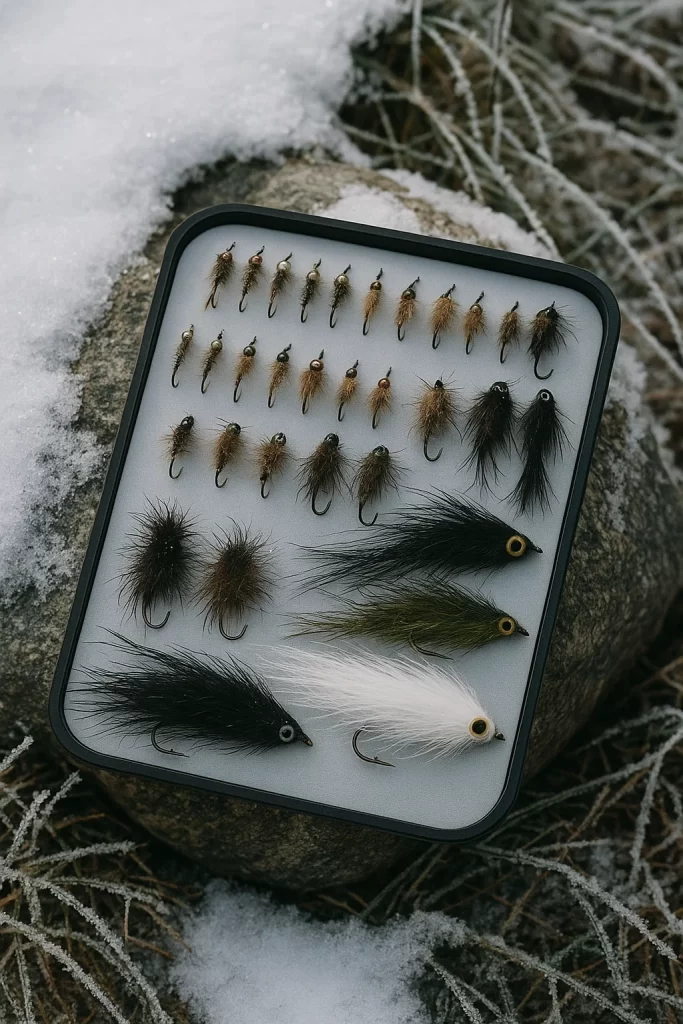
3️⃣ Winter Grayling Fly Patterns to Consider
These patterns are commonly used for winter grayling in UK rivers. Choose size, weight and colour according to water depth, clarity and current speed.
🪱 1. Pink or Purple Shrimp
Bright shrimp patterns can be useful in coloured water, especially when fish are feeding close to the riverbed.
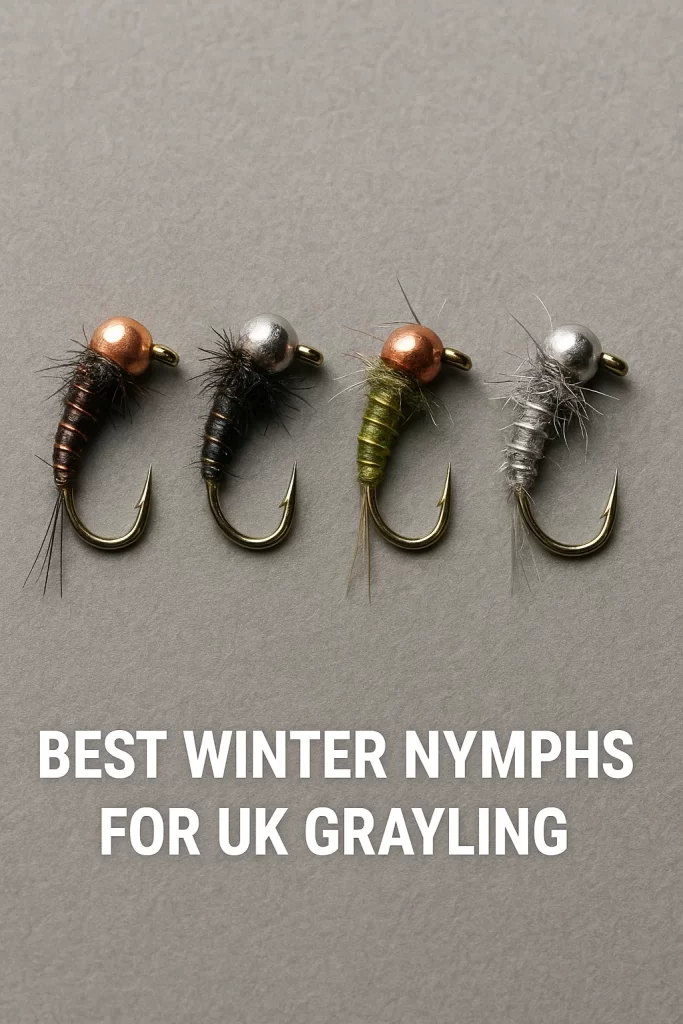
🪱 2. Tungsten Hares Ear Jig
Hare’s Ear variants imitate a range of aquatic insects and can be useful in clearer water.
👉 For storage: view this waterproof fly box on Amazon UK.
🪱 3. Red Tag (Classic Grayling Fly)
Red Tag variants are traditional grayling patterns that can be worth trying in clear or lightly coloured water.
🪱 4. Pink Bead Nymphs
High visibility + strong cold-water trigger.
🪱 5. Soft Hackles (Under the Surface Film)
Soft-hackle patterns can be useful when grayling are feeding higher in the water or taking emerging insects near the surface film.
4️⃣ Best Setups for Winter Grayling
▶️ A. Euro-Nymphing Setup (Close-Contact Option)
- 10–11 ft 2–3wt rod
- Long leader (18–20 ft)
- 2–3 nymphs on a dropper rig
- Tungsten bead on point fly
- Ultra-sensitive sighter
👉 For more detail on choosing a suitable rod, read our winter fly fishing rods guide and fly rod weight guide for UK rivers.
B. Indicator Nymphing Setup
A straightforward option for anglers who prefer a visible strike indicator.
- Medium-size yarn or foam indicator
- Two-fly rig
- 5X–6X tippet
- Cast upstream, mend once, let it drift naturally
Useful accessories include thermal neoprene gloves on Amazon UK for cold-weather hand protection and polarised sunglasses on Amazon UK for reducing glare and spotting changes in depth.
5️⃣ Presentation: How to Trigger Winter Takes
🎯 The Drift Is Everything
Grayling are sight feeders, even in winter. They want a dead-natural drift.
Follow this formula:
- Cast short
- Keep your line off the water
- Lead the flies slightly
- Maintain tension
- Let the nymph tick bottom
- If the fly hesitates — STRIKE
Some takes may register only as a pause, slight hesitation or change in tension, so strike when the drift behaves differently.
6️⃣ Water Colour: Change Your Flies
Clear Water
- Natural tones
- Hares Ear
- Pheasant Tail
- Soft hackles
Coloured Water
- Pink
- Purple
- Red tags
- Heavier tungsten
7️⃣ Clothing & Winter Gear Checklist
Stay warm, stay sharp, stay safe.
- Thermal base layers for winter fly fishing
- Warm socks and winter fishing boots
- Winter fly fishing gloves
- Winter jackets and insulating mid-layers
- Polarised glasses for spotting seams and changes in depth
- Forceps kept somewhere accessible and dry
8️⃣ When’s the Best Time to Fish?
On many winter days, late morning to mid-afternoon can be a useful starting point, when light and air temperatures may be higher. Feeding windows still vary with the river, weather, water level and insect activity.
Do not rule out first or last light automatically. Watch for signs of feeding, and always check local byelaws, access rules, river levels and seasonal restrictions before fishing.
Conclusion
Grayling can provide rewarding winter sport when river conditions and local rules allow. Focus on depth, drift and fly choice, then adjust based on what you observe.
No method guarantees fish, but a careful approach, safe wading and willingness to adapt can improve your chances of presenting flies effectively.
Tight lines! 🎣❄️