Walking into a fly shop or scrolling through pages of patterns online can feel utterly overwhelming. Thousands of flies exist, each claiming to be essential, and before you know it you’ve spent a fortune on a box full of things you’ll never tie on. The truth is, choosing flies doesn’t need to be complicated, and you certainly don’t need every pattern ever invented.
Start with what’s actually happening on your local water. This sounds obvious, but too many anglers ignore it completely. If you’re fishing a chalk stream in Hampshire, your approach will differ massively from someone tackling a spate river in the Pennines. Spend time watching the water before you even set up your rod. Are fish rising? What insects are flying about or sitting on the surface? Is the river high and coloured, or low and clear? These observations matter far more than any general advice you’ll read.
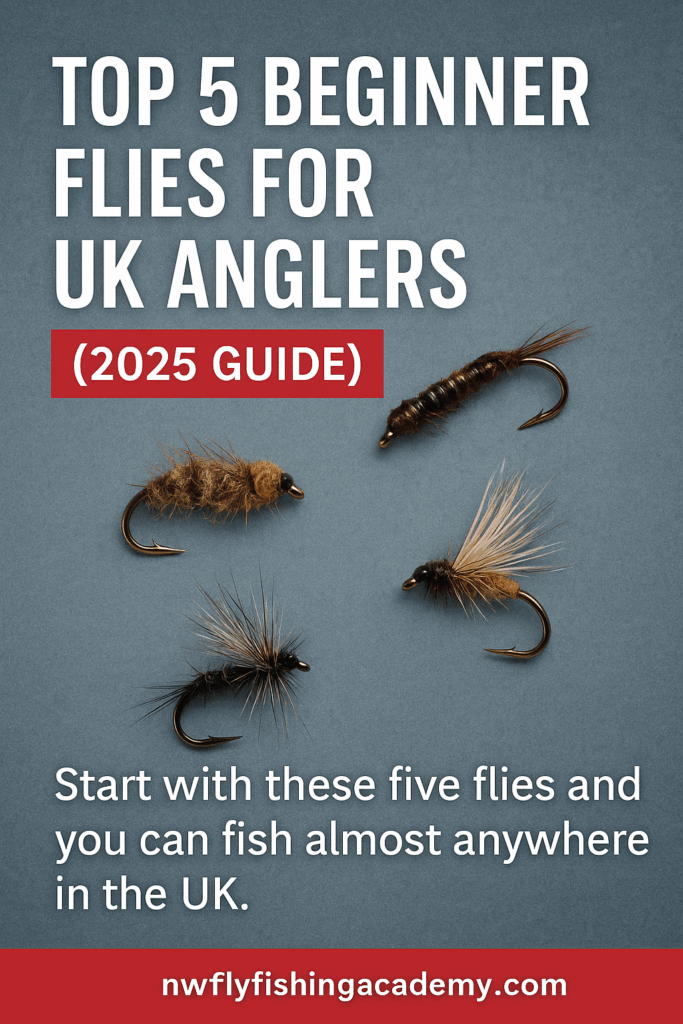
For UK rivers, you can cover most situations with a relatively small selection. Dry flies like the Adams, Grey Duster, and a few CDC patterns will handle your mayfly and general surface activity. Having these in sizes 14 to 18 gives you flexibility. Nymphs are where many anglers catch most of their fish, particularly outside the main hatches. Pheasant tail nymphs, hare’s ears, and simple tungsten bead patterns work throughout the season. For wet fly fishing, traditional patterns like the Black Pennell and Partridge and Orange still catch fish just as reliably as they did a century ago.
Size often matters more than the exact pattern. A size 16 nondescript nymph will usually outfish a perfect size 12 imitation when trout are feeding on small olives. Keep a range of sizes in your core patterns rather than buying one of everything in a single size. This approach saves money and actually makes you more effective on the water.
Seasonal changes should influence your choices too. Early season often means larger stonefly nymphs and darker patterns when the water runs cold. Spring brings the first proper hatches, so you’ll want medium sized dry flies and emergers. Summer means terrestrials like beetles and ants become important, particularly during quiet afternoons when nothing seems to be hatching. Autumn fishing often goes back to nymphs and small wet flies as temperatures drop.
Don’t overlook the value of having a few attractor patterns that don’t imitate anything specific. A bright pink blob or a gaudy goldhead might offend your sense of tradition, but they catch fish, particularly in coloured water or when trout are being aggressive rather than selective. Save the precise imitations for when you need them.
Local knowledge beats everything else. Talk to other anglers on the bank, join a club, or simply observe what’s working. Many rivers have their own quirks and preferred patterns. The Derbyshire Wye might fish differently to the Test, and what works on the Tweed won’t necessarily suit the Tamar. If you’re buying flies online, something like this selection gives you a decent starting point across different categories without breaking the bank.
Keep records of what works. A simple notebook where you jot down the date, conditions, and successful flies builds into an invaluable reference over time. You’ll start noticing patterns, like how a particular nymph always produces when the river’s carrying a bit of colour, or how one dry fly consistently works on bright afternoons.
The biggest mistake is having too many flies and not enough confidence in the ones you carry. Better to fish a small selection properly, changing sizes and depths, than to constantly swap through dozens of patterns hoping for magic.
Here’s something practical for your next trip out: take just six patterns in different sizes rather than your entire box. Force yourself to fish them thoroughly at different depths and speeds before changing. You’ll learn more about presentation and water reading in one session than months of endless fly swapping ever taught you.