 Most fly fishers start on a 5 weight rod. It is the standard, the safe choice, the one everyone recommends for beginners. And for most river fishing in the UK, it does the job well.
But spend enough time on smaller rivers and you will start to notice something. A 5 weight feels heavy. The casts feel clumsy. The fish feel the line before they see the fly.
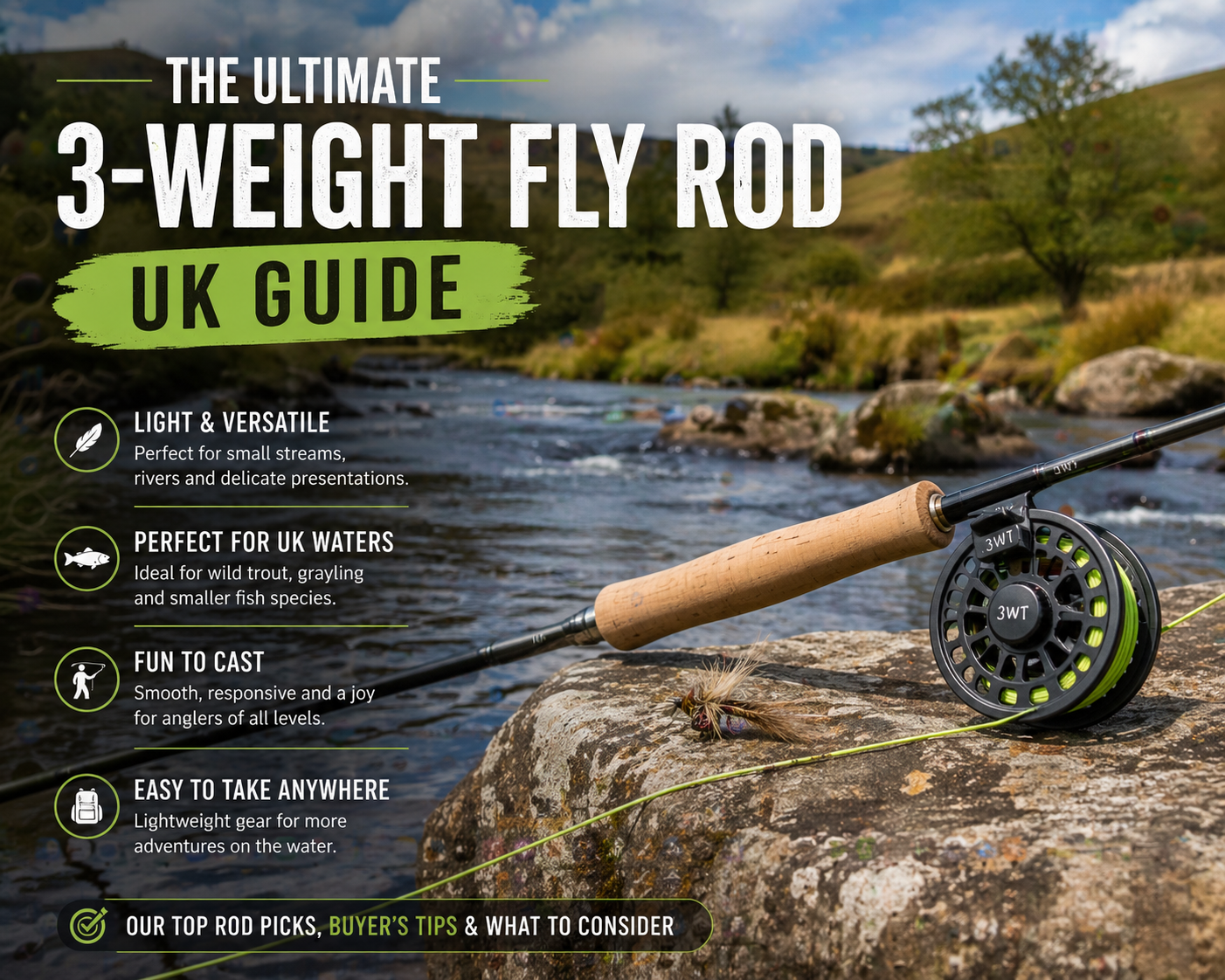
That is where a 3 weight fly rod comes in. Lighter, more delicate, and a completely different experience on the right water. This guide covers exactly what a 3 weight is good for, when to use one, and whether it is worth adding to your kit.
Most fly fishers start on a 5 weight rod. It is the standard, the safe choice, the one everyone recommends for beginners. And for most river fishing in the UK, it does the job well.
But spend enough time on smaller rivers and you will start to notice something. A 5 weight feels heavy. The casts feel clumsy. The fish feel the line before they see the fly.
That is where a 3 weight fly rod comes in. Lighter, more delicate, and a completely different experience on the right water. This guide covers exactly what a 3 weight is good for, when to use one, and whether it is worth adding to your kit.
Table of Contents
hide
What Is a 3 Weight Fly Rod?
Fly rods are rated by weight — a number from 1 to 14 that describes how heavy a fly line the rod is designed to cast. The lower the number, the lighter the rod and line. A 3 weight sits at the lighter end of the freshwater range. It is designed for small flies, light tippets, and short to medium range casts. It will not punch a heavy nymph rig into the wind, and it was never designed to. What it does brilliantly is present a dry fly or small nymph with almost no disturbance on the water. On the right water, fishing a 3 weight feels completely different to a heavier rod. Every fish feels larger. Every cast feels more precise. It brings a level of enjoyment to small river fishing that a 5 weight simply cannot match.What Is a 3 Weight Fly Rod Good For?
Small Stream Fishing
This is where a 3 weight truly belongs. Small becks, moorland streams, and narrow chalk streams where casts are short and accuracy matters more than distance. On these rivers a 5 weight is overkill. A 3 weight lets you place a fly precisely under an overhanging branch or tight against a far bank with far less effort.Wild Brown Trout
Wild brown trout in small UK rivers are notoriously cautious. They spook easily and refuse flies that do not land naturally. A 3 weight with a fine tippet gives you the lightest possible presentation. The fly lands softly, the line barely disturbs the surface, and pressured fish that would ignore a heavier setup will often take.Dry Fly Fishing
The 3 weight is a natural fit for dry fly fishing. Its lighter line lands gently, the rod loads well at short range, and it gives you the feel and control needed for delicate presentations. On a warm summer evening with trout rising to small olives or midges, a 3 weight rod with a size 16 dry fly is a genuinely special combination.Grayling on Light Tackle
Grayling fight hard for their size and a 3 weight makes the most of every run. On smaller rivers where grayling hold in gentle glides and clear water, a light rod and fine tippet will out-fish heavier setups consistently. The subtle presentation gets more takes from fish that have seen a lot of pressure.When Not to Use a 3 Weight
A 3 weight is a specialist tool. It has real limitations and using it in the wrong situation will frustrate you.-
- Big rivers: On wider rivers where you need distance, a 3 weight runs out of power quickly. It cannot carry enough line to reach fish on the far bank of a big beat
-
- Heavy nymph rigs: Czech nymphing or euro nymphing with heavy tungsten flies puts too much strain on a 3 weight. A 4 or 5 weight handles weighted rigs far better
-
- Windy conditions: A light line struggles badly in wind. On exposed moorland rivers on a blustery day, a 3 weight will feel almost uncastable
-
- Large fish: If you are targeting salmon, sea trout, or large stillwater rainbow trout, a 3 weight is not appropriate. It will struggle to control and land bigger fish safely
3 Weight vs 4 Weight vs 5 Weight — What Is the Difference?
| Rod Weight | Best For | Typical Use |
|---|---|---|
| 3 weight | Small streams, dry fly, wild brown trout | Delicate presentation, short range, light flies |
| 4 weight | Small to medium rivers, dry fly and nymphs | Versatile light rod, handles most UK river fishing |
| 5 weight | Medium rivers, stillwaters, beginners | All-round workhorse, best starting point for most |
Best Rivers for a 3 Weight in the UK
The 3 weight comes into its own on smaller, intimate waterways. In the UK that means:-
- North of England becks and gills: The small moorland streams of Yorkshire, Cumbria, and Northumberland are perfect 3 weight water. Short casts, wild brownies, and stunning scenery
-
- Welsh hill streams: Fast, rocky, and full of small wild trout that respond brilliantly to a well-presented dry fly on light tackle
-
- English chalk streams: The gin-clear water of Hampshire and Wiltshire chalk streams demands delicate presentation. A 3 weight on a small chalk stream in summer is as good as fly fishing gets
-
- Scottish hill lochs and burns: Remote and wild, Scottish hill streams are ideal 3 weight territory. The fish are not large but they are beautiful and the fishing is special
What Line and Tippet to Use with a 3 Weight
Match the line to the rod. A 3 weight rod needs a 3 weight fly line — do not try to use a heavier line to cast further. It will overload the rod and ruin the delicate presentation that makes a 3 weight worth using in the first place.-
- Fly line: Weight forward 3 weight floating line for most river use
-
- Leader: 9 foot tapered leader to 4x or 5x
-
- Tippet: 5x or 6x for dry flies, 4x for small nymphs
-
- Fly sizes: Size 14 to 18 works best — small, natural patterns
Recommended 3 Weight Fly Rods
Budget
The Shakespeare Oracle 2 is available in lighter weights and is a solid entry point if you want to try a 3 weight without spending a lot. Good action, reliable, and widely available in the UK. 👉 Shakespeare Oracle 2 on SportfishMid-Range
The Greys Wing Streamflex is one of the most popular small river rods in the UK for good reason. It has a beautiful action at short range, handles dry flies with precision, and feels alive in the hand on a small stream day. 👉 Greys Wing Streamflex on SportfishPremium
The Hardy Aydon is built specifically for small stream and light line fishing. Hardy rods have a long history on UK rivers and the Aydon is one of their finest lighter weight options. If you fish small streams regularly it is worth the investment. 👉 Hardy Aydon Fly Rod on Sportfish3 Weight Fly Rod FAQ
Is a 3 weight good for beginners? Not as a first rod. Start on a 5 weight — it is more forgiving and versatile. Once you are comfortable casting and want a dedicated small stream rod, then move to a 3 weight. Can I use a 3 weight on a medium sized river? You can, but you will feel limited at longer ranges. On a river wider than 10 to 12 metres a 4 or 5 weight will serve you better. What length should a 3 weight rod be? For small streams, 7 to 8 feet is ideal. It keeps the rod out of overhanging trees and gives you better control at close range. On slightly larger water an 8 foot 6 or 9 foot 3 weight gives you a bit more reach. Is a 3 weight the same as a 3 wt? Yes. The terms 3 weight, 3 wt, and 3 weight fly rod all refer to the same thing — a rod rated for a 3 weight fly line. Can I catch grayling on a 3 weight? Absolutely. Grayling on light tackle is brilliant sport. Use a 3 weight with a fine tippet on smaller grayling rivers and you will wonder why you ever used anything heavier.Related Guides
Disclosure: As an Amazon Associate and Sportfish affiliate, we earn from qualifying purchases. This comes at no extra cost to you.

