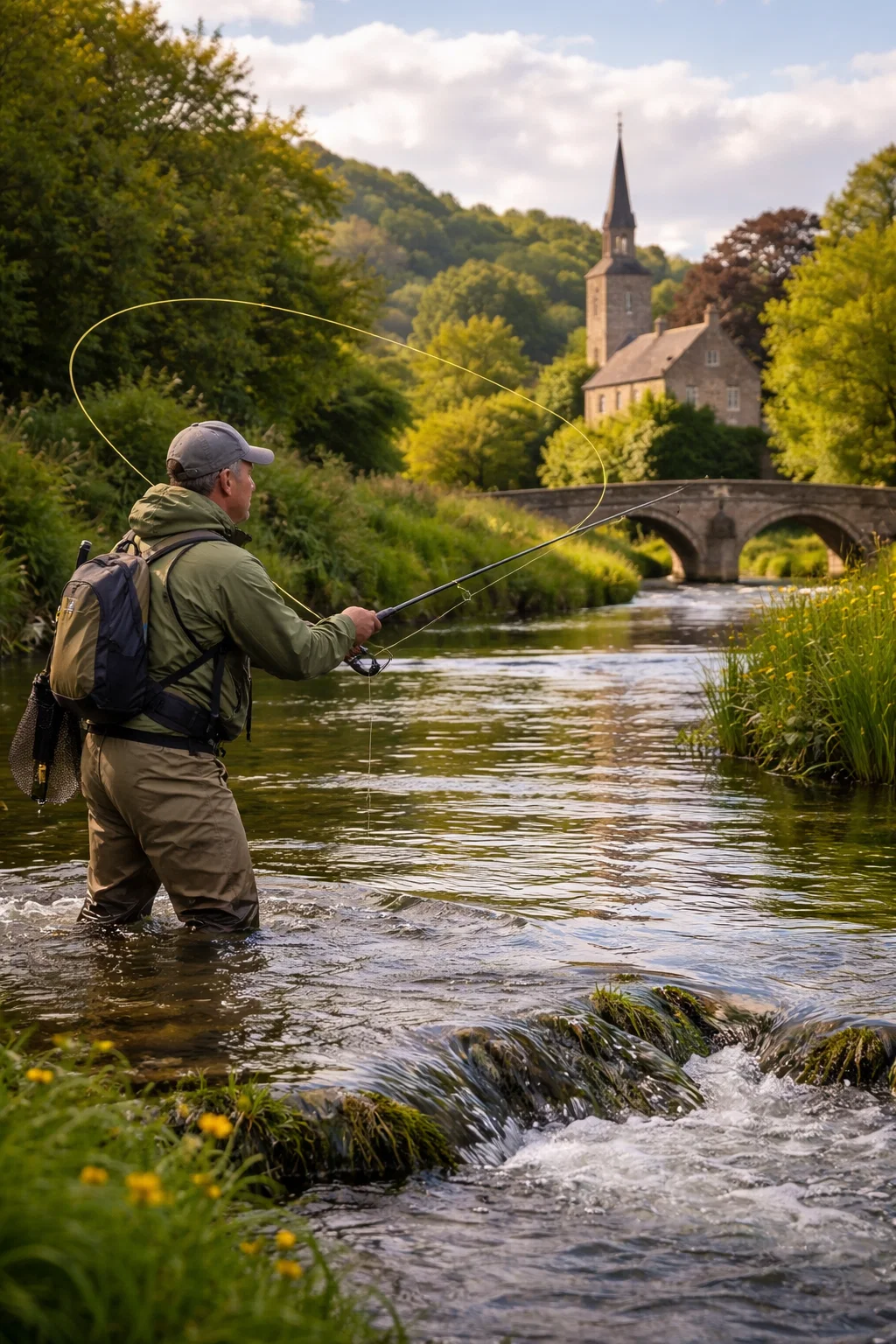
 So you want to fly fish a river for the first time. Good choice. River fly fishing is one of the best things you can do outdoors in the UK — but it can feel confusing when you are just starting out.
This guide walks you through everything you need to know before you go. What gear to bring, where to stand, how to cast, and what to do when a fish takes your fly. No jargon. No fuss. Just practical advice that works.
What You Need Before You Go
You do not need expensive gear to start. Here is the basic setup for a first river session:
Rod and Reel
A 9 foot, 5 weight fly rod is the standard starting point for UK rivers. It handles most conditions and is easy to cast. A matched reel and fly line usually comes included in beginner combo kits.
This article contains affiliate links. If you buy through them, we may earn a commission at no extra cost to you.
👉 Shakespeare Oracle 2 Fly Rod on Sportfish 👉 Orvis Clearwater Fly Rod on Sportfish
Waders and Boots
Chest waders keep you dry and let you get into position in the river. Neoprene waders are warmer for spring and autumn. Breathable waders are better in summer. Always pair them with proper wading boots for grip on wet rocks.
👉 Simms Freestone Wading Boots on Sportfish
Flies
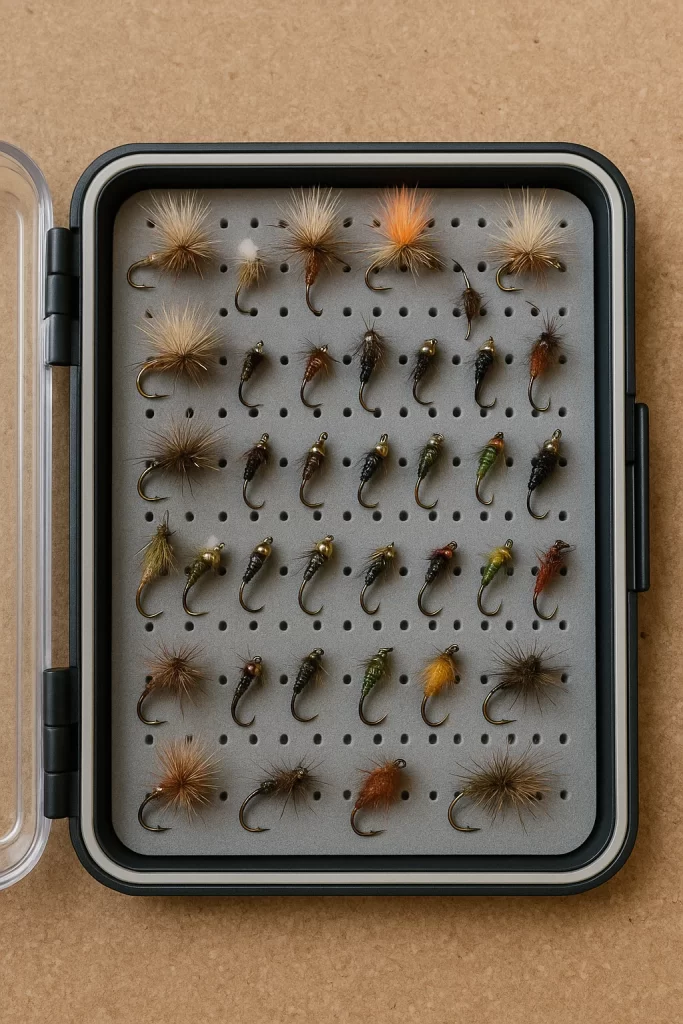
For a spring river session, keep it simple. Carry a Pheasant Tail Nymph, a Hare’s Ear, and a dry fly like an Adams or CDC pattern. That is enough to cover most situations.
👉 See our full spring fly guide for 2026
Fishing Licence
You must have a valid rod licence to fish in England and Wales. You can buy one from the Environment Agency website. A full season licence costs around £33. Day licences are also available. Scotland has different rules — fishing access there is generally more open but always check local bylaws.
👉 Check our UK Trout Season 2026 guide for season dates and rules
How to Read the River
Fish do not sit randomly in a river. They hold in specific spots where food comes to them without burning too much energy. Learning to spot these places is one of the most useful skills in fly fishing.
Where Trout and Grayling Hold
-
- Behind rocks and boulders: The slack water behind a rock gives fish a rest from the current while food drifts past
-
- Seams: The line where fast water meets slow water. Fish sit on the slow side and pick off food coming down the fast lane
-
- Bends: The inside of a river bend slows down. Fish often feed there
-
- Riffles: Shallow, fast, broken water. Lots of food gets dislodged here and washes downstream to waiting fish
-
- Deep pools: Fish rest here, especially in cold weather or bright sun
Rule of thumb: If you were a fish, where would you sit to get the most food with the least effort? That is where to cast.
How to Cast on a River
You do not need a perfect cast to catch fish. A short, accurate cast in the right spot beats a long, sloppy one every time.
Basic Overhead Cast
-
- Start with 6 to 8 metres of line out in front of you
-
- Lift the rod smoothly to the 10 o’clock position — do not rush it
-
- Wait for the line to straighten behind you — you will feel a slight pull
-
- Push the rod forward to the 2 o’clock position and stop
-
- Let the line fall onto the water
The most common beginner mistake is casting too hard and too fast. Slow down. The rod does the work, not your arm.
Roll Cast
When there are trees behind you, use a roll cast. Drag the line back across the water surface, then push the rod forward in a smooth arc. The line rolls out in front of you without a back cast. It is worth practising this before your first session.
How to Present Your Fly
Presentation means how your fly drifts on or through the water. A badly presented fly will not catch fish even if it is the right pattern.
Upstream Nymphing
Cast your nymph slightly upstream and let it drift naturally with the current. Keep the line tight enough to feel a take but loose enough to let the fly drift freely. Watch your leader where it enters the water. Any pause, twitch, or movement — lift the rod. That is a fish.
Dry Fly Fishing
Cast your dry fly upstream and slightly across. Let it drift naturally over where you spotted a rising fish. Do not drag it — if the fly starts dragging across the current it looks unnatural and fish will refuse it. Mend your line upstream after casting to get a better drift.
What Flies to Use in Spring
Spring is a brilliant time to start fly fishing. Hatches of Large Dark Olives begin in March and April, and trout start looking up for the first time since autumn. Here is what to carry:
-
- Pheasant Tail Nymph (size 14): Works all day under the surface
-
- Hare’s Ear Nymph (size 12-14): Great in murky or slightly coloured water
-
- CDC Dry Fly (size 14-16): Perfect when you see fish rising
-
- Elk Hair Caddis (size 12): Easy to see on the water, great for fast runs
👉 Tungsten Nymph Trout Flies on Troutflies.co.uk 👉 Barbless CDC Dry Flies on Troutflies.co.uk 👉 Mayfly Micro Nymph on Sportfish
How to Strike and Land a Fish
Striking
When you see your leader move or feel a pull, lift the rod tip firmly but not violently. A short, sharp lift of the wrist is enough. Too hard and you will snap the tippet. Too slow and the fish spits the fly.
With dry fly fishing, wait a fraction of a second after you see the fish take before you lift. New anglers often strike too early and pull the fly out of the fish’s mouth.
Playing the Fish
Keep the rod high and maintain steady pressure. Let the fish run if it wants to — your reel drag will slow it down. Do not wind in line while the fish is running. Wait for it to tire, then retrieve line steadily.
Landing and Releasing
Wet your hands before touching the fish. Cradle it gently in the water, remove the hook with forceps, and hold it facing upstream until it swims away strongly. Most UK rivers are catch and release — check your permit conditions before keeping any fish.
River Safety for Beginners
Rivers can be dangerous, especially in spring when water levels are high after winter rain. A few simple rules keep you safe:
-
- Never wade deeper than your waist
-
- Use a wading staff in fast or unfamiliar water
-
- Shuffle your feet rather than lifting them — feel for solid ground
-
- Wear a wading belt on your chest waders — it slows water entry if you fall
-
- Never fish alone in remote locations
-
- Check river levels before you go — the Environment Agency has a live flood map
First Session Tips
-
- Go early morning or late afternoon — fish are most active then
-
- Move slowly and quietly along the bank — trout spook easily
-
- Start on smaller rivers — they are easier to read and cast on
-
- Watch the water for 5 minutes before you cast — look for rising fish or insect activity
-
- Keep sessions short at first — two to three hours is plenty when you are learning
-
- Do not worry about catching fish on your first session. Focus on the cast and the presentation
Beginner FAQ
Do I need a fishing licence for river fly fishing in the UK? Yes. In England and Wales you need a valid EA rod licence. Scotland is different — most rivers are freely accessible but you may need permission from the landowner or estate.
What is the best time of year to start river fly fishing? Spring is ideal. The season opens in March or April depending on the river, hatches begin, and trout are actively feeding after winter. The water is also clearer than winter.
How far do I need to cast? Not far at all. Most river fish are caught within 10 metres. A short, accurate cast is worth far more than a long messy one.
What weight rod do I need for river fishing? A 5 weight rod is the most versatile starting point for UK rivers. A 4 weight works on smaller streams. Avoid going heavier than 6 weight for trout fishing.
Can I teach myself to fly fish? Yes, many anglers do. Online guides and YouTube help a lot. A single lesson with a qualified instructor will fast-track your casting significantly though — it is worth the investment early on.
Related Guides
Frequently Asked Questions
What does reading a river mean in fly fishing? Reading a river means understanding where fish are likely to be holding based on the flow, depth, and structure of the water. Fish position themselves where the current brings food to them while using as little energy as possible. Once you understand that principle, every river starts to make sense.
Where do trout hold in a river? Trout typically hold in three types of water — behind obstacles like boulders and fallen trees where the current breaks, along the seams where fast and slow water meet, and at the tail of pools where food collects. In summer they also move into shallow riffles during hatches.
What is a feeding lane in fly fishing? A feeding lane is a narrow channel of current that concentrates food drifting downstream. Trout position themselves at the edge of these lanes so they can intercept food without fighting the full force of the current. Spotting feeding lanes is one of the most important skills in river fly fishing.
How does water temperature affect where fish hold in a river? In cold water below 6 degrees celsius fish become lethargic and drop into the deepest slowest pools to conserve energy. As water warms through spring they move into faster, shallower water to feed. In summer if temperatures rise above 18 degrees fish seek out cooler, oxygenated water such as riffles and areas below tributaries.
What is the best way to approach a river without spooking fish? Wade slowly and minimise disturbance. Stay low, avoid sudden movements, and keep your shadow off the water. Approach from downstream where possible since trout face into the current and are less likely to see you coming from behind. On clear water a stealthy approach matters as much as fly choice.
How do you read a river pool for fly fishing? Start at the tail of the pool where the water shallows and slows — fish often feed here during hatches. The main body of the pool holds fish mid-water on slower days. The head of the pool where fast water enters is productive when fish are actively chasing food. Work from downstream to upstream to avoid disturbing water you haven’t fished yet.