 Walk into any fishing shop and the fly line section can feel overwhelming. Floating lines, sinking lines, sink tips, weight forward, double taper — and that is before you even look at the weight ratings.
The good news is that for river fly fishing in the UK, the choice is actually pretty simple. This guide cuts through the confusion and tells you exactly what fly line you need, why it matters, and what to look for when buying one.
Why the Fly Line Matters More Than You Think
In fly fishing the line does the casting work. Unlike spinning or bait fishing where the weight of the lure carries the cast, in fly fishing the line itself has weight and carries the virtually weightless fly to the target.
This means a poor quality or wrongly matched fly line will make casting harder, presentation worse, and catching fish more difficult — regardless of how good your rod is. Getting the right line is one of the most important decisions a beginner can make.
The Three Types of Fly Line
Floating Line
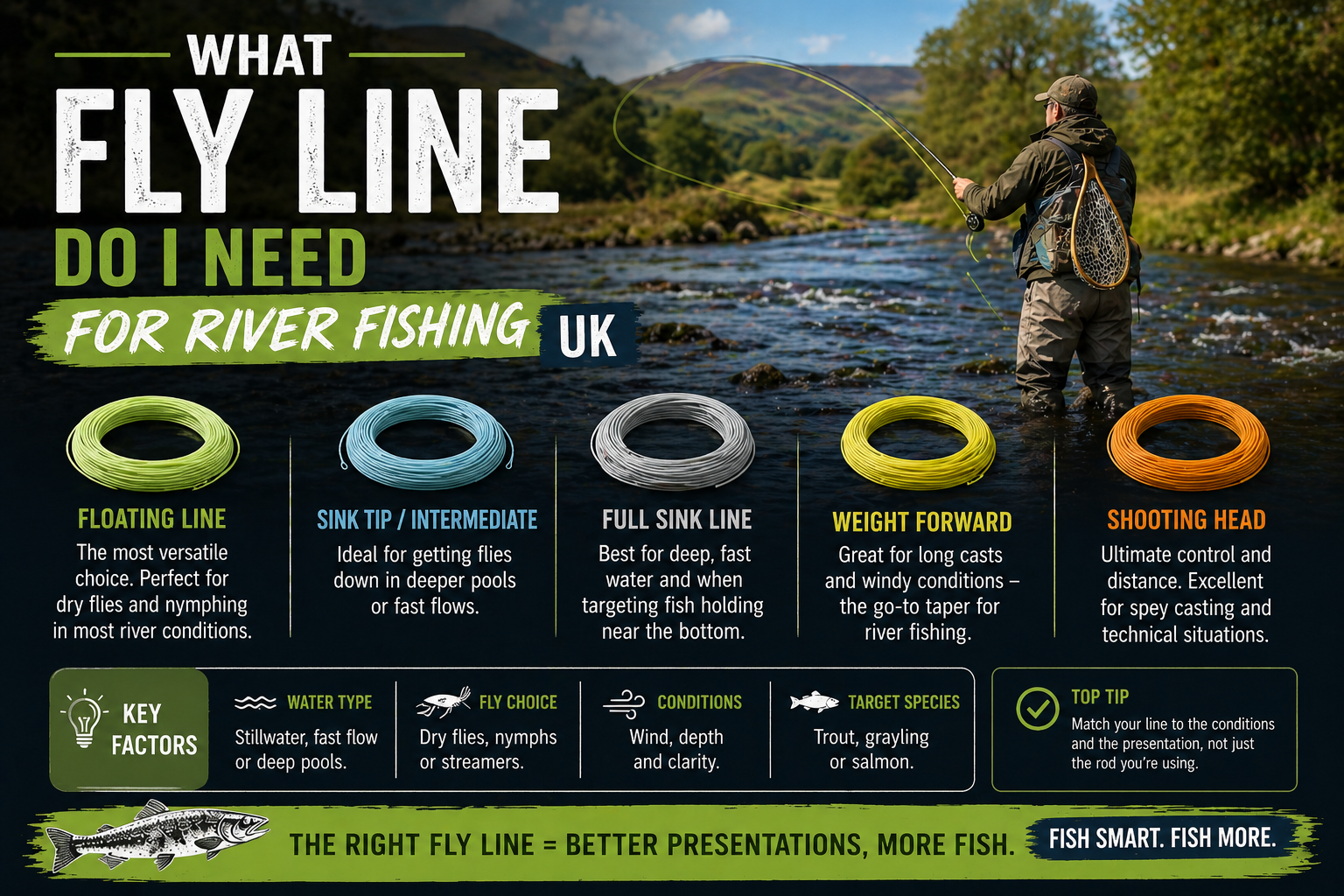
A floating line stays on the surface of the water. This is the most versatile fly line and the one you should start with. It works for dry fly fishing, nymphing with an indicator, and light wet fly fishing. On UK rivers a floating line covers the vast majority of situations you will encounter.
Best for: Dry fly fishing, nymphing, general river fishing, beginners
Sinking Line
A sinking line is designed to pull the fly down through the water column. Sinking lines come in different sink rates — slow, medium, fast, and very fast. They are primarily used on stillwaters for lure fishing or on big deep rivers where you need to get a fly right to the bottom quickly.
Best for: Stillwater lure fishing, deep river pools, streamer fishing
Sink Tip Line
A sink tip line has a floating body with a sinking tip section — usually the first 10 to 15 feet. This gives you some depth without fully committing to a sinking line. Useful for swinging wet flies and soft hackles in rivers where fish are holding just below the surface.
Best for: Swinging wet flies, river trout and sea trout fishing
Line Taper — Weight Forward vs Double Taper
Fly lines are not the same thickness throughout their length. They are shaped — or tapered — to help load the rod and deliver the fly accurately. The two most common tapers are weight forward and double taper.
Weight Forward (WF)
Most of the weight is concentrated in the front section of the line. This makes it easier to cast at distance and punch into the wind. Weight forward lines are the most popular choice for beginners and experienced anglers alike.
Best for: Most river fishing situations, beginners, casting at distance
Double Taper (DT)
The line tapers at both ends with a thicker middle section. This gives a more delicate presentation at short range and the line can be reversed when one end wears out. Double taper lines are favoured by dry fly purists fishing at close range on small rivers.
Best for: Delicate dry fly presentation, small rivers, experienced casters
What Weight Fly Line Do I Need?
Fly lines are rated by weight — the same numbering system as fly rods. The line weight must match the rod weight. A 5 weight rod needs a 5 weight line. A 3 weight rod needs a 3 weight line.
| Line Weight | Best For | UK River Use |
|---|---|---|
| 3 weight | Small streams, delicate dry fly | Small becks, hill streams, wild brownies |
| 4 weight | Small to medium rivers | Versatile light river rod |
| 5 weight | Medium rivers, general use | Best all-round choice for UK river fishing |
| 6 weight | Larger rivers, bigger flies | Salmon tributaries, sea trout rivers |
For most beginners starting on UK rivers, a 5 weight weight forward floating line is the answer. It handles most conditions, is easy to cast, and works for both nymphing and dry fly fishing.
Leaders and Tippet — What Goes Between the Line and the Fly
The fly line does not connect directly to the fly. Between the fly line and the fly you have a leader and a tippet.
Leader
The leader is a tapered length of clear monofilament that connects to the end of the fly line. It transfers the energy from the line to the fly and helps the fly land delicately. A standard 9 foot tapered leader is the right starting point for most UK river fishing.
Tippet
The tippet is a thin section of monofilament tied to the end of the leader. This is what your fly is tied onto. As you change flies throughout the day the tippet gets shorter, so you add more tippet from a spool to extend it. Tippet is rated in X sizes — the higher the number, the thinner and lighter the tippet.
| Tippet Size | Diameter | Best For |
|---|---|---|
| 3X | 0.20mm | Large nymphs, streamers |
| 4X | 0.17mm | General nymphing, medium flies |
| 5X | 0.15mm | Dry flies, small nymphs |
| 6X | 0.13mm | Small dry flies, clear water, pressured fish |
Start with 4X or 5X tippet for general UK river fishing. Go lighter to 6X when fish are refusing flies in clear, calm conditions.
Do Beginner Rod Combos Come with a Fly Line?
Most beginner fly rod combo kits include a matched fly line, backing, and often a leader already attached. This is the easiest way to start — everything is matched and ready to go without having to work out line weights and leaders yourself.
👉 Beginner Fly Rod Combo with Line on Amazon 👉 Shakespeare Oracle 2 on Sportfish 👉 Orvis Clearwater Fly Rod on Sportfish
👉 See our full guide to the best beginner fly rod combos UK 2026
When to Upgrade Your Fly Line
Budget fly lines that come with entry level combos are perfectly fine to learn on. Once you are casting consistently and catching fish regularly, upgrading to a quality fly line makes a noticeable difference. A good fly line shoots further, lands more delicately, and lasts longer than a budget one.
Signs your line needs replacing or upgrading:
-
- The coating is cracking or feels rough
-
- The line sinks when it should float
-
- It coils badly when you pull it off the reel
-
- Casting feels harder than it used to
Clean your fly line regularly with a soft cloth and line cleaner — it extends the life significantly and keeps it shooting smoothly through the guides.
Fly Line FAQ
Can I use any fly line on my rod? No. The line weight must match the rod weight. A 5 weight rod needs a 5 weight line. Using the wrong weight will make casting difficult and can overload the rod.
What does WF5F mean on a fly line? WF = Weight Forward taper. 5 = line weight. F = Floating. So WF5F is a weight forward, 5 weight, floating line. This is the most common line you will see recommended for UK river fishing.
How long does a fly line last? A well looked after fly line should last 2 to 4 seasons. Clean it regularly, store it away from direct sunlight, and it will last longer.
Do I need backing on my reel? Yes. Backing is thin braided line that fills the reel before the fly line is attached. It gives you extra line if a fish runs further than your fly line length. Most beginners never need it on small rivers but it is important to set up correctly.
What is the difference between a fly line and a fishing line? A regular fishing line is thin, almost invisible, and you cast the weight of the lure. A fly line is thick, coloured, and heavy — because in fly fishing the line itself is what you cast. The fly weighs almost nothing.
Related Guides
Disclosure: As an Amazon Associate and Sportfish affiliate, we earn from qualifying purchases. This comes at no extra cost to you.

