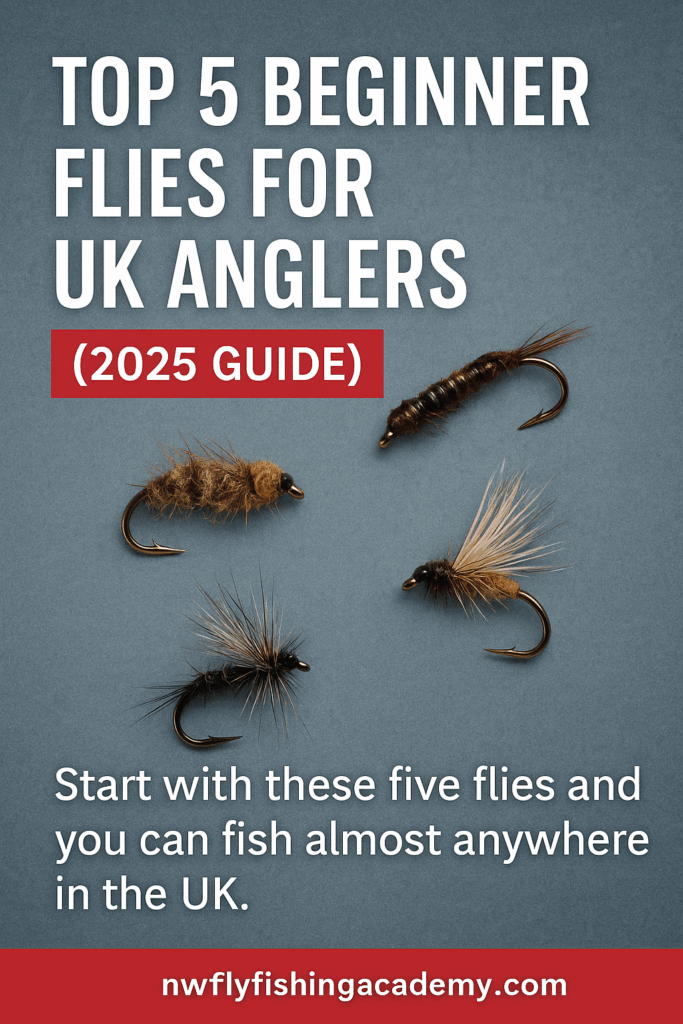
If you’ve ever spent time peering into a chalk stream or watching a Yorkshire beck tumble over stones, you’ll know that trout aren’t exactly fussy eaters. That said, they’re not stupid either. Understanding what’s on their menu throughout the season makes the difference between a blank day and consistently hooking fish.
Gear Used in This Article
The backbone of a trout’s diet in most UK rivers comes down to aquatic invertebrates. These are the nymphs, larvae, and creepy crawlies that live underwater before they hatch into flying insects. Olive nymphs are probably the most important food source across the country. From the Large Dark Olive in February through to the Medium and Small Olives of summer, these mayfly nymphs keep trout busy year-round. You’ll find them clinging to rocks and weed, and trout hoover them up constantly, even when nothing’s hatching on the surface.
Caddis larvae are another mainstay. These little grubs build protective cases from sand, gravel, or vegetation, and they’re absolutely everywhere in healthy rivers. Trout will often root around in the riverbed to dislodge them, which is why a weighted caddis pattern fished deep can work brilliantly when you’re not seeing any surface activity. The hatches themselves can be spectacular too, especially on summer evenings when sedges skitter across the water and trout go absolutely bonkers.
Stonefly nymphs matter more in the north and west where you’ve got faster, well-oxygenated water. They’re chunky things, and a big trout won’t pass up the chance to grab one. If you’re fishing Welsh or Scottish rivers, or the faster northern streams, having a few stonefly patterns makes sense.
Then there’s the stuff that doesn’t live underwater. Terrestrials become increasingly important from late spring onwards. Beetles, ants, and daddy longlegs all end up in the water, either blown in by wind or through their own misfortune. August and September can see fantastic fishing with daddy longlegs patterns, particularly after a breezy day when the banks have shed plenty of naturals onto the water.
Don’t forget the small fry either. Bigger trout, especially those over a pound or so, will happily munch on minnows, bullheads, and even smaller trout. If you’re targeting specimen fish in deeper pools, a streamer pattern that imitates baitfish can be devastatingly effective. I’ve had some of my best brown trout on small streamers fished slowly through deeper runs where you’d never see a rise.
Freshwater shrimp are ridiculously common in most UK rivers, particularly chalk streams and limestone waters. They’re there all year, tucked into weed beds and under stones. Trout eat them constantly, which is why a simple shrimp pattern in pink or olive should be in everyone’s box. They’re one of those flies that just work, even when you can’t figure out what else the fish want.
The key thing to remember is that trout feed underwater probably 90% of the time in UK rivers. We get fixated on dry fly fishing because it’s exciting and visual, but the reality is that most feeding happens below the surface. Learning to nymph properly, getting your flies down to the right depth, and understanding which invertebrates are active at different times will catch you far more fish than waiting for rises.
A decent river entomology guide, like this one available here: https://amzn.to/4dbkzUH, helps you match what you’re seeing (or not seeing) to what’s actually in the river. Once you start turning over rocks and checking what’s living there, your fly selection becomes much more informed.
For your next session, try this: spend ten minutes before you even set up your rod looking at what’s in the river. Turn over a few stones in the margins, check any weed for shrimp and nymphs, and watch the water for any hatching insects. That information will tell you exactly where to start with your fly choice, and you’ll fish with far more confidence than just tying on whatever worked last time.