Right then, let’s talk about what you actually need to get started with fly fishing in the UK without spending a fortune or lugging half of Sportfish around with you. I’ve seen too many anglers turn up riverside with enough gear to stock a tackle shop, and I’ve also watched blokes try to fish our temperamental chalk streams with completely the wrong setup. There’s a middle ground, and that’s what we’re after.
Gear Used in This Article
Your rod and reel combo is obviously where it starts, and for most UK fishing situations you’ll want a 9-foot, 5 or 6 weight setup. This handles our typical trout perfectly well, whether you’re on a Yorkshire beck or a Hampshire carrier. Don’t overthink this bit. A mid-range outfit will serve you better than an expensive rod you’re terrified of breaking on overhanging brambles. Match your line weight to your rod, and get a floating line to start with. You can faff about with sinking lines later once you know what you’re doing.
Waders are non-negotiable for most of the year unless you fancy pneumonia. Chest waders give you more options than thigh waders, though they’re warmer in summer. I prefer breathable ones because the old neoprene jobs make you sweat like you’re in a sauna. Pair them with proper wading boots that have felt or rubber studs. Our river beds are slippery as hell, especially those limestone ones down south, and there’s no dignity in going backside over breakfast into a pool.
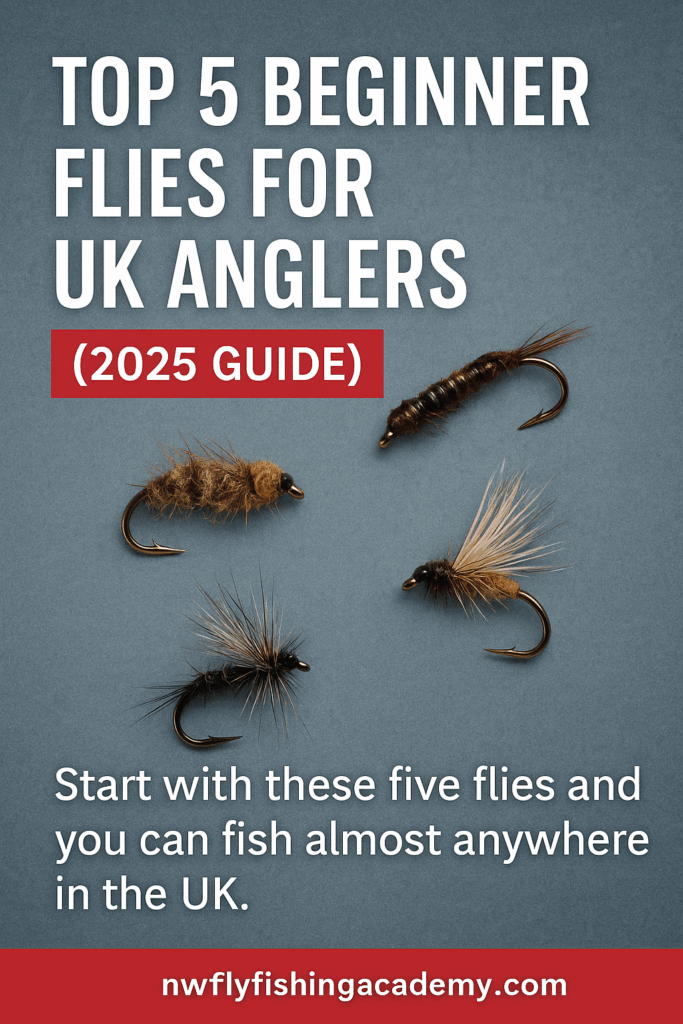
Your fly selection doesn’t need to be massive, but it does need to match what’s actually hatching on UK waters. A basic box should include some Pheasant Tail Nymphs in various sizes, a few Goldhead variants, some CDC dry flies for our mayfly hatches, and definitely some Klinkhammers because they work pretty much everywhere. Add in some terrestrials like beetles and ants for summer, and maybe some Daddy Long Legs patterns for autumn. The Montana Nymph rarely lets me down when nothing seems to be moving.
You’ll need leaders and tippet material, and this is where people often skimp when they shouldn’t. A decent tapered leader in 9 feet works for most situations, and carry spools of tippet from 3X down to 6X. Our educated trout, especially on pressured waters, can be right fussy about presentation. Sometimes that extra fineness in your tippet makes all the difference between a blank day and a memorable one.
A proper fly fishing waistcoat or chest pack keeps everything accessible without needing to trudge back to your bag every five minutes. I’m a waistcoat man myself because I like the pockets, but plenty of anglers prefer the modern sling packs. Whatever holds your flies, nippers, floatant, and a pack of wine gums for when your blood sugar drops.
Speaking of accessories, you need nippers or scissors on a zinger, some dry fly floatant, leader sink for nymphing, and forceps for unhooking fish. A priest if you’re keeping fish for the table. Polarised sunglasses are absolutely essential, not just for seeing fish but for protecting your eyes from errant flies. I learned that lesson the hard way with a size 10 Woolly Bugger embedded in my ear.
Don’t forget a landing net with a decent size hoop and soft mesh. Those tiny trout nets are useless if you hook into a better fish. A good option that won’t break the bank is this telescopic landing net https://amzn.to/4dbkzUH which saves space when you’re walking between pools.
For clothing beyond waders, think layers. Our weather changes faster than a toddler’s mood. A waterproof jacket that’s actually breathable, a warm fleece for early mornings, and a cap to keep the sun or rain off your face. Buff or neck warmer for cold days, and maybe fingerless gloves for winter sessions.
Here’s a practical tip for your next session: before you even assemble your rod, spend ten minutes just watching the water. Look for rises, observe what insects are about, check the flow patterns. The anglers who catch most fish aren’t necessarily the best casters. They’re the ones who actually pay attention to what the river is telling them.