There’s something magical about standing in a river with a fly rod in hand, watching the current swirl past your waders while you try to tempt a trout to the surface. I remember my first proper session on a small chalk stream in Hampshire, tangling my line in every overhanging branch and spooking every fish within a mile radius. If you’re thinking about getting into river fly fishing, I promise it gets easier, and the learning curve is half the fun.
The first thing to understand is that UK river fishing is quite different from stillwater fishing. Rivers have current, which changes everything about how your fly behaves and how fish position themselves. Trout in rivers face upstream because that’s where their food comes from, drifting down towards them on the current. Your job is to present your fly so it looks like just another tasty morsel floating by.
You don’t need to spend a fortune on gear when you’re starting out. A decent 9-foot rod rated for a 5-weight line will cover most UK river situations, from small streams to larger rivers like the Test or the Wye. Pair it with a basic floating line and you’re good to go. I spent my first season with a basic setup that cost less than a fancy restaurant meal, and I caught plenty of fish. Save the expensive stuff for when you know what you actually like.
Learning to cast is where most beginners get frustrated, but here’s the thing: you don’t need to cast sixty feet to catch fish in most UK rivers. I regularly catch trout at fifteen feet or less. The key is accuracy and presentation, not distance. Find a local park or field and practice getting your fly to land gently where you want it. Think about laying the line down softly rather than whipping it about like you’re trying to break the sound barrier.
Reading the water is the skill that separates successful anglers from those who just go through the motions. Trout don’t sit randomly in a river. They pick spots where they can hold position without fighting the current too hard while still having access to food. Look for slower water next to faster currents, the cushion in front of rocks, the deeper runs under overhanging trees. These are your money spots.
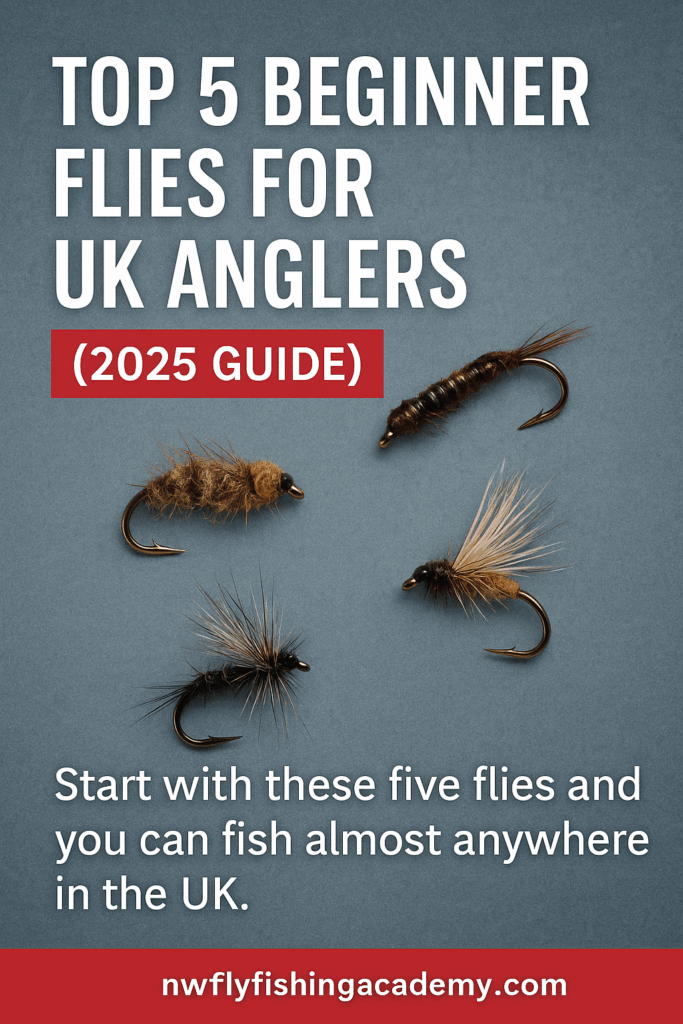
Fly selection can feel overwhelming when you’re staring at hundreds of patterns in a shop, but start simple. A few basic nymphs, some dry flies like Adams or Elk Hair Caddis, and maybe a couple of small streamers will get you through most situations on UK rivers. I keep coming back to simple patterns because they work. Match the size to what you’re seeing in the water more than obsessing over exact colour matches.
The stealth factor matters more than most beginners realize. Trout are survival machines with excellent vision, and they’re programmed to flee from anything suspicious. Approach the water carefully, keep a low profile, and don’t stomp about on the bank like you’re at a football match. I’ve caught fish from pools where I’d previously blanked just by being more careful with my approach.
Most importantly, don’t get discouraged. Every experienced fly angler you see on the river was once exactly where you are now, wondering if they’d ever figure it out. We all have days when nothing works and the fish seem to have left the country entirely. The difference is just time on the water.
Here’s something that made an immediate difference for me: before you make your first cast in any pool or run, spend five minutes just watching the water. Look for rises, observe where the current slows down, spot any fish you can see. Those five minutes of observation will tell you more about where to cast than an hour of random flogging the water.