Right, let’s talk about nymphing because it’s probably the most effective way to catch trout in our UK rivers, yet somehow it remains a bit of a mystery to many anglers. I spent years flogging dry flies and wondering why I wasn’t catching much, especially during those long periods when nothing’s rising. Then I properly got into nymphing and everything changed.
The basic principle is simple enough. Trout feed underwater most of the time, picking off nymphs drifting in the current. Your job is to get an artificial nymph down to their level and present it as naturally as possible. Sounds straightforward, but the devil’s in the details.
First off, you need to think about depth. This varies massively depending on the river you’re fishing. A shallow chalk stream riffle might only be a foot deep, while a pool on a northern spate river could be six feet or more. You control depth mainly through your leader setup and the weight of your flies. I generally start with a leader around nine feet long for nymph fishing, then add tippet as needed. For getting down quick in deeper water, you’ll want a weighted nymph or even a couple of them. In shallower spots or when fish are feeding higher in the water column, lighter nymphs work better.
The Czech nymph technique works brilliantly on our faster northern rivers. You fish short, keeping most of your fly line off the water, and work the nymphs through likely holding spots. The takes can be savage. For our gentler southern chalk streams, a more delicate approach with a longer leader and indicator often works better. I use a small piece of hi-vis material as an indicator, nothing fancy, just something to help spot those subtle takes.
Reading the water makes all the difference. Trout sit where they can hold position without burning too much energy while having access to food. That means looking for seams between fast and slow water, the cushion in front of rocks, the deeper runs along undercut banks. Don’t ignore the shallow riffles either, particularly in spring and early summer when olives are hatching.
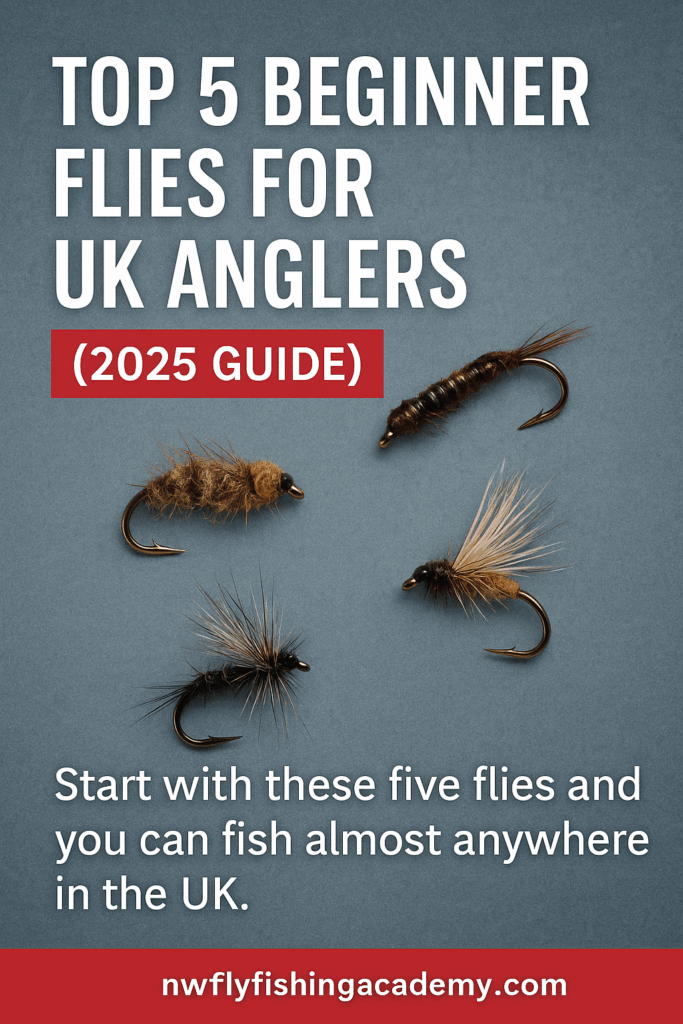
Fly selection doesn’t need to be complicated. A few patterns in different weights will cover most situations. Pheasant tail nymphs are absolute staples for good reason. They suggest all sorts of natural nymphs and trout absolutely hammer them. Hare’s ear nymphs work brilliantly too, especially in slightly coloured water. For our mayfly-rich chalk streams, something like a sawyer’s killer bug or a simple olive nymph does the business. Having a few heavier tungsten bead patterns for getting down quick is essential. A decent fly box with a range of nymph patterns will set you up properly without breaking the bank.
The presentation itself requires concentration. You’re aiming for a dead drift, letting the nymphs tumble naturally with the current just like the real thing. Any drag and the game’s up. Keep your rod tip following the drift, maintaining contact without pulling the flies unnaturally. This is where nymphing becomes almost meditative. You’re watching your indicator like a hawk, feeling for any slight hesitation in the drift, ready to strike at the tiniest sign.
Strikes can be subtle. Sometimes it’s just a slight pause in your indicator, sometimes it shoots under, occasionally you just feel a gentle weight. Strike at anything unusual. Better to strike at nothing than miss fish. I lift the rod firmly but not violently. You’re setting a small hook in relatively soft tissue, not heaving in a carp.
The best practical tip I can give you for your next session is this: fish your nymphs slower than you think you should. When you reckon you’re fishing slow enough, slow down even more. Add a bit more weight if needed to keep them down, and really let them trundle through the likely spots at the same pace as the current. That’s when you’ll start connecting with fish that have been there all along, just waiting for something that looks genuinely edible to drift past their nose.