I’ve spent enough mornings on the Test and the Usk watching newcomers make the same mistakes over and over. It’s not their fault, really. The internet is full of conflicting advice, and half of it seems written by people who’ve never fished a British river in their lives. After twenty years of chasing trout and grayling across England and Wales, I’ve seen these patterns repeat so often that I could spot a beginner’s setup from fifty yards away.
The first mistake nearly everyone makes is standing too close to the water. British rivers aren’t Montana spring creeks with wide open banks. Our rivers are intimate affairs, often overgrown, with fish that have seen every fly pattern known to man. Yet I constantly see anglers wading straight into the middle of a run before they’ve even assembled their rod. Those fish you just spooked? They were your best chance of the day, and now they’re sulking under the far bank wondering what just crashed through their living room.
The thing about UK trout is they’re educated. A wild brown trout in the Derbyshire Wye has probably seen more anglers than tourists visit the Peak District. Approach matters more than your casting ability, your fly choice, or your fancy rod. I’ve watched absolute beginners catch fish after fish simply because they kept low, moved slowly, and fished the water before blundering through it. Meanwhile, more experienced anglers with perfect loops catch nothing because every fish in the pool saw them coming from a mile off.
Then there’s the gear obsession. Newcomers arrive with enough equipment to stock a tackle shop, but they’ve never learned to properly tie a blood knot. I get it. The shiny stuff is exciting, and the marketing makes you think you need everything. But I’ve caught some of my best fish on a basic nine foot five weight with a leader that cost less than a pint. What actually matters is understanding the water you’re fishing and matching your approach to it. That said, if you’re going to invest in one thing early on, make it a proper fly box rather than scattering loose flies in every pocket you own. At least you’ll know where your flies are when the hatch starts.
False casting is another giveaway. Beginners tend to wave their rod back and forth like they’re conducting an orchestra, making ten false casts when two would do. Every second your fly is in the air is a second it’s not in the water where the fish are. Plus, all that movement above the river is like putting up a flag that says “danger” to every trout within sight. The best anglers I know make the minimum number of false casts needed to get the right distance, then they put the fly where it needs to be. Fish the water, not the air.
Reading the water comes next, and this is where things get interesting. New fly anglers often fixate on the obvious spots like the middle of a fast run or the deepest pool they can find. They ignore the subtle seams, the slack water behind rocks, and those little pockets right at their feet. Some of my best fish have come from water so shallow I could see their backs breaking the surface. Trout don’t always sit where you think they should. They sit where the food comes to them with the least effort, and that’s often in surprisingly unremarkable looking water.
The whole dry fly obsession deserves its own paragraph. Yes, watching a fish rise to your fly is magical. It’s why most of us started fly fishing in the first place. But on many British rivers, you could fish dries all day and catch nothing while nymphing would have filled your net in the first hour. Beginners often resist fishing subsurface because it feels less pure or romantic. That’s nonsense. Trout feed underwater ninety percent of the time, and if you’re not willing to fish where they’re feeding, you’re making this harder than it needs to be. Learn to nymph properly, and you’ll catch fish even when nothing’s rising.
Strike timing causes endless problems too. New anglers either strike too early because they’re nervous and excited, or too late because they’re not paying attention. With dry flies, you need to pause that split second to let the fish actually take the fly. With nymphs, you need to strike at the slightest hesitation in your leader. It’s not instinctive at first, but you’ll develop the feel after enough sessions on the water. There’s no substitute for time on the river.
Weather ignorance is perhaps the most fixable mistake. Beginners check the forecast, see rain, and stay home. Meanwhile, experienced anglers know that some of the best fishing happens when it’s absolutely miserable. A bit of extra water colour after rain can make fish less spooky. Overcast days often bring better hatches than bright sunshine. I’ve had some of my most memorable sessions in drizzle that kept everyone else in the pub.
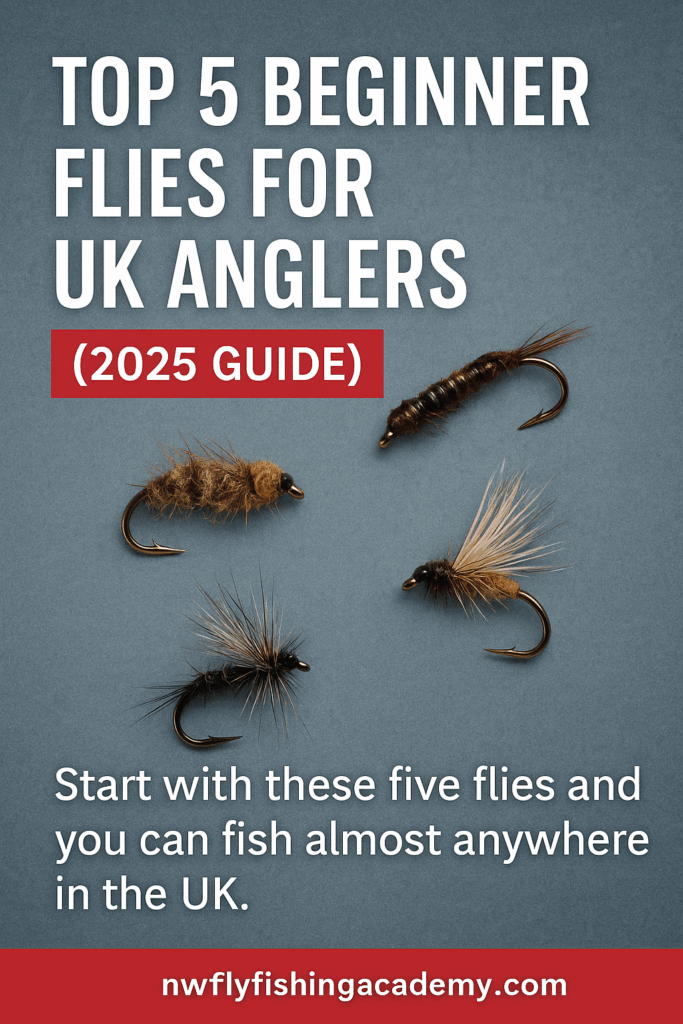
One last thing about fly choice. Beginners agonize over patterns like they’re choosing a wedding ring. They buy every variant of every fly they read about online. Then they spend more time changing flies than actually fishing. Pick something sensible for the conditions, tie it on properly, and fish it with confidence. A well presented mediocre fly will always outfish a poorly presented perfect one. Most of the time, the fish don’t care as much as you think they do about the exact shade of dubbing or whether your hackle is from a hen or a rooster.
Related Reading:
The best advice I can give you for your next session is this: spend the first ten minutes just watching before you do anything else. Don’t string up your rod immediately. Don’t wade in. Just watch the water. Look for rises, observe how the current moves, spot the likely holding areas. Those ten minutes of observation will teach you more than an hour of blind casting. The fish will tell you what they want if you’re patient enough to listen.