Right, let’s talk about getting yourself sorted with fly fishing gear without sending your bank account into meltdown or ending up with a garage full of kit you’ll never use. I’ve watched plenty of newcomers turn up at my local river with gear that’s either completely wrong for the job or so expensive they’re terrified to actually use it. Neither approach is much fun.
The first thing to understand is that fly fishing isn’t one single thing. The setup you need for chucking nymphs at grayling on a Yorkshire beck is different from what you’d want for dries on a Hampshire chalkstream, and different again from loch fishing in Scotland. But since most of us start on rivers, that’s what we’ll focus on here.
Your rod is the foundation of everything, and for general river work in the UK, you want a 9-foot rod rated for a 5-weight line. This isn’t the most exciting advice, but there’s a reason everyone recommends it. It’ll handle most of our rivers, cope with a decent breeze, and won’t wear you out after an hour. Some people will tell you to go lighter, maybe a 3 or 4 weight, and sure, they’re lovely to fish with when conditions suit. But they’re harder to cast when the wind picks up, which on British rivers is basically always.
You don’t need to spend a fortune on your first rod. There are perfectly good outfits available for under a hundred quid that’ll see you through your first season and beyond. The expensive stuff casts a bit nicer and weighs a bit less, but it won’t catch you more fish when you’re learning. Save your money for now.
The reel matters less than people think at this stage. For river trout and grayling, it’s basically just somewhere to store your line. You’re not going to be fighting fish that strip backing off like a bonefish. A simple click-and-pawl reel that balances your rod nicely is all you need. Make sure it’s the right size for your line weight, get it from a proper fishing tackle shop rather than some random brand online, and you’ll be fine.
Lines are where it gets interesting, because this is what you’re actually casting. The weight and taper of your fly line is what loads the rod and carries your flies out to the fish. A weight-forward floating line in the same weight as your rod is where everyone starts. The weight-forward taper makes casting easier for beginners because it loads the rod with less line out. You’ll see all sorts of fancy tapers and sink rates in the shop, but ignore them for now.
Matching your line to your rod weight is crucial. If you’ve got a 5-weight rod, you need a 5-weight line. The numbers need to match or nothing works properly. Some people will tell you to overline by one weight to help with casting at short range, and that’s not bad advice once you know what you’re doing, but keep it simple at first.
Here’s something nobody mentions enough: buy the best line you can afford, even if it means going cheaper on the rod. A good line on a modest rod will cast better than a cheap line on an expensive rod. Modern fly lines from decent manufacturers last for years if you look after them, and the difference between a budget line and a good one is massive.
Leaders and tippet confuse everyone at first. The leader is the tapered length of clear line between your fly line and your fly. You can buy pre-made tapered leaders, which is definitely the way to go when starting out. For river fishing, a 9-foot leader tapered to 4X or 5X covers most situations. The X-rating tells you the diameter, with higher numbers being thinner. Thinner tippet is less visible to fish but breaks more easily.
Keep a few spools of tippet material in your bag, usually 4X, 5X, and 6X for river work. You’ll be changing flies and rebuilding the end of your leader regularly, so you’ll get through it. Fluorocarbon costs more than nylon but it’s less visible underwater and sinks better, which matters for nymph fishing.
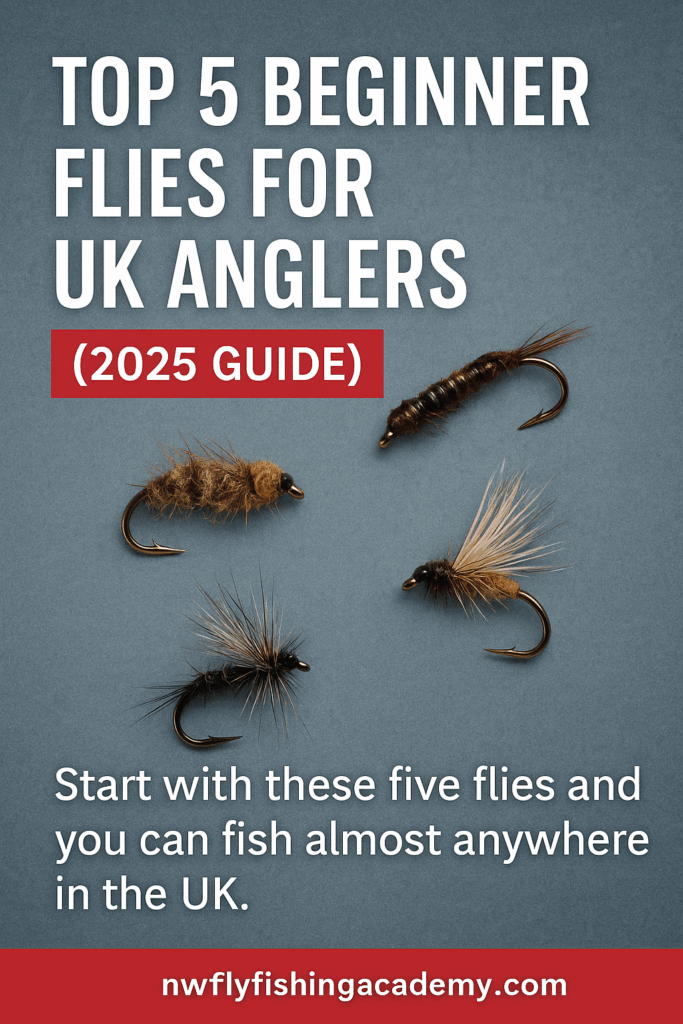
Now for flies, and this is where people lose their minds. There are thousands of patterns out there, and you absolutely do not need most of them. For UK river fishing, start with a small box of general patterns. Some Gold Head Hare’s Ears in sizes 12 to 16 for nymphing, a few Pheasant Tail nymphs, maybe some Czech nymphs if you fancy it. For dry flies, get some Adams or Grey Dusters in sizes 14 to 18, and perhaps some CDC patterns for when fish are being fussy.
Match your flies to what actually hatches on your local water if you can. Talk to other anglers, check with the fishery if it’s a club water, or just watch the river for half an hour before you start fishing. You’ll catch more fish with three patterns you understand and can present well than with a box full of fancy flies you’ve never used.
Polarised sunglasses aren’t optional, they’re essential. You need to see into the water to spot fish, read the currents, and avoid drowning yourself by walking into unexpected holes. Get proper fishing sunglasses with good quality polarised lenses. The cheap ones from the petrol station are better than nothing, but not by much.
Chest waders or waist-high waders depend on where you fish. Breathable waders are more comfortable than neoprene unless you’re fishing in January. Get them big enough to fit layers underneath for cold days. Good wading boots with felt or rubber soles matter more than people think, because wet rocks are incredibly slippery and a dunking in a UK river in April is properly cold.
The rest of the gear accumulates over time. Nippers for cutting tippet, forceps for removing hooks, a small net if the fishery requires it, floatant for dry flies, and something to carry it all in. Start simple and add things as you discover you actually need them.
Related Reading:
Here’s your practical tip for next time: before you make your first cast on any session, set your rod up completely and make a few practice casts on the bank or in a quiet bit of water. Check your knots, make sure everything runs smoothly, and get the feel of your tackle before you’re standing in front of rising fish. Nothing ruins a chance at a good trout faster than fumbling with dodgy knots or tangled leaders when