Right, let’s get straight into this. Fly fishing isn’t nearly as complicated as some folks make it out to be, but there are a few things you need to understand before you start thrashing away at your local river or reservoir. I spent my first season doing everything wrong, and I mean everything. So hopefully I can save you some of that pain.
The basic idea behind fly fishing is that you’re casting the weight of the line rather than the weight of a lure or bait. Your fly weighs almost nothing, so you need to use the line itself to carry it to where the fish are. This is the fundamental difference between fly fishing and any other type of angling, and once you get your head around it, everything else starts to make sense.
Let’s talk about gear first because you can’t do much without it. You need a rod, a reel, line, and some flies. For UK fishing, a 9-foot rod in a 5 or 6 weight is about perfect for most situations. It’ll handle everything from small stream trout to decent sized reservoir rainbows. Don’t overthink this bit. You can spend a fortune on rods, but honestly, a mid-range setup will do you just fine while you’re learning.
The reel is basically just somewhere to store your line. Unlike other types of fishing where the reel does a lot of work, in fly fishing it’s the least important part of your setup for most of what we do in the UK. Just make sure it balances nicely with your rod and holds enough backing and fly line. Speaking of line, this is where things get a bit more interesting. You’ve got different densities from floating to fast sinking, and which one you choose depends on where your fish are feeding. Starting out, get a weight forward floating line. It’s the easiest to cast and covers about 80% of the fishing you’ll do.
Now casting. This is what puts most people off, but it’s really not that hard. The basic overhead cast is just about keeping the rod tip moving in a straight line and letting the line unfurl behind you before driving it forward again. People call it “ten to two” like a clock face, but I find that makes people use too much arm. It’s more about the wrist and forearm, crisp movements, and letting the rod do the work. The rod loads up (bends) as you stop it on the back cast, then that energy releases on the forward cast.
Here’s something nobody tells beginners: spend time practising on grass before you even go near water. Tie a bit of bright yarn on instead of a fly and just work on getting the line to unfurl neatly in front of you. Twenty minutes of this is worth hours of frustrated fishing. You’ll know you’re getting it right when you can hear a nice tight loop whistling through the air.
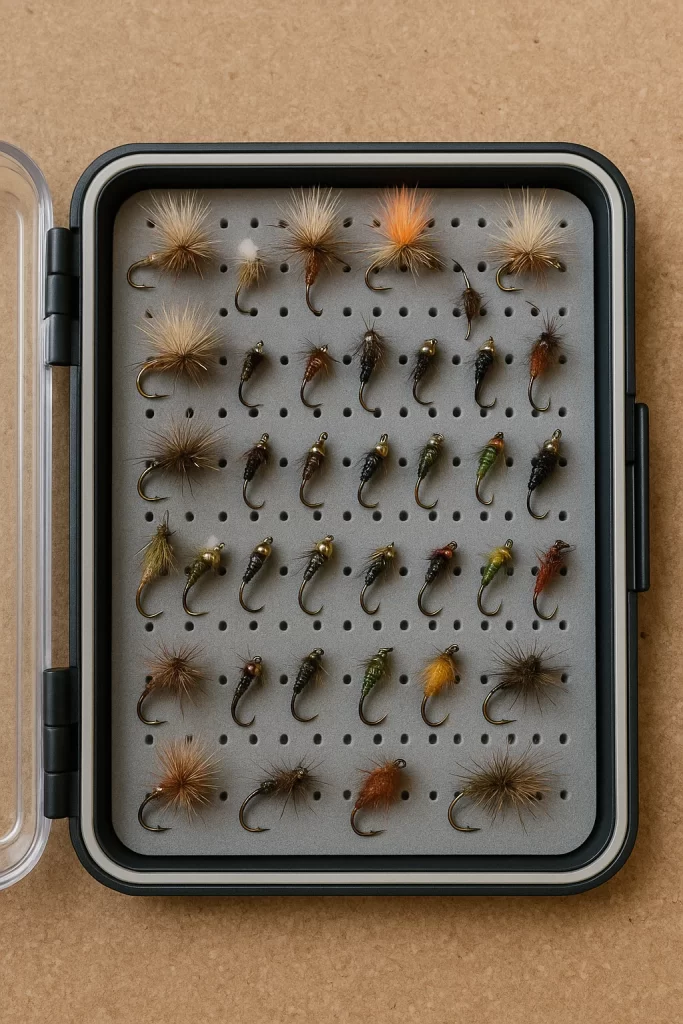
When you do get to the water, the real learning begins. Fly selection is part science, part guesswork, and part luck. In the UK, we’re blessed with some brilliant hatches throughout the season. March brings the large dark olives, then we get iron blues, mayflies in late spring, sedges through summer, and daddy longlegs in autumn. Matching the hatch means trying to imitate what the fish are eating right now, but sometimes they’re not being fussy and a general pattern like a gold ribbed hare’s ear or pheasant tail nymph will do the job.
Reading the water is something that takes years to get good at, but the basics are straightforward. Fish like to sit where they can feed efficiently without using too much energy. That means places where the current brings food to them: the seams where fast water meets slow water, behind rocks and other obstructions, under overhanging trees, and in the deeper pools. On still waters, look for features like weed beds, drop-offs, and anywhere wind is pushing food.
Presentation matters more than most beginners realise. You can have the perfect fly, but if you slap it down on the water like you’re swatting a wasp, you’ll spook every fish in the pool. The fly should land gently, and your leader should be straightish (unless you’re deliberately putting slack in for drag-free drift). Drag is when your fly moves unnaturally because the current is pulling on your line. Fish absolutely hate it. Mend your line by flicking it upstream to keep that drift natural.
Polarised sunglasses can reduce surface glare, making it easier to read the water and spot structure or fish in suitable conditions. Choose a comfortable pair with suitable UV protection and enough coverage to help protect your eyes from hooks as well as glare.
Let’s talk about actually hooking fish. When you see or feel a take, don’t do what every instinct tells you and yank the rod up like you’re trying to launch the fish into orbit. Just lift smoothly and tighten into the fish. Trout have soft mouths and hooks can pull out if you’re too aggressive. Once they’re on, keep the rod up, keep tension on the line, and let the rod absorb their runs. Your reel’s drag should be set light enough that a strong fish can take line without snapping your tippet.
Related Reading:
Here’s a practical tip for your next session: before you even make a cast, spend five minutes just watching the water. Look for rises, observe the current, check what insects are about. Most people rush in and start casting immediately, but those few minutes of observation will tell you where to fish, what depth to fish at, and what fly to start with. It’s the difference between fishing blind and fishing smart.