There’s something deeply satisfying about standing knee-deep in a British chalk stream on a warm June evening, watching mayflies dance above the water while trout rise steadily in the glide downstream. River and stream fishing for trout is where most of us cut our teeth as fly anglers, and it remains the most rewarding form of the sport even after decades of experience.
The beauty of our UK trout streams is their sheer variety. You might fish a moorland beck in Yorkshire one weekend, all tumbling pocket water and wild brown trout that grab your fly with savage enthusiasm, then find yourself the following week on a Hampshire chalk stream, presenting size 18 olive duns to selective rainbows sipping in spring creek currents. Each water demands different approaches, and that’s what keeps things interesting season after season.
Reading the water is the foundation skill that separates successful river anglers from those who simply flog away hopefully. Trout aren’t distributed randomly throughout a river. They hold in specific lies where the current brings food to them without forcing them to expend too much energy fighting the flow. Look for the cushion of slower water in front of large rocks, the seam where fast water meets slow, the undercut banks where overhanging vegetation provides cover, and the tail end of pools where the water shallows and accelerates. These are your prime spots.
The season here runs from late March through September for most rivers, though some stillwaters stay open longer. Early season can be tough, with water temperatures still low and fish lethargic, but it’s also when you’ll find rivers least crowded and trout most willing to take nymphs fished deep and slow. As water warms through April and into May, surface activity increases and dry fly fishing becomes productive.
Tackle for river trouting doesn’t need to be complicated. A 9-foot rod rated for a 5-weight line covers most situations on medium-sized rivers. Go lighter to a 3 or 4-weight on small streams where delicacy matters and the trout average under a pound. Conversely, if you’re fishing bigger waters or targeting sea trout after dark, a 6 or 7-weight gives you the backbone to handle larger fish and turn over bulkier flies in awkward wind conditions.
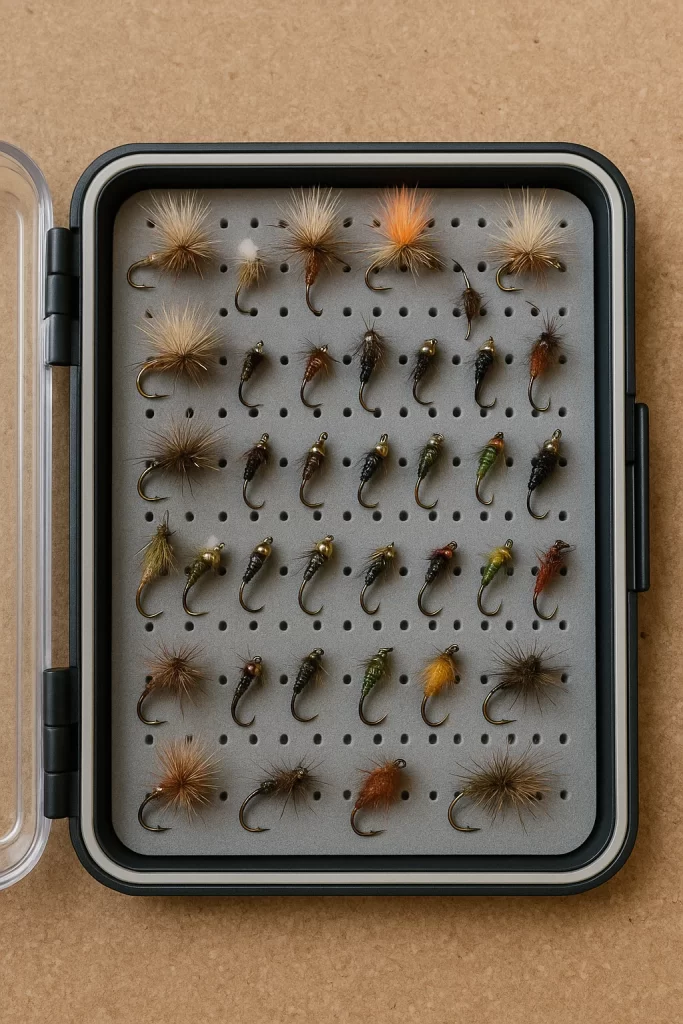
Your fly selection should match what’s hatching, but certain patterns work consistently throughout the season. Pheasant tail nymphs in sizes 14 to 18 account for more trout than any other subsurface fly in my experience. For dry flies, a selection of Adams patterns, CDC olive duns, and a few terrestrials like black ants or beetles cover most eventualities. Don’t overthink it, particularly when you’re starting out. I’ve watched anglers waste entire sessions rummaging through fly boxes when a simple Gold Ribbed Hare’s Ear would have caught fish all afternoon.
Presentation matters more than pattern most of the time. Trout in rivers see constant food coming at them in the current, always drifting naturally with the flow. Anything that looks wrong triggers suspicion. Your fly needs to behave like the real insects, which means achieving a drag-free drift. This is easier said than done, especially when you’re casting across conflicting currents that pull your line at different speeds.
Mending helps enormously. After casting, flip the line upstream in a half-circle to create slack that prevents the current grabbing your line and dragging your fly unnaturally across the surface. Sometimes you’ll need to mend several times during a single drift. Watch your fly constantly and be ready to lift off and recast as soon as drag sets in rather than persisting with a ruined presentation.
Upstream fishing generally works best on smaller streams where you can move quietly into position below rising trout. You’re approaching from their blind spot, the current carries your scent away from them, and any small disturbances you make wash downstream behind you. The downside is that you’re casting into the current, which means your fly comes back at you quickly and you need to strip line continuously to maintain contact.
Downstream or across-and-down approaches suit bigger rivers where wading upstream becomes laborious. You’re covering more water with less effort, and you can use the current’s tension on your line to your advantage when nymph fishing. The fish do see you more easily from this angle though, so stealth becomes absolutely critical.
Polarised sunglasses can reduce surface glare, making it easier to read the water and spot fish or submerged structure in suitable conditions. They also provide useful protection from hooks. Choose a comfortable pair with suitable UV protection and enough coverage for the conditions in which you normally fish.
Weather affects river trouting dramatically. Bright sunny conditions push fish into faster, broken water where the rippled surface provides cover, or tight against undercut banks and beneath overhanging branches. Overcast days are perfect as trout feed more confidently in lower light and will hold in open water where you can reach them easily. Light rain often switches on a hatch and triggers feeding frenzies that every angler should experience at least once.
The ethical side of river fishing deserves mention. Many of our wild brown trout populations face pressure from habitat loss, pollution, and over-fishing. Practice catch and release whenever sensible, handle fish gently with wet hands, and keep them in the water while unhooking. If you do keep the occasional fish for the table, take smaller ones rather than the large specimens that represent years of growth and prime breeding stock.
Access varies enormously depending where you fish. Some stretches are club-controlled with season tickets available, others offer day tickets, while certain waters remain strictly private. Always secure permission before fishing and respect the rules of whatever water you’re on. Most angler conflicts stem from simple misunderstandings about who has rights to fish where.
Related Reading:
For your next session, try this practical tip that transformed my catch rate. Spend the first fifteen minutes just watching before you make a single cast. Observe where fish are rising, note the rhythm of their rises, and identify exactly what they’re eating. The trout will still be there in a quarter hour, but you’ll have genuine information to work with rather than educated guesses. Patience at the start pays dividends throughout the session.