I remember my first proper day chasing trout on a small chalk stream in Hampshire. I’d turned up with a borrowed rod, a box of flies that looked about right, and absolutely no idea what I was doing. The experienced angler fishing upstream from me landed three fish in the time it took me to get my line tangled round a tree branch. That’s the thing about trout fishing though, it has a learning curve that can feel steep at first, but once things start clicking, you’ll wonder why you didn’t start sooner.
The UK is genuinely brilliant for trout fishing. We’ve got everything from tiny moorland becks in Yorkshire to proper chalk streams in the south, commercial stillwaters where you can learn the basics, and wild fisheries where brown trout have been living for thousands of years. The variety means you can find somewhere to fish within an hour or two of most places in the country, and you don’t need to spend a fortune to get going.
Let’s talk about what you actually need first. A 9-foot rod rated for a 5-weight line will cover most situations you’ll face as a beginner. Some people will tell you to start with a 6-weight for a bit more power, but I reckon a 5-weight is more versatile and you’ll still be using it years later. Match it with a simple reel and a weight-forward floating line. Don’t overthink this bit. Your casting will improve faster with decent gear, but you don’t need the most expensive setup in the shop.
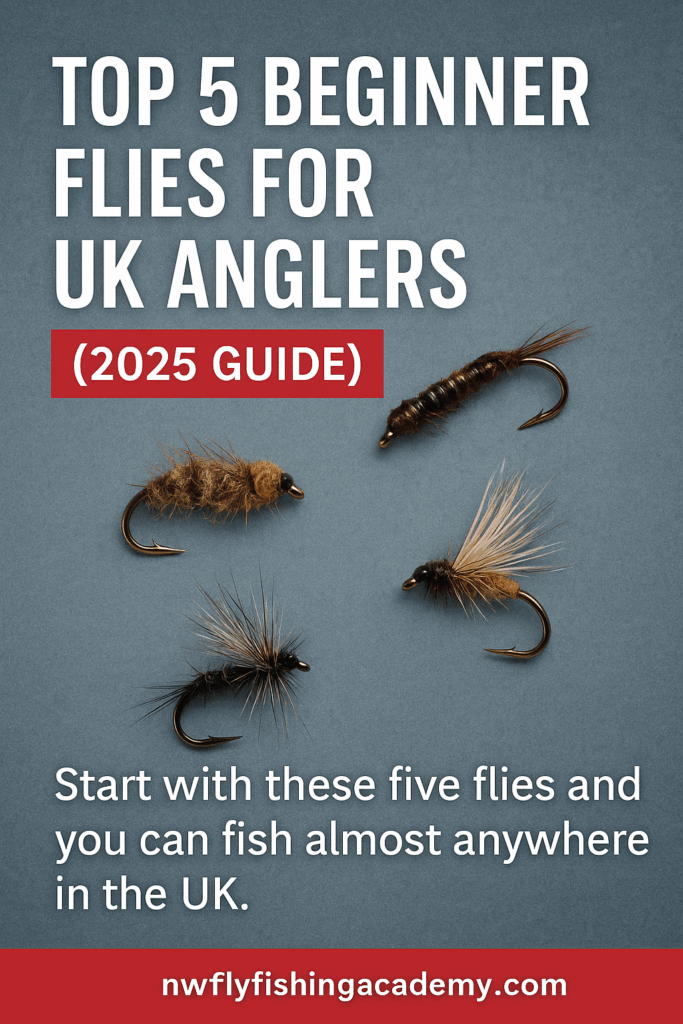
Flies are where it gets interesting. Walk into any tackle shop and you’ll see hundreds of different patterns, all supposedly essential. Ignore most of them for now. A handful of nymphs in sizes 12 to 16, some dry flies like Adams or Grey Dusters, and maybe a couple of small lures if you’re fishing stillwater will genuinely cover 90% of situations. I still catch most of my fish on about six patterns I’ve been using for years. The trout haven’t read the magazines, they don’t care if you’re using the latest pattern that’s killing it on the Test.
Stillwaters are honestly the best place to start. Most commercial fisheries in the UK are stocked regularly, the fish are usually willing to feed, and you won’t spend the whole day wondering if there are actually any trout in front of you. Places like Rutland Water or your local farm pond will have fish moving, rising, and generally behaving in ways that help you learn. You’ll figure out how to cast, how to retrieve, how to spot rises, and how to actually land a fish without the added pressure of difficult wild fish on technical water.
The retrieve is something nobody really explains properly when you’re starting out. You’re not just chucking it out and winding it back in. With nymphs or lures, you want to vary the speed, add little pauses, twitch the rod tip a bit. Trout often take on the drop when you stop moving the fly, so pay attention to your line even when you’re not actively retrieving. If it twitches, tightens, or does anything unexpected, lift the rod. Half the takes you’ll get won’t feel like much at all.
River fishing is a different game entirely. The trout are warier, they’re used to natural food drifting downstream, and you need to think about presentation more carefully. Upstream nymphing is probably the easiest technique to learn for rivers. You cast upstream, let the flies drift back down naturally with the current, and watch your leader for any signs of a take. It feels weird at first because you’re not really doing anything except managing the line, but it’s deadly effective once you get the hang of it.
Dry fly fishing is what most people imagine when they think about fly fishing, and yeah, it’s absolutely brilliant when trout are rising. You need to match the hatch roughly (same size and colour as what’s coming off the water) and get a drag-free drift over the fish. That means your fly needs to float down the river at the same speed as the current without your line pulling it unnaturally. It takes practice, but watching a trout rise and sip your fly off the surface never gets old.
One thing I wish someone had told me earlier is that leaders matter more than you’d think. A thick, visible leader will put fish down before your fly even gets near them. I use fluorocarbon tippet down to about 5lb breaking strain on most rivers, sometimes lighter on really clear water or spooky fish. Yes, you’ll lose a few flies in trees and the occasional big fish might snap you off, but you’ll get far more takes with a properly fine tippet.
Watercraft is the term people use for reading the river and understanding where trout will be holding. Look for anywhere the current breaks or slows down. Behind rocks, in front of weed beds, along undercut banks, at the tail of pools where the water shallows out. Trout don’t sit in fast heavy water all day because it’s exhausting. They want somewhere they can hold position easily while food drifts past them. Learn to spot these lies and you’ll catch more fish than someone who just thrashes the whole river randomly.
Having a proper box of varied patterns means you can experiment and see what works on your local waters.
The biggest difference between catching a few fish and catching consistently is time on the water. You can read articles and watch videos all you want, but actually being out there with a rod in your hand teaches you things you can’t learn any other way. The way a trout rises differently to a mayfly versus a midge. How the light on the water changes what you can see. When to change flies and when to just change your approach.
Related Reading:
Here’s something practical for your next session: before you make your first cast, spend five minutes just watching the water. Look for rises, observe what insects are about, check what the trout might actually be feeding on. Most beginners (and plenty of experienced anglers) just start flogging away immediately. The ones catching fish are usually the ones who took a moment to actually see what’s happening first.