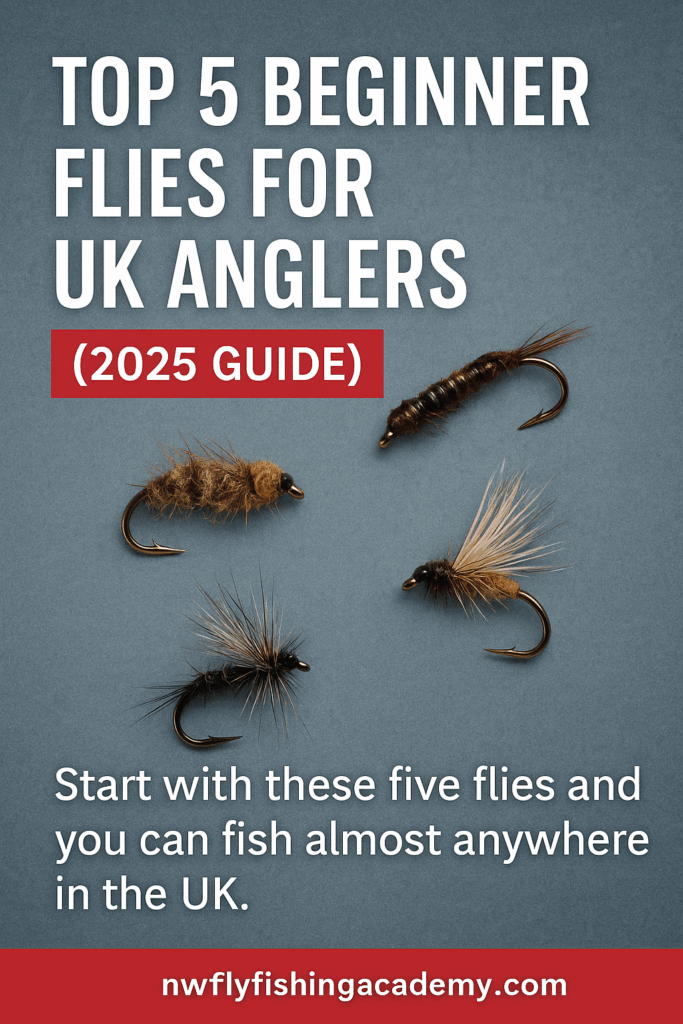
Starting fly fishing in the UK can feel overwhelming when you’re staring at pages of gear online or standing in a tackle shop with your head spinning. Every angler and their dog has an opinion on what you absolutely must have, and before you know it, your shopping basket looks like you’re preparing for an expedition to Mongolia rather than a day on the River Test.
The truth is, you need less than you think. I’ve been fishing rivers across the UK for fifteen years now, and I’ve watched countless newcomers turn up with more gear than they can carry, spending half their session fiddling with gadgets instead of actually fishing. The best advice I can give you is this: start simple and build your kit as you learn what actually matters to you on the water.
Let’s talk about what actually needs to be in your bag for a proper day’s fishing. First up, the rod and reel combo. For most UK rivers and stillwaters, a 9-foot rod rated for a 5 or 6 weight line will cover you for about 80% of situations. Yes, you might eventually want a lighter rod for small streams or a heavier one for reservoir fishing, but right now you need something versatile that won’t break the bank. Pair it with a basic reel that matches your line weight. The reel doesn’t need to do much except hold your line and backing. Don’t let anyone tell you that you need a fancy drag system for stocked rainbows or wild brownies.
Your fly line matters more than most beginners realise. A weight forward floating line in the right weight for your rod is non-negotiable. This isn’t where you want to cut corners with cheap stuff that cracks after one season. A decent line will cast better, last longer, and make learning to cast infinitely less frustrating. Trust me on this one. I spent my first season fighting with a budget line that kinked every time the temperature dropped below 10 degrees.
Leaders and tippet are next, and this is where it gets simple again. Pre-made tapered leaders save you time and work perfectly well. Keep a few in 9 foot lengths, ranging from 4X to 6X. For tippet, grab a couple of spools in similar sizes. You’ll work through 5X faster than anything else if you’re nymph fishing, which let’s be honest, is what catches most fish on most UK rivers.
Flies are the fun part, but also where beginners go mad and spend a fortune on patterns they’ll never use. If you’re river fishing, you need some nymphs in various sizes. Pheasant tail nymphs, hare’s ear nymphs, and copper johns in sizes 12 to 16 will catch fish anywhere in Britain. Add some dry flies for when the fish are rising. Adams, Elk Hair Caddis, and a few CDC patterns will cover your bases. For stillwaters, throw in some lures like Cats Whiskers and Damsel nymphs. A couple of dozen flies in total is plenty to start with.
Now for the bits that make your day on the water actually pleasant. Polarised sunglasses aren’t optional, they’re essential. You need to see into the water, spot fish, and protect your eyes from errant casts. Get decent ones that actually cut the glare. Cheap ones are worse than useless.
Waders or boots depend on where you’re fishing. For small streams and rivers where you’ll be wading, chest waders with felt or studded soles are what you want. For stillwater bank fishing or when you’re staying dry, good waterproof boots and a decent jacket will do. British weather being what it is, always assume it will rain even if the forecast says otherwise.
A fishing vest or chest pack keeps everything accessible. I prefer a chest pack these days because it doesn’t get in the way when you’re wading deep, but plenty of anglers swear by traditional vests. Whatever you choose, you need somewhere to stash fly boxes, tippet spools, nippers, forceps, and the various bits and bobs you’ll accumulate.
Speaking of which, get some decent nippers on a retractor so you’re not constantly losing them in the grass. Forceps or hemostats help remove hooks quickly and safely. A small priest if you’re keeping fish. Some floatant gel for dry flies and a bottle of degreaser for leaders. A landing net if you’re after bigger fish, though many river anglers skip this for smaller wild trout.
One thing that genuinely makes life easier is a complete starter kit that takes the guesswork out of matching components. Something like this fly fishing starter kit includes everything balanced to work together, which matters more than people realise when you’re learning to cast. Mismatched gear makes learning harder than it needs to be.
For clothing, think layers. A base layer, fleece or midlayer, and a waterproof outer shell. Add a warm hat and gloves if you’re fishing autumn or winter. British fly fishing is a year-round sport if you’re keen enough, and I’ve had some of my best days in February when most people are sitting indoors.
Don’t forget a rod tube for transport and a decent bag to carry it all. Nothing fancy required, just something that keeps your rod safe and your gear organised. I use an old hiking backpack that I’ve had for twenty years. It works perfectly.
The mistake most beginners make is buying too much too soon. You don’t need seventeen different fly boxes and specialist leaders for every situation. You need the basics, and you need to spend time on the water learning to cast, read the river, and understand what fish are actually eating. The gear obsession comes later, and by then you’ll know what you actually want rather than what the internet told you to buy.
Related Reading:
Here’s a practical tip for your next session: before you even start fishing, spend ten minutes just watching the water. Look for rises, observe insects on the surface, check what’s clinging to rocks at the water’s edge. This will tell you more about what fly to tie on than any amount of gear ever will. Match what the fish are eating, present it properly, and the rest sorts itself out.