Right, let’s talk about fly fishing gear without all the nonsense you’ll find in most guides. I’ve been fishing our British rivers for years now, and I’ve learned that getting your gear right for UK conditions is quite different from what works in Montana or New Zealand. You don’t need to remortgage your house, but you do need to be smart about what you’re buying.
The first thing any UK fly angler needs to understand is that our weather is, well, British. That means you need gear that handles everything from bright May mornings on the Test to miserable February days on your local chalk stream when you’re convinced only an idiot would be out fishing (that’s us, by the way). This reality should drive every gear decision you make.
Let’s start with rods. For most UK river fishing, you want something between a 9 foot 5 weight and a 10 foot 7 weight. I know American magazines bang on about 9 foot 5 weights like they’re the only rod ever invented, but on our rivers, especially the northern spate rivers, that extra foot of length helps enormously with line control. When you’re dealing with swirling currents and trying to get a decent drift, being able to mend line effectively matters more than looking cool with some fancy fast action rod.
Speaking of rod action, don’t get sucked into the fast action hype unless you’re genuinely a decent caster already. Medium action rods are far more forgiving, they help you feel what the line is doing, and honestly, they’re just more pleasant to fish with all day. I fish a mid-flex 6 weight most of the season and it handles everything from March browns to sedges without making me feel like I’m working instead of fishing.
Reels are where people waste serious money. Yes, a good drag matters if you’re into salmon or sea trout, but for most river trouting, your reel is basically just somewhere to store your line. I’ve landed countless trout on reels that cost less than a nice pub meal. Save your money for better flies or actually going fishing more often. That said, get something with a decent build quality that won’t fall apart if you drop it on rocks, which you will.
Lines are where you should spend some thought. For general UK river fishing, choose a fly line that matches the rod’s rated weight and suits the distances and techniques you normally use. The line needs to load the rod predictably and remain manageable when mending or controlling a drift. For nymph fishing, use a suitable leader, sighter or indicator arrangement and adjust it to the depth, current and presentation required.
Leaders and tippet are another area where UK conditions matter. Our fish can be ridiculously spooky, especially on southern chalk streams where the water is gin clear and the trout have seen every fly pattern known to mankind. You need long leaders, often 12 feet or more, and you need to be prepared to go down to 6X or even 7X on hard-fished waters. Yes, you’ll lose more fish. No, you won’t catch them at all if they spot your leader from three feet away.
Waders are essential unless you enjoy hypothermia. Breathable chest waders are the standard now, and rightly so. The old neoprene ones were like fishing in a wetsuit. Get something with decent boots or boot attachments, because our riverbeds range from silty chalk stream gravel to proper ankle-breaking boulders. Felt soles are banned on some waters now due to disease transfer concerns, so rubber soled boots with decent treads are usually your best bet. They’re actually fine once you get used to them.
Your clothing needs to work in layers. A good base layer, a fleece or soft shell, and a proper waterproof jacket will see you through most conditions. Forget about looking fashionable. You’re going to be wet, possibly cold, and definitely focused on fishing rather than impressing anyone. That said, a decent peaked cap or hat keeps rain off your glasses and helps you spot fish, so don’t skip it.
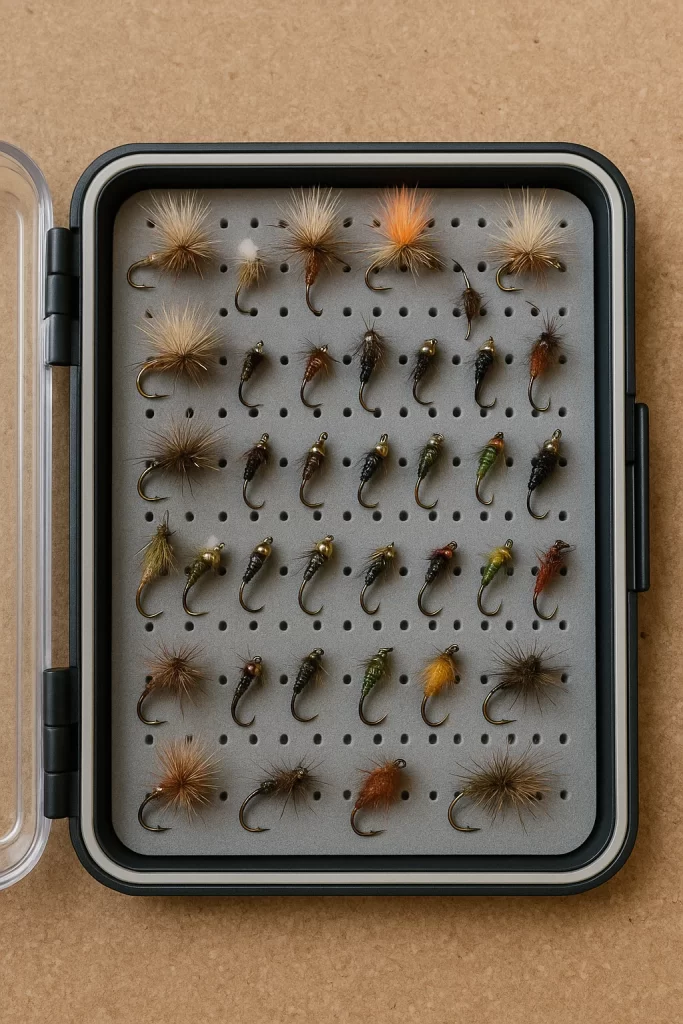
Flies are personal, but have more than you think you need. UK hatches can be specific, and having the right pattern in the right size can mean the difference between a blank day and a memorable one. Build your fly box around what actually hatches on your local rivers. There’s no point having sixty size 12 Adams if your water is all about small dark olives and iron blues. Talk to other anglers, join a local club, and learn what works where you actually fish.
Accessories matter more than you’d think. A good pair of polarized sunglasses is essential for spotting fish and for protecting your eyes from flies (both the insect kind and the ones on hooks). Forceps for unhooking fish, a priest if you’re keeping any for the table, nippers for cutting tippet, floatant for dry flies, and some form of strike indicator if you’re nymphing. Keep it all organized in a chest pack or waist pack so you’re not rummaging through pockets when a hatch starts.
The truth about fly fishing gear is that it’s easy to spend a fortune chasing marginal gains. Get decent middle-of-the-road equipment that suits UK fishing conditions, learn to use it properly, and spend your time on the water rather than in tackle shops. The best gear is the stuff that gets you fishing more often, not the most expensive rod in the shop.
Related Reading:
Here’s a practical tip for your next session. Before you even start fishing, set up your whole rig at home or by the car. Tie on your leader, attach your tippet, and sort your flies. There’s nothing worse than standing by a rising fish trying to thread 6X through a size 18 eye with cold wet fingers while the hatch comes off. Do it before you need it, and you’ll actually be fishing when it matters.