There’s something special about wild trout fishing in the UK that keeps me coming back, even when the stocked stillwaters promise easier catches and fatter fish. Perhaps it’s the connection to centuries of angling tradition, or maybe it’s just the thrill of outwitting a fish that’s survived entirely on its own merit. Either way, if you’ve not experienced it properly, you’re missing out on what I reckon is the purest form of fly fishing we have.
The beauty of wild trout fishing here is that we’re spoiled for choice, though you wouldn’t always know it from the way some anglers talk. Yes, chalk streams get all the glory, and rightly so in many respects. The Test, Itchen, and their cousins are genuinely special places where brown trout thrive in gin-clear water over beds of waving ranunculus. But these aren’t your only options, and honestly, they’re not always the most interesting.
I’ve had some of my best days on small moorland becks in Yorkshire and the Peak District, where the trout average maybe eight inches but fight like demons in the fast water. These little streams teach you more about presentation and stealth than any chalk stream ever will. You’re crouching behind rocks, flicking a size 16 dry fly into pockets of water barely bigger than a dinner plate, and when a six-inch brownie slams it, you feel like you’ve achieved something real.
Wales offers extraordinary wild trout fishing too, particularly in the upland areas where streams tumble through ancient oak woodland. The Usk system, the Teifi, and countless smaller tributaries hold populations of truly wild fish that have never seen a hatchery. These trout are typically leaner than their stocked cousins, but they’re scrappy and beautiful, with vivid red spots and golden flanks that catch the light as they dart back into the current.
Scotland deserves its own paragraph because frankly, it’s a different world up there. The lochs and rivers of the Highlands hold wild brown trout in numbers that would surprise most English anglers. Some of these fish live in remarkably harsh conditions, growing slowly in acidic water with limited food, but they’re perfectly adapted to their environment. A half-pound trout from a remote Scottish loch is a prize worth having, and the scenery while you’re fishing is usually worth the trip alone.
The West Country has always been close to my heart for wild trout fishing. The rivers flowing off Dartmoor and Exmoor hold wonderful populations of native brownies, and many are accessible through various angling associations at reasonable prices. The Dart, the Barle, and the Exe all have their devotees, and rightly so. These rivers can be moody though. After heavy rain they’re unfishable for days, but catch them right and you’ll have the kind of day that reminds you why you started fly fishing in the first place.
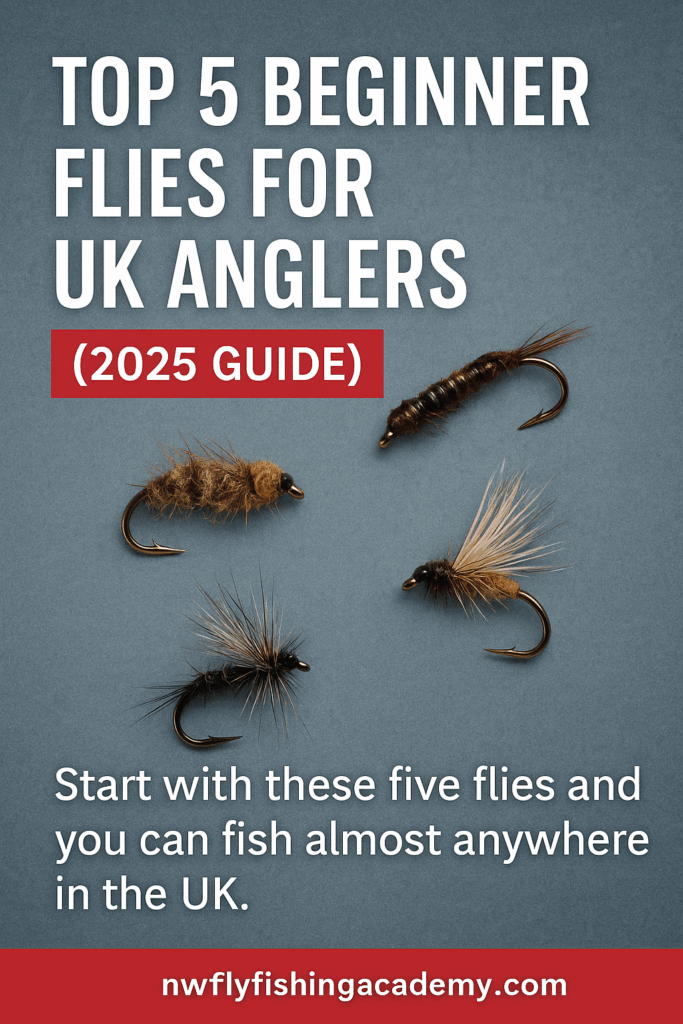
What gear do you actually need for this? Less than you think, probably. A 7’6″ to 9′ rod in a 3 or 4 weight is perfect for most UK wild trout situations. I use a simple double taper line because it loads quickly at short range and allows for delicate presentations. Leaders don’t need to be complicated, just a nine-foot tapered setup down to 5X or 6X depending on conditions. A basic selection of dry flies and nymphs will cover most situations. I keep a few Adams patterns, some CDC duns, a couple of sizes of Pheasant Tail nymphs, and maybe a Gold Head Hare’s Ear. That’s honestly enough for 90% of days.
Permission is the tricky bit with wild trout fishing in the UK. Unlike in Scotland where you have much broader access rights, most English and Welsh waters are privately owned or controlled by angling clubs. This means doing your homework. Local tackle shops are invaluable sources of information about day tickets and club memberships. Some of the best wild trout fishing I’ve accessed has come through joining small local clubs that manage stretches of river or stream. The fees are usually modest, the company is good, and you’re supporting conservation efforts.
Speaking of conservation, I think we have a responsibility to handle wild trout with care. These aren’t hatchery fish bred to be caught repeatedly. They’re slower growing, more vulnerable to stress, and represent a genuinely wild population that we should protect. I use barbless hooks exclusively for wild trout, wet my hands before handling them, and try to release them without even lifting them from the water when possible. If I want a photo, I keep the fish in the net in the shallows and take a quick snap. They’re too precious to risk for the sake of a grip-and-grin shot.
The seasonal aspect of wild trout fishing adds to its appeal. Traditional season dates run from late March to early October in most areas, though this varies by region and specific fishery. I love those opening weeks when the water is still cold and the trout are only just waking up. A warm afternoon in April with a sparse hatch of large dark olives can produce fantastic fishing if you’re prepared to be patient. Equally, September fishing with terrestrial patterns like beetles and ants can be outstanding, with trout fattening up before winter.
One thing I’ve learned over years of pursuing wild trout is that success often comes down to observation more than technique. Spend twenty minutes just watching the water before you even string up your rod. Where are the fish rising? What are they taking? What’s the current speed? Where would you sit if you were a trout trying to intercept food with minimum effort? Answer these questions and you’re halfway to a good day.
Related Reading:
Here’s a practical tip for your next wild trout session: approach every pool or run from downstream and stay low. Wild trout spook incredibly easily, and once they’re alarmed, they won’t feed properly for ages. I’m talking about crawling on your knees in some situations, keeping your rod low, and making your first cast count. One good presentation to an undisturbed fish is worth ten casts to a trout that’s already seen you.