Right, let’s strip away all the mystique and snobbery that seems to hang around fly fishing like midges over a chalk stream on a summer evening. If you’ve been curious about getting into it but felt a bit intimidated by all the terminology and the seemingly endless gear options, I reckon it’s time we had a proper chat about what this fishing method actually involves.
At its core, fly fishing is simply a way of presenting an artificial fly to a fish using a weighted line rather than relying on the weight of a lure or bait. That’s the fundamental difference between fly fishing and everything else. Your spinning rod casts a weighted lure that pulls light line behind it, whereas a fly rod casts a heavy line that carries a virtually weightless fly to the target. Once you understand that basic principle, everything else starts making sense.
The reason this method exists is pretty straightforward. Fish, particularly trout and grayling in our UK rivers, feed heavily on insects. They’re taking mayflies, sedges, midges and all manner of tiny creatures that you simply can’t cast with conventional tackle. So someone clever figured out that if you make the line heavy enough, you can cast these delicate imitations where they need to go. Genius really, even if it does take a bit of practice.
Let me walk you through the actual gear without getting bogged down in unnecessary detail. You need a fly rod, which is longer and more flexible than what you’re used to if you’ve been spinning or bait fishing. Most UK river anglers start with a 9-foot rod rated for a 5 or 6 weight line. That weight number refers to the line, not the rod, and it’s basically telling you how heavy the first 30 feet of fly line should be. A 5 weight is perfect for typical trout fishing on rivers like the Test, Usk or Derbyshire Wye.
The reel in fly fishing is mostly just somewhere to store line. Unlike spinning or baitcasting, you’re not really reeling to cast. Some would say it’s just an expensive line holder, though when you hook into a decent fish that wants to run, you’ll appreciate a reel with a smooth drag. For starting out, you don’t need to spend a fortune here.
The fly line itself is where things get interesting. This is the heavy, coloured line that you’ll actually be casting. Behind that sits thinner backing line on the reel, and at the business end you attach a tapered leader and then a tippet. The leader and tippet are basically clear monofilament or fluorocarbon that gradually steps down in diameter, creating a smooth transfer of energy so your fly lands delicately rather than slapping down like a teenager doing a belly flop.
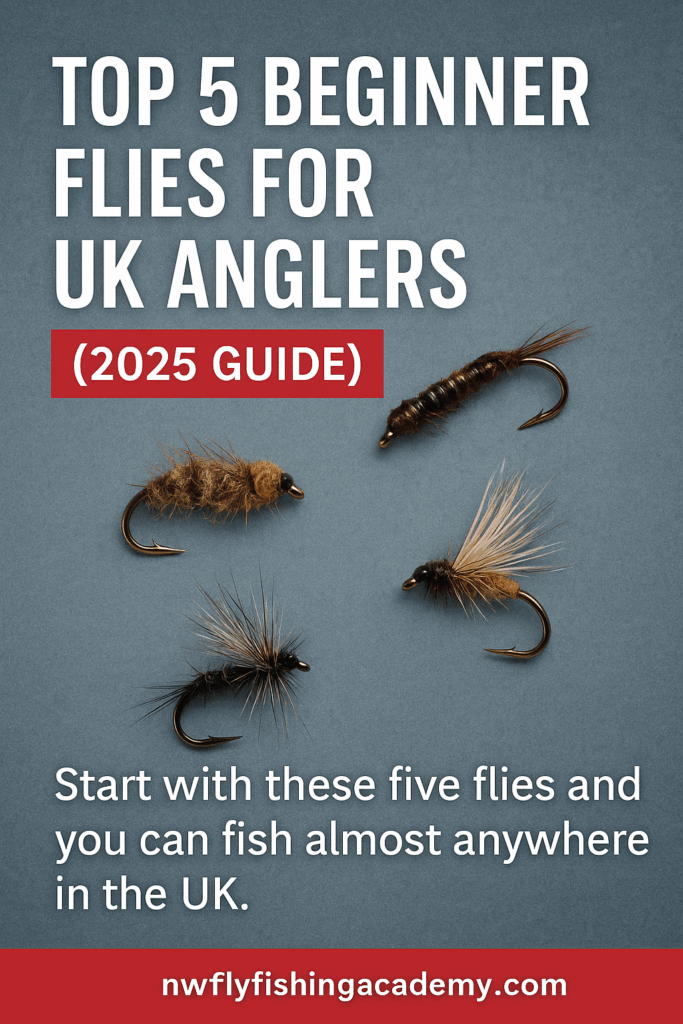
Now the flies themselves are where people either get completely absorbed or utterly confused. You’ve got dry flies that float on the surface, nymphs that drift underwater, and various other patterns including streamers and emergers. For UK river fishing, you’ll mainly be using dries and nymphs. A dry fly imitates an adult insect sitting on the water, which is brilliant visual fishing because you see the take. Nymphs imitate the larval stage of aquatic insects drifting in the current, and they’ll often catch more fish, even if watching a leader for subtle takes isn’t quite as exciting.
The casting technique throws most people at first. You’re not flicking a heavy weight like with a spinner. Instead, you’re loading the rod by letting line extend behind you on the back cast, then driving it forward with the weight of that extended line pulling more line through the rod. It’s all about timing and letting the rod do the work. Every single person I’ve watched learning to fly cast tries to muscle it at first, and that never works. Smooth acceleration to a crisp stop, both back and forward, that’s what makes the line flow.
Where you fish matters enormously. Fly fishing really shines on our chalk streams and freestone rivers where trout and grayling are actively feeding on insects. The Test and Itchen down south are legendary but pricey and often fully booked. The rivers of the Peak District, Yorkshire Dales and Welsh valleys offer incredible fishing at more accessible prices. Stillwater fly fishing on reservoirs like Rutland or Grafham is also hugely popular and often easier for beginners since you don’t need pinpoint accuracy like you do when covering a rising fish on a river.
Reading the water is half the battle. You’re looking for where fish will be holding and feeding. That means seams where fast and slow water meet, the cushion in front of rocks, deeper runs and the tails of pools. On a summer evening with a good hatch, trout will be rising in all sorts of places, and you’ll see the rings spreading on the surface. That’s when fly fishing becomes almost addictive, presenting your imitation to a feeding fish and watching it confidently sip down your fly.
The learning curve is real but not as steep as some make out. Your first few trips will probably involve tangled leaders, spooked fish and the occasional branch decorated with your fly. That’s completely normal. I’d strongly recommend getting a casting lesson or two from a qualified instructor. A couple of hours with someone who knows what they’re doing will save you weeks of frustration and bad habits.
One thing about UK fly fishing is the community. Most anglers you meet on the water are generous with advice, though some chalk stream beats maintain a more reserved atmosphere. Join a local club if you can, as they often control good water and provide a ready-made group of people to learn from.
Related Reading:
For your next session, here’s something practical to focus on. Before you even think about which fly to tie on, spend ten minutes just watching the water. Look for rises, observe what insects are about, check what’s stuck in spiderwebs near the bank. That observation time will tell you more about what the fish are eating than any amount of random fly changing. Match what you see as closely as you can, present it naturally, and you’ll be surprised how quickly things click into place.