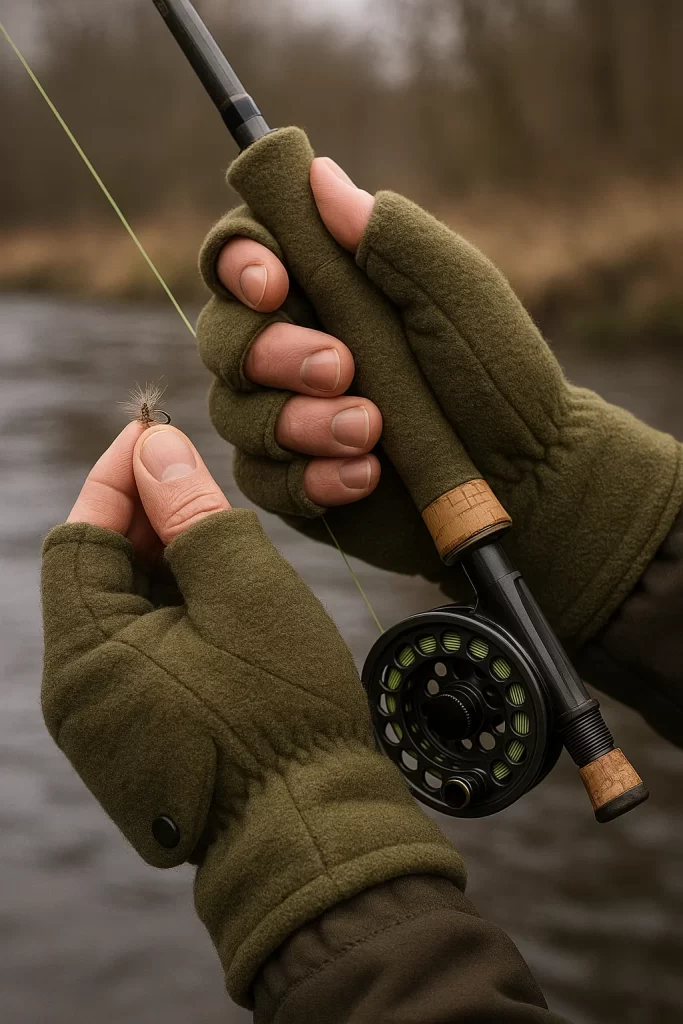
Right, let’s talk about the knots that really count. Not the fancy stuff you see in YouTube videos where some bloke ties seventeen different variations while you’re sat there thinking “mate, I just want to catch a trout before the hatch finishes”. I mean the proper workhorses. The knots you’ll tie a hundred times a season on the Test, the Eden, or whatever bit of water you’re lucky enough to fish.
I’ll be straight with you. For years I buggered about with all sorts of knots, trying to remember which one was which, getting in a right tangle when my fingers were frozen on a February morning. Then I had a proper wake up call on the Ure last spring. Hooked what felt like a decent fish, probably a three pounder, and the fly just pulled free. Not a break. The knot slipped. Came undone like a shoelace. I’d tied a granny knot without realising it because I was rushing, distracted by a rise I wanted to cover before it stopped.
That’s when I decided to simplify everything. Stick to two or three knots maximum and know them so well I could tie them in the dark. Which, let’s face it, you often are when you’re trying to get that last cast in before heading to the pub.
The improved clinch knot is where most of us start, and honestly, it’ll do you fine for ninety percent of situations. Thread your tippet through the eye of the hook, wrap it around the standing line five or six times, then bring the tag end back through the little loop near the eye. Before you tighten it, pass that tag end through the big loop you’ve just created. Wet it with spit, pull it snug. Done.
Now here’s the thing about the improved clinch. It works brilliantly up to about 8lb breaking strain. Anything heavier and you want something beefier. But for your standard dry fly and nymph work on UK rivers, where you’re probably using 4X to 6X tippet most of the time, it’s absolutely solid. I’ve landed fish up to five pounds on a properly tied improved clinch without any drama.
The problem comes when you’re fishing tiny flies. Size 18 and below, threading tippet through those microscopic eyes gets properly fiddly, especially when the light’s failing or you’ve got a decent breeze. This is where the loop knot earns its keep. Some anglers swear blind that a non-slip loop knot gives better fly movement, lets a dry fly dance more naturally on the surface. I’m not totally convinced the fish care that much, but I do know it’s easier to thread a loop through a small eye than trying to poke a thick bit of tippet through when your hands are cold.
For the non-slip loop knot, make an overhand knot about six inches from the tag end but don’t pull it tight. Thread the tag through the hook eye, bring it back through that loose overhand knot, then wrap the tag around the standing line three or four times. Pass it back through the overhand knot going the same direction as before. Tighten the whole thing carefully and you’ve got a small loop that sits just off the eye of the fly.
But if I’m being totally honest, the knot I probably use most these days is the Rapala knot. Similar to the non-slip loop but tidier, and it just feels more reliable somehow. Once you’ve got the muscle memory down, it’s quick to tie even in rubbish conditions. The loop it creates is small and neat, doesn’t catch on weed as much, and I’ve yet to have one fail on me.
There’s also the Davy knot, which has a cult following among competition anglers. It’s stupidly simple and uses less tippet than anything else, which matters when you’re constantly changing flies. Pass the line through the eye, make a simple loop, pass the tag end through that loop, make another pass through, pull tight. Feels wrong because it’s so basic, but it holds. I still don’t trust it completely for bigger fish, probably just superstition on my part.
The uni knot deserves a mention too because it’s genuinely versatile. You can use it for fly to tippet, tippet to leader, even backing to fly line if you’re desperate. It’s the kind of knot you learn once and it sorts out half your problems. Form a loop alongside the hook eye, wrap the tag end around both lines six times while going through that loop, pull everything snug.
Here’s what nobody tells you about knots though. The actual pattern matters less than doing it properly. Wet the knot before you tighten it. Always. The friction from pulling dry nylon against itself weakens the line way more than most people realise. Use your spit, dip it in the river, whatever. Just get it wet.
And check your knots regularly. Not just a quick tug, actually look at them. If the tippet’s gone curly or kinked near the knot, cut it off and re-tie. Takes thirty seconds and saves you from losing the fish of the season.
I keep a spool of decent fluorocarbon tippet in my vest at all times now, makes re-rigging less of a faff when you need to change things up. Worth checking out: https://amzn.to/3J6nFyq
The thing is, perfect knots don’t catch fish. Good enough knots tied quickly so you can get back to fishing, those catch fish. Master two or three that work for your style of fishing and practice them until you can tie them while chatting to your mate about why the fish aren’t rising.
Related Reading:
Next time you’re out, take five minutes before you even make a cast. Tie your chosen knot three times, cut it off, tie it again. Do it until your fingers remember the pattern without your brain having to think. That muscle memory will save you more fish than any fancy new pattern you read about online.