
UK fly-fishing setup tool
Fly Rod and Line Weight Matcher
Choose your species, water and fishing style to get a starting rod weight, rod length and matching fly line. The result explains the reasoning, because no single rod suits every water.
Your setup will appear here
Start with where you fish
A small wooded stream and a windswept reservoir need very different tackle, even when both hold trout.
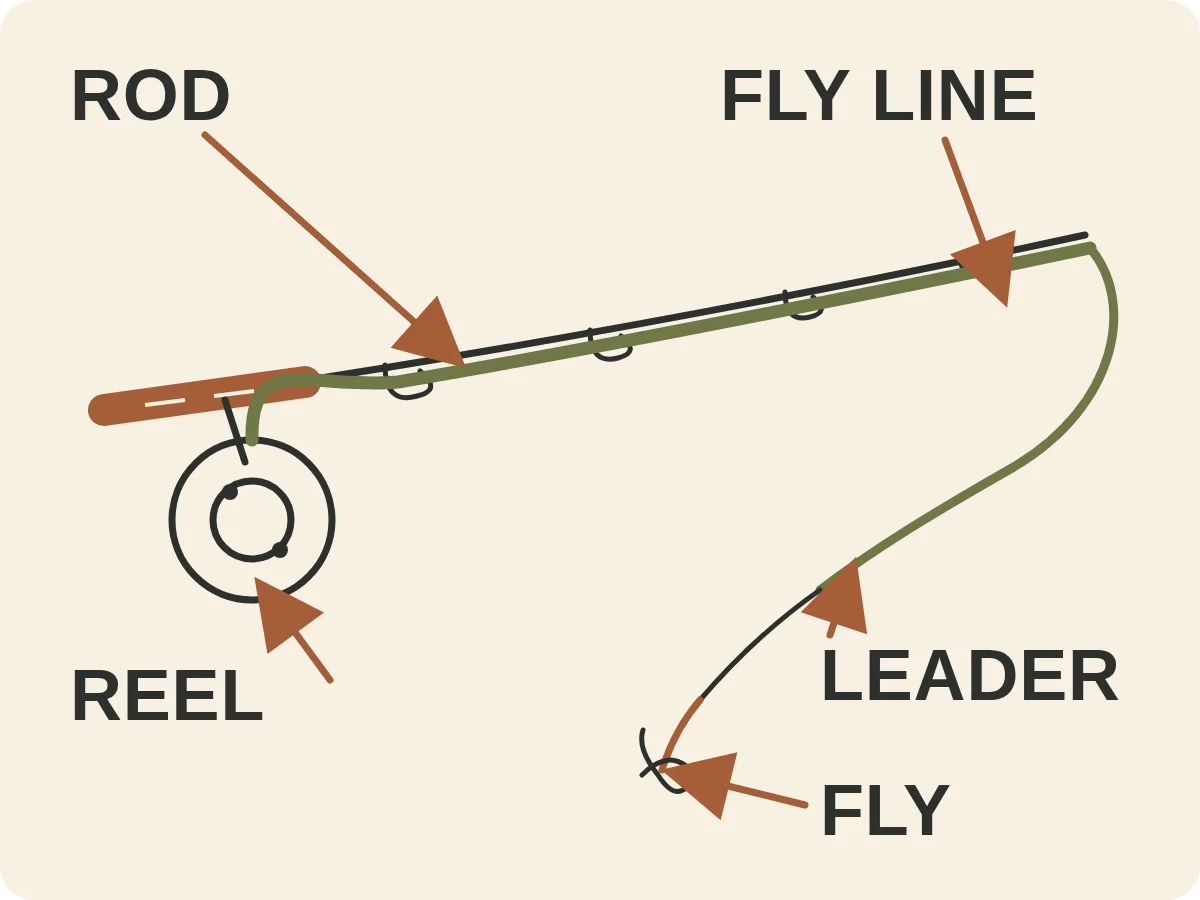
How the fly rod matcher works
The water type sets the starting rod length and line weight. Technique, wind, casting distance and target species then adjust it, usually by one line weight at a time, and the result stays between 3wt and 8wt. This tool treats 7wt as the minimum for sea trout, which is a cautious default. Some anglers fish lighter rods for smaller sea trout on small rivers.
The Experience setting does not currently change the recommendation, so beginners and intermediate anglers see the same result.
The suggested line is usually a weight-forward floating line, which is thicker toward the front to help with casting. For reservoir or sea trout streamers, the result may also mention an intermediate or sink-tip line for when you need to fish deeper.
The tool recommends a starting setup, not a guaranteed purchase. A 5wt can be a useful all-round river rod, but it is not automatically right for a tight brook, reservoir lures or sea trout at night.
What changes the recommendation?
Water and cover
Short rods help beneath trees. Longer rods improve reach, mending and line control on broad rivers and reservoirs.
Fly size and technique
Small dry flies reward delicacy. Streamers and teams of flies need more power to turn over cleanly.
Wind and distance
Regular wind and long casts can justify a heavier line class, but extra power is unnecessary on sheltered short-range water.
Common UK starting points
These are general conventions rather than test results, and individual rods and anglers vary. The matcher’s own result may differ once wind, technique and casting distance are included.
| Situation | Common starting point | Why |
|---|---|---|
| Small stream trout | 3wt to 4wt, 7’6″ to 8’6″ | Compact casting and delicate presentation |
| General UK river trout | 4wt to 5wt, 8’6″ to 9′ | Balanced reach, control and versatility |
| Reservoir from the bank | 6wt to 7wt, 9’6″ to 10′ | Wind, distance and larger flies |
| River sea trout | 7wt to 8wt, 9’6″ to 10′ | Stronger fish and larger night flies |
Frequently asked questions
Is a 5wt the best beginner fly rod?
Not always, but a 9-foot 5wt is a versatile starting point for many UK rivers. It can be too long or heavy for a tight stream, and underpowered for regular reservoir lure fishing or sea trout.
Should the fly line match the rod weight?
For a conventional setup, begin with the same line rating as the rod. Specialist tapers and shooting heads need closer attention to the manufacturer’s recommended line weight in grains, or head weight.
What fly rod is best for grayling?
It depends on technique and river size. Lighter 3wt to 4wt rods suit dry flies and smaller rivers. Longer rods of 10 feet or more, made for close-contact nymphing, serve a different purpose.
Can one rod cover rivers and reservoirs?
A 5wt or 6wt can cover some of both, but a compromise will not feel ideal at either extreme. Use the tool to see which side your usual fishing favours.
