You know what’s funny about fly fishing? We all spend hours tying on different patterns, reading articles, watching videos, trying to crack the code. Then some bloke turns up with a scruffy old Pheasant Tail that looks like it’s survived three seasons and absolutely smashes it while you’re faffing about with the latest fancy pattern from America. But there are patterns that consistently work on our waters, and after years of getting it wrong more often than right, I’ve learned which flies actually earn their place in my box.
Gear Used in This Article
The Pheasant Tail Nymph has to be first up because it’s saved my bacon more times than I can count. Simple, buggy, and trout seem hardwired to eat the thing. Size 14 or 16 works most days on rivers like the Test or Usk, but I’ll go down to 18s when the water’s gin clear and the fish are being difficult. The beauty of this fly is that it looks like half a dozen different things trout eat regularly. Olive nymphs, caddis pupae, even small mayfly nymphs if you squint a bit. I lost an absolute beast on the Wye last April because I’d tied my tippet knot like an idiot, but that fish hammered a Pheasant Tail without hesitation. Still think about that one.
Gold Ribbed Hare’s Ear sits right alongside it in terms of reliability. Bit bushier, bit more scruffy, and that gold rib catches the light as it tumbles along the bottom. Trout love it. The original pattern is over a century old and it still outfishes half the modern stuff in tackle shops. I reckon it’s the mix of textures and that natural hare’s ear dubbing that does it. Looks alive in the water, moves properly, and covers you for a whole range of naturals.
Dry fly season is when things get properly exciting though. Nothing beats watching a trout rise to a fly on the surface. The Adams is probably the most versatile dry fly ever tied for UK conditions. Grey body, mixed hackles, and it’ll pass for various upwings depending on what’s hatching. Works for our pale wateries, works for iron blues on those dour spring days. Size 16 is my go-to, but I carry them from 14 down to 18. You can fish it in broken water or smooth glides and it just works.
Now if there’s a proper mayfly hatch happening, you need proper mayfly patterns. French Partridge Mayfly or a Grey Wulff in size 10 or 12 will sort you out. But honestly, mayfly time is easy mode. The fish go mental and you can get away with some fairly rough imitations. It’s the rest of the season that sorts the anglers from the chancers.
CDC patterns have become massive over the last decade or so, and rightly so. That stuff floats brilliantly and looks incredibly lifelike. A simple CDC Olive or CDC F Fly in sizes 16 to 18 covers most olive hatches throughout the season. They sit in the surface film beautifully, right where emerging insects struggle before flying off. Trout key in on that vulnerable moment and a CDC pattern imitates it perfectly.
Klinkhammer Special deserves a mention because it’s a bit of a hybrid. Technically a dry fly with the body hanging through the surface, imitating an emerger. Parachute hackle keeps it afloat and visible, and trout absolutely smash them. Olive or tan bodies work on most UK rivers. It’s particularly good during those frustrating periods when you can see fish moving but can’t quite work out what they’re eating. Chuck a Klinkhammer at them and you’ll often get a response.
Black Gnat might seem old fashioned but it still catches fish. Those little black terrestrials get blown onto the water throughout summer and trout never ignore an easy meal. Size 14 or 16, simple and effective. Same goes for the Hawthorn Fly in late April and early May when the real ones are about. Bit bigger at size 12, with those characteristic trailing legs. Deadly for a few weeks then you can put them away till next year.
Wet flies have fallen out of fashion a bit but they shouldn’t have. Spider patterns work brilliantly on northern streams and Scottish rivers. Snipe and Purple, Partridge and Orange, simple soft hackle patterns fished across and down. Trout absolutely murder them. They’re brilliant for covering water when there’s no hatch happening and you need to search likely spots. I keep a selection on hand for those days when nothing’s moving and the nymph game isn’t working.
Diawl Bach is a modern Welsh pattern that’s spread across the UK for good reason. Looks a bit like a bloodworm, a bit like a buzzer pupa, a bit like a generic nymph. Fished static under an indicator or slow stripped, it catches fish from stillwaters and rivers alike. Red, black or natural brown versions all work. Size 12 to 14 for rivers usually.
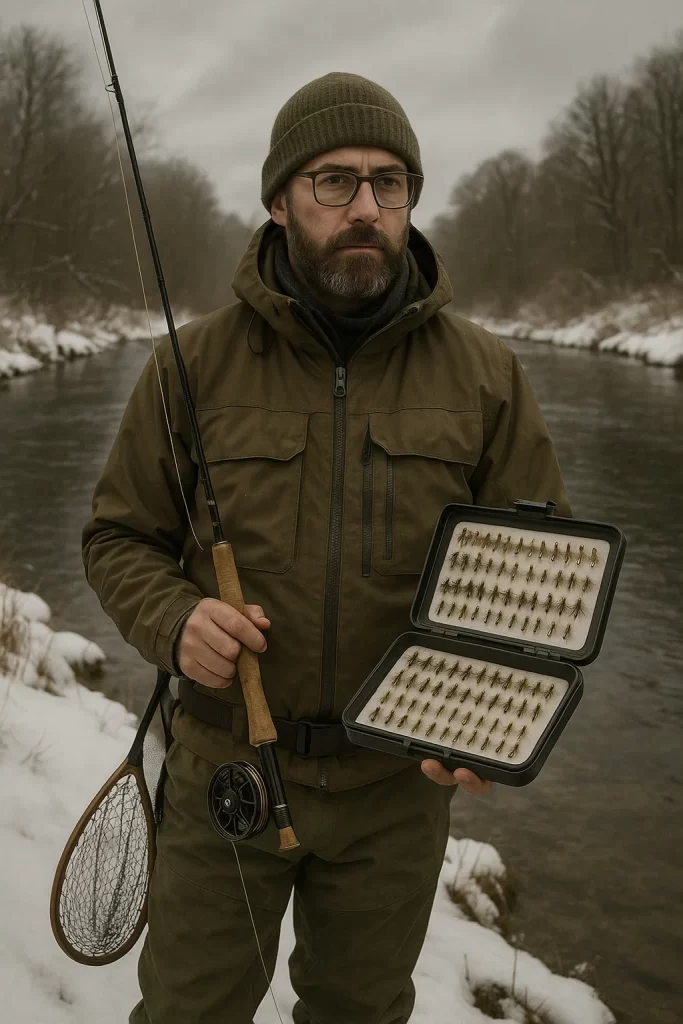
You’ll need a proper fly box to keep all these organised and protected. I rate the waterproof boxes with the silicone inserts because they hold flies securely even when you’re wading and inevitably drop the thing in the river.
Worth checking out: https://amzn.to/4om4T54
The honest truth is that presentation matters far more than the exact pattern most days. A rough Pheasant Tail drifted naturally through the right lie will outfish a perfectly tied show fly dragging unnaturally every single time. But having confidence in your fly selection means you fish with more focus and less second guessing.
Related Reading:
Next time you’re out, try fishing one pattern for a full hour before switching. We all change flies too often, myself included. Give each pattern a proper chance and you’ll learn what actually works rather than just guessing.