
Tippet reference and matcher
Tippet and Fly Size Matcher
Match a hook size to a practical tippet X rating, then adjust for dry flies, nymphs, streamers, trout, grayling, sea trout and water clarity. The result includes diameter and a typical strength range. Tippet is the last length of line, the part the fly is tied to.
Your tippet will appear here
Start with fly size, then adjust
The familiar divide-by-three rule is useful, but fly type, fish strength and water conditions can justify moving stronger or finer.
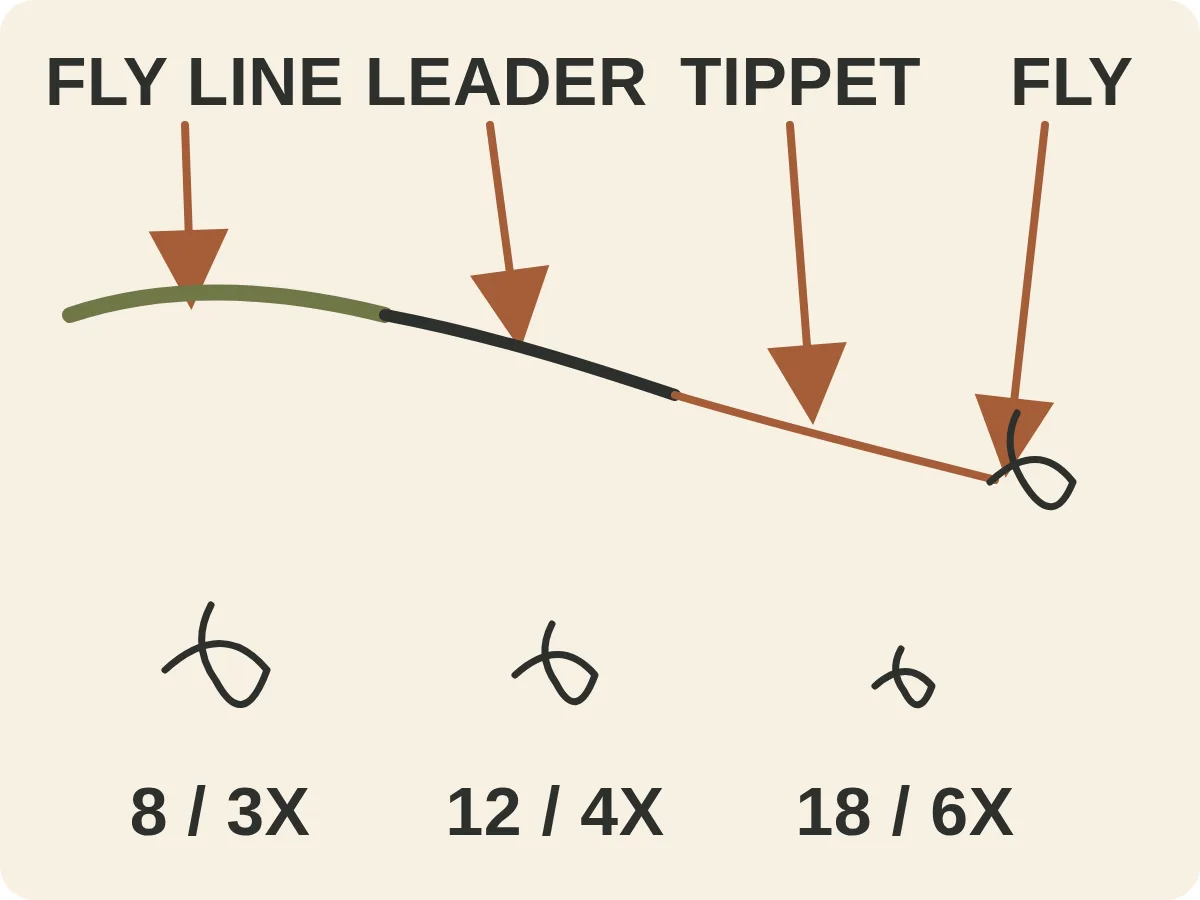
How this tippet and fly size matcher works
The starting point is the traditional divide-by-three rule: divide the hook size by three, rounding to the nearest whole number, to estimate the X rating. A size 12 fly therefore begins around 4X, while a size 18 begins around 6X. The X rating is a diameter code: the higher the number, the thinner and weaker the tippet.
The calculator then makes visible adjustments. Nymphs move one step stronger, while streamers and sea trout each move two steps stronger. Clear water moves one step finer, and stained water moves one step stronger. The result is kept between 0X and 7X.
Tippet X rating, diameter and breaking-strain chart
| X rating | Approx. diameter | Typical nylon strength | Common starting use |
|---|---|---|---|
| 0X | 0.279 mm / .011 in | 12 to 15 lb | Large streamers and stronger sea trout work |
| 1X | 0.254 mm / .010 in | 10 to 12 lb | Large lures and powerful fish |
| 2X | 0.229 mm / .009 in | 8 to 10 lb | Streamers and larger reservoir flies |
| 3X | 0.203 mm / .008 in | 6 to 8 lb | Large dries, nymphs and small streamers |
| 4X | 0.178 mm / .007 in | 5 to 7 lb | General river trout flies |
| 5X | 0.152 mm / .006 in | 4 to 6 lb | Small dries and nymphs |
| 6X | 0.127 mm / .005 in | 3 to 4.5 lb | Small flies and delicate presentation |
| 7X | 0.102 mm / .004 in | 2 to 3.5 lb | Very small flies in suitable open water |
Why hook size alone is not enough
Fly resistance
A bushy dry or weighted streamer creates more resistance than a slim nymph on the same hook size.
Fish and cover
A stronger fish near weed or rocks needs a larger safety margin than a small grayling in open water.
Presentation
The tippet still needs to turn the fly over and let it move naturally. The thinnest available material is not always the best choice.
Frequently asked questions
What does 5X tippet mean?
It is an X-rating commonly associated with a diameter around 0.152 mm or .006 inches. Actual breaking strain varies between products.
What tippet should I use for a size 16 fly?
The divide-by-three rule starts around 5X. Clear water and a delicate dry may favour 6X, while a nymph, a weighted fly, larger trout or abrasive water may justify 4X.
Is fluorocarbon stronger than nylon at the same X rating?
Not reliably across every brand. Compare the printed diameter and breaking strain rather than assuming material alone determines strength.
Should I always use finer tippet in clear water?
No. Move finer only when presentation requires it and the fish, cover and fly allow it. Unnecessarily fine material increases break-off risk.
