You can have the fanciest rod, the most perfect imitation flies, and a casting technique that would make an instructor weep with joy. None of it matters if you’re flogging away at dead water.
Gear Used in This Article
Reading a river is the difference between going home with stories and going home wondering why that bloke fifty yards downstream caught six while you barely had a pull. It’s not mystical. It’s about understanding where trout actually want to be, and more importantly, where they’re willing to feed.
Start with the current. Trout are lazy buggers at heart, just like the rest of us. They want maximum food for minimum effort, so they position themselves where the current brings meals directly to them without having to work too hard. But they also need enough flow to keep oxygen levels up and give them an escape route if a heron fancies lunch.
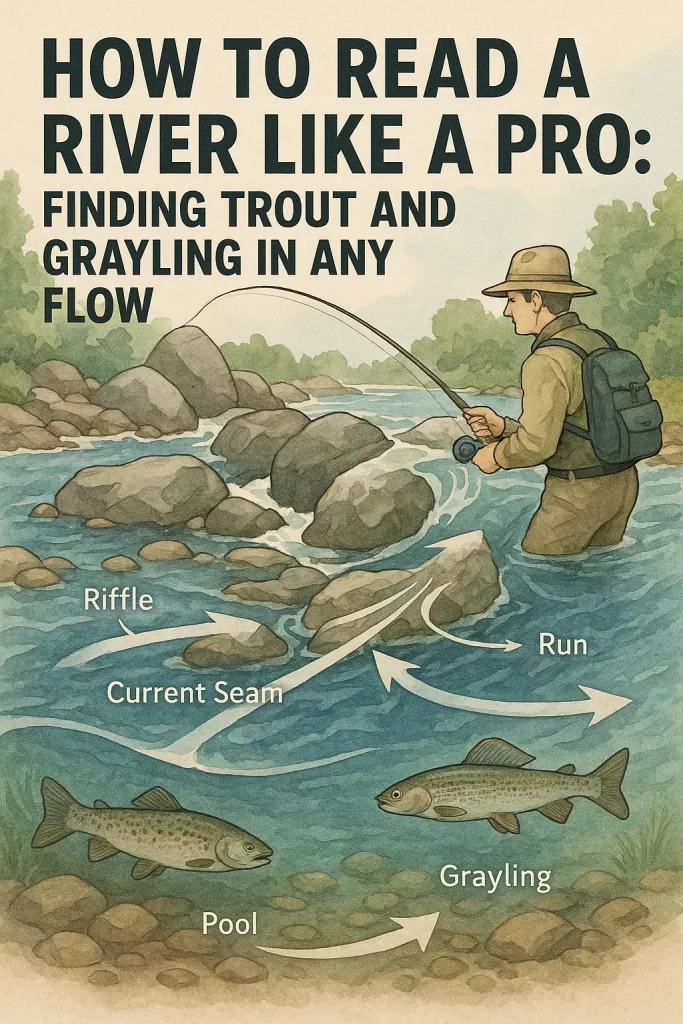
Look for the seams where fast water meets slow. That transition zone is prime real estate. The trout sit in the slower stuff, nipping out into the faster current to grab nymphs and emergers as they drift past. You’ll often see these seams as a visible line on the surface where the textures change. Chuck your fly just into the faster side and let it swing through into the calmer water. That’s where the magic happens.
Depth matters more than most beginners realise. A river that looks uniformly shallow might have a depression that’s six inches deeper than everything around it, and that’s where the better fish will be. I spent three sessions on the Ure last summer absolutely convinced the fish were holding tight to the far bank where overhanging trees created obvious shade. Turned out they were sitting in a slight trough about two thirds across, in what looked like featureless water. Lost count of how many casts I wasted before I finally stuck a fish there by accident and worked it out.
Rocks and boulders create cushions of slower water immediately upstream and downstream. The upstream cushion is often overlooked but it’s brilliant holding water. Downstream is more obvious, that classic pocket behind an obstruction where the current splits and swirls. Both spots will hold fish. The bigger the rock, the bigger the cushion, the bigger the potential fish.
Undercut banks are trout magnets but they’re frustrating to fish. You need to get your fly tight to the bank, right into that shadowy overhang where the big ones lurk during daylight. Accuracy counts more here than distance. A short, precise cast beats a long sloppy one every single time.
Foam lines are your friends. All that bubbling scum collecting on the surface looks grim but it concentrates food. Trout know this. They’ll sit under foam lines sipping away happily while you’re casting to clearer water wondering where they’ve all gone. Don’t ignore the muck.
Riffles and runs need different approaches. Riffles are the broken, bubbly bits where water flows over stones. Great for oxygen, great for insect life, and trout love feeding there. But they’re not resting spots. Fish the riffles hard during hatches, then look downstream to the runs where the water deepens and smooths out. That’s where trout go to digest and rest between feeding spells.
Pools are trickier than they look. The head of the pool, where water tumbles in, often holds fish during the day. The tail, where it shallows and narrows before the next riffle, is classic feeding water. The deep middle section? That’s where the big cautious ones sit during bright conditions, and you’ll struggle to tempt them unless you’re fishing deep with nymphs.
Time of day changes everything. That slack water near the bank that looked dead at noon might be alive with rising fish at dusk. Temperature affects where trout position themselves too. Warm summer afternoons send them to faster, more oxygenated water or into deeper pools. Cold winter days and they’ll tuck into slower pockets where they don’t have to fight the current.
Polarised glasses aren’t optional for this. You need to see through the surface glare to spot the actual structure. I never head out without a decent pair of polarised glasses these days. Worth checking out:
https://amzn.to/495KRr4
Watch for rises but don’t just fish to them blindly. A rise tells you a fish is there, obviously, but the direction it’s facing and where it actually is versus where you saw the ring matters. Trout drift back and down to intercept food, then return to their holding spot. That rise you saw might be from a fish sitting two feet upstream and a foot deeper than where the ring appeared.
Weed beds create highways and dining rooms. The channels between weed growth funnel food and give trout clear feeding lanes. The edges of weed provide cover and ambush points. Fish the margins of weed, not the weed itself, unless you enjoy spending more time untangling than fishing.
Bankside features matter too. Trees drop terrestrials. Cattle drinks create muddy disturbance that washes food loose. Inflows from tributaries or drains change temperature and add oxygen. Even a fence post in the water creates a tiny current break that might hold a fish.
The best way to learn is to watch water before you fish it. Spend ten minutes just looking. See where the currents interact, spot the depth changes, identify the structure. Then fish methodically through the likely spots rather than randomly casting at anything wet.
Here’s something practical for your next session: fish the near bank first before you wade in and start casting to the far side. I’ve lost count of good fish I’ve spooked by tramping through shallow water to get a better angle on the opposite bank. The fish you’re looking for might be right at your feet.