June is honestly one of those months where you can either clean up or go home skunked, and half the battle is just having the right patterns in your box. The hatches are absolutely bonkers right now. Everything seems to be happening at once.
Let me tell you about a session I had on the Usk last June where I watched decent browns rising everywhere, changed flies about fifteen times, and finally cracked it with something I’d almost forgotten was tucked in the corner of my fly box. That’s June for you. Infuriating and brilliant in equal measure.
The mayfly is obviously the big story if you’re anywhere that still gets a proper hatch. We’re talking about the tail end of the main emergence, but there’s still plenty of action to be had. A size 10 or 12 Grey Wulff is your bread and butter here. Sits high on the water, easy to see, and trout absolutely hammer it. Don’t overthink the pattern either. I’ve seen anglers tie themselves in knots trying to match the hatch with perfect mayfly imitations when a scruffy Wulff outfishes everything else.
But here’s the thing about mayfly. Not every river gets them in huge numbers, and even where they do, the trout can switch focus faster than you can tie a new tippet. That’s where having a proper selection matters.
Sedges are absolutely firing in June. Honestly, they might be even more reliable than mayfly because you’ll find them on pretty much every river in the country. A size 12 or 14 Elk Hair Caddis is non-negotiable. The silhouette is spot on, it floats forever, and trout seem to lose all caution when they’re on sedge. I fish mine right into the dusk, sometimes well after I can barely see it. You’re fishing by sound at that point, waiting for the slurp.
The other sedge pattern that absolutely saves my bacon is a G&H Sedge. Bit bushier, bit more visible, and it creates a lovely wake when you twitch it across the surface. Trout go mental for that. Static drift is fine, but give it the odd little pull and you’ll often get smashed instantly.
Now, terrestrials become a real factor in June, especially if we get any warm weather. Black ants are the quiet achievers of summer fishing. A size 14 or 16 black ant pattern looks like nothing special in your hand, but get it on the water during a fall and you’ll wonder why you ever fished anything else. Trout see them as easy pickings. Low energy food just sitting there in the film.
Beetles too. A simple black foam beetle in size 12 or 14 works a treat along undercut banks or anywhere there’s overhanging vegetation. You’re not trying to imitate a specific species here. Just the general idea of beetle is enough. Trout aren’t entomologists.
Hawthorn flies are mostly done by June, but you’ll still get the odd straggler, and trout remember them. A size 12 Hawthorn with those daft dangling legs can pull fish up even when there’s nothing hatching. It’s one of those searching patterns that just works.
Right, let’s talk about what’s happening below the surface because dry fly isn’t always the answer, much as we’d all like it to be. Nymphing in June can be absolutely lethal. A Pheasant Tail Nymph in size 14 or 16 is about as reliable as it gets. Simple, effective, and trout eat them year-round. I fish mine on a French leader setup most of the time now, though a dry dropper works brilliantly too.
Hare’s Ear Nymphs are the other staple. Scruffy, buggy looking things that could pass for about twenty different naturals. That’s exactly why they work. Size 12 to 16 depending on the water.
If you’re fishing stillwater rather than rivers, then you need to think a bit differently. Damselflies are the big ticket item in June. A size 10 or 12 damsel nymph fished on a floating line with a long leader is absolutely devastating. Slow figure-of-eight retrieve, watch the line, and hold on. Seriously. Reservoir rainbows and browns go absolutely daft for them.
One pattern that doesn’t get enough love is the Klinkhammer. Sits half in, half out of the film, so it works as an emerger pattern for all sorts of hatches. I never head out without a decent selection these days.
Size 12 to 16, and I tend to favour the olive or grey versions in June. Trout seem to take them with real confidence, maybe because the profile looks like something struggling in the surface.
CDC patterns are worth mentioning too, especially CDC F-flies and shuttlecocks. They sit beautifully in the film and the CDC just has that lifelike quality that feather and foam don’t quite match. Fragile little things though. You’ll be drying them out and treating them constantly.
Blue Winged Olives are still around in June, particularly on duller days or in the evenings. A size 14 or 16 BWO pattern in your box is sensible. Could be a traditional Greenwell’s Glory or something more modern. Doesn’t matter hugely as long as the size and general colour is right.
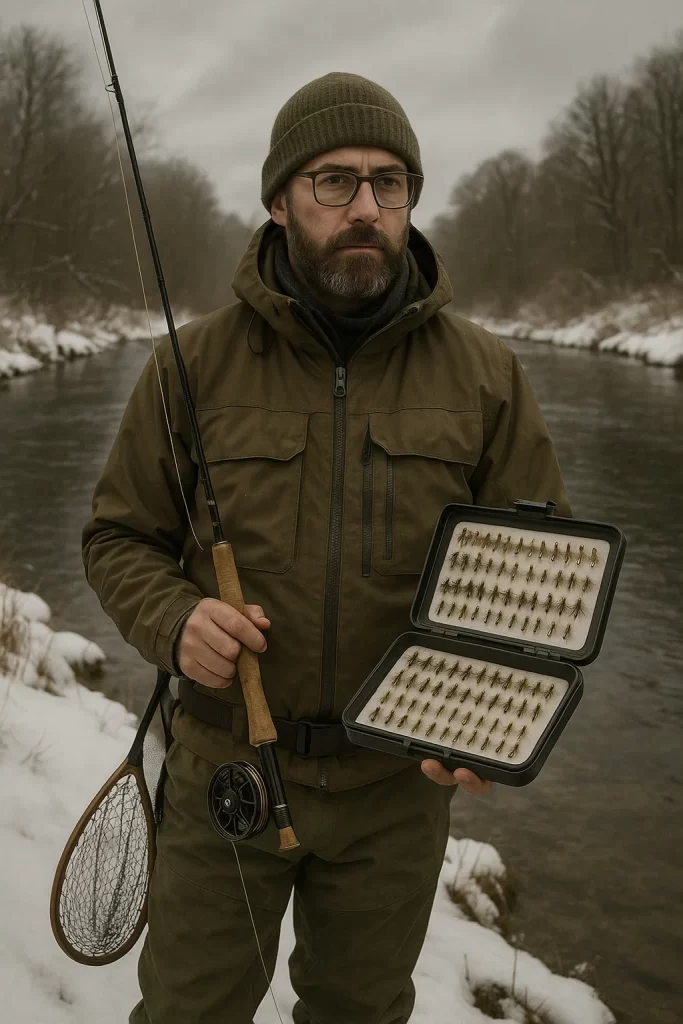
The key thing about June is being ready to switch. Conditions change, hatches overlap, and what worked yesterday might be useless today. Keep your fly box organized so you’re not fumbling around. Have your dries, your nymphs, and a few terrestrials all easily accessible.
Related Reading:
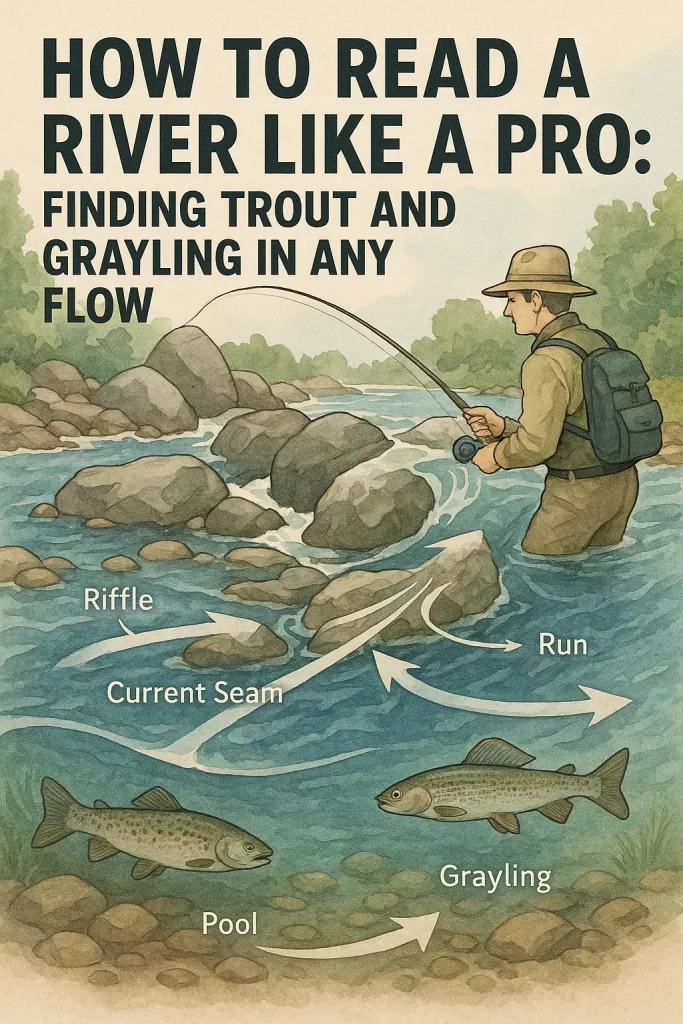
One last thing before you head out. Watch the water before you start fishing. I know that sounds obvious, but actually spend ten minutes just looking. Are fish rising? What are they taking? How are they feeding? That observation time saves you an hour of trial and error. If you see rises but can’t spot what’s hatching, start with a general attractor pattern like an Adams or a Klinkhammer and work from there. The trout will tell you what they want if you pay attention.